Home / Critical & Emerging Technologies (page 227)

Critical & Emerging Technologies

Researchers use Graphene for miniature inductors enabling Ultra-Miniaturized Electronics Devices

The inductors along with capacitors and resistors, inductors are one of the three passive elements that are the foundations of all electronics. An inductor works by inducing a magnetic field as an electric current flows through its coil of wire. This magnetic field temporarily stores electric energy as magnetic energy, …

Read More »

US Army’s Warfighter Network (WIN-T) provides high-speed, high-capacity and secure reliable voice, video and data communications anytime, anywhere without the need for fixed infrastructure

Today’s soldiers expect to have network access anywhere, anytime. With the Warfighter Information Network-Tactical (WIN-T), enables mission command and secure reliable voice, video and data communications on-the-move anytime, anywhere without the need for fixed infrastructure.   First deployed in Iraq in 2004, WIN-T meant soldiers “had a high-speed, interoperable voice …

Read More »

Neutron Beams can detect Nuclear Warheads and disable them

Despite making reductions in their arsenals, both the USA and Russia have extensive and expensive programmes under way to replace and modernize their nuclear warheads, missile and aircraft delivery systems, and nuclear weapon production facilities. The Nuclear Race between US, Russia, and China through their continuous modernization of all the …

Read More »

DARPA’s Safe Gene editing program developing tools to prevent Global Bioterrorism and Biowarfare threat

Gene editing technologies have captured increasing attention from healthcare professionals, policymakers, and community leaders in recent years for their potential to selectively disable cancerous cells in the body, control populations of disease-spreading mosquitos, and defend native flora and fauna against invasive species, among other uses. The potential national security applications …

Read More »

Heterogeneous Integration Technology enhance capability of military RADAR, communications, imaging and sensing systems, DARPA’s DAHI, and CHIPS led its development

Modern warfare is increasingly dependent on microelectronics capabilities that sense the environment, convert the signals into data streams, process the information, and generate a response. In this sense, Aerospace and Defense (A-D)  systems are quite similar to commercial systems that perform communications and computations, while taking advantage of the advancement …

Read More »

Countries developing Neutron guns as particle beam directed energy weapons to destroy enemy missiles

A neutron beam can destroy electronics and that would be useful in warfare. The U.S. Defense Strategic Defense Initiative put into development the technology of a neutral particle beam to be used as a weapon in outer space. Neutral beam accelerator technology was developed at Los Alamos National Laboratory. According to …

Read More »

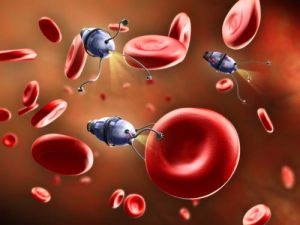
Nanomedicine entering mainstream to treat Cancer, HIV and Chem-Bio weapon threats.

Nanomedicine is a branch of medicine that applies the knowledge and tools of nanotechnology to the prevention and treatment of disease. Nanomedicines typically encapsulate therapeutic and/or imaging compounds in submicrometer-sized carrier materials. Nanomedicine involves the use of nanoscale materials, such as biocompatible nanoparticles and nanorobots, for diagnosis, delivery, sensing or …

Read More »

New materials bringing Thermoelectric generators or heat-to-power technology close to deployment

Thermoelectric energy harvesting mainly depends on the operation of the thermoelectric generator (TEG). A thermoelectric (TE) device can directly convert heat emanating from the Sun, radioisotopes, automobiles, industrial sectors, or even the human body to electricity.  A TEG converts heat directly into electrical energy according to the Seebeck effect.   …

Read More »

Risind threat of rising Mass shooting incidents, Security Forces deploying technologies AI based Gunfire detection systems, and imaging radars

Assaults by firearm kill about 11,000 people in the US each year, which translates to a roughly 1-in-370 lifetime chance of death from gun violence. That’s almost 50% more likely than the lifetime odds of dying while riding inside a car, truck, or van. These measures also suggest Americans are …

Read More »

Neural Implant restores visual perception by sending camera feed into Blind people’s brain

Around 39 million people in the world are thought to be completely blind and according to the World Health Organization, 90% of visually impaired people live in low and middle-income countries. Blindness can be caused by lots of different illnesses and injuries  includingt diabetes, macular degeneration, severe eye injuries, cornea …

Read More »
wpChatIcon
wpChatIcon