 International Defense Security & Technology Your trusted Source for News, Research and Analysis
Introduction China’s maritime ambitions and naval modernization have garnered significant attention on the global stage. As the People’s Liberation Army (PLA) seeks to strengthen its position in the Asia-Pacific region and beyond, China has made substantial investments in its naval capabilities. This comprehensive modernization effort is transforming the Chinese navy, …
Read More »Advancing the Depths: DARPA’s APEX Propulsion Technology for Submarines and UUVs
Introduction: The world beneath the ocean’s surface is a realm of mystery and intrigue, home to some of Earth’s most uncharted territories. In this underwater world, submarines play a pivotal role in scientific exploration, defense, and more. However, to unlock the full potential of this hidden domain, propulsion technology needs …
Read More »DARPA DELTA exploring digital twins for Autonomous Underwater Vehicle (AUV) missions

Digital twins are a virtual and identical representation or model, with full characterization, of a physical product or system. A digital twin seeks to emulate the actual system by utilizing data analysis and integration, machine learning, and modeling techniques. Commercially, digital twins have been used in various applications, ranging from …
Read More »Air-Independent Propulsion (AIP): Revolutionizing Submarines for Modern Naval Warfare

Introduction Submarines are versatile and vital assets in modern naval warfare, serving a multitude of roles that range from intelligence gathering and reconnaissance, covert insertion and extraction of special forces, attacking enemy submarines and their surface warships, mine laying, to other littoral or choke point operations. Their ability to operate …
Read More »Elevating Maritime Security: The Future of Software-Defined Surface-Search Radar for Surface Warships
In an era where global security relies on staying one step ahead of ever-evolving threats, the maritime domain poses unique challenges. Surface warships are tasked with ensuring safe navigation, safeguarding maritime boundaries, and countering a myriad of potential dangers. To tackle these challenges head-on, a revolutionary shift is underway: the …
Read More »DARPA’s PALS Program: Unveiling the Future of Underwater Surveillance with Living Naval Sensors

Introduction In the vast expanse of the world’s oceans, monitoring adversaries’ movements has always posed a significant challenge. Recognizing the need for innovative solutions, the Defense Advanced Research Projects Agency (DARPA) introduced the Persistent Aquatic Living Sensors (PALS) program in February 2018. This groundbreaking initiative aims to integrate the power …
Read More »Mastering the Waves: Adaptable Control and Propulsion Systems Revolutionize Hybrid Ship Propulsion
Introduction In the ever-evolving world of maritime transportation, the quest for sustainable solutions has become a top priority. With the pressing need to reduce emissions and minimize the environmental impact of shipping, innovative technologies are emerging to revolutionize the industry. One such breakthrough is the development of adaptable control and …
Read More »Navigating the Waves of Growth: Exploring the Global Marine Hybrid Propulsion Market and Industry Trends

In a world where sustainability and environmental consciousness have taken center stage, industries are actively seeking innovative solutions to reduce their carbon footprint. The maritime sector, which has historically been associated with significant greenhouse gas emissions, is no exception to this trend. Enter the realm of marine hybrid propulsion – …
Read More »The Rise of Amphibious Warfare: The Crucial Role of Amphibious Capabilities in Addressing Modern Threats
Introduction: Amphibious warfare has experienced a significant resurgence due to its crucial role in addressing modern threats. As military strategies adapt to changing landscapes, the importance of amphibious capabilities in countering diverse challenges has become evident. In this article, we will explore the historical context, the evolving nature of amphibious …
Read More »From Submarines to Sensors: Harnessing the Power of Internet of Underwater Things (IoUT)
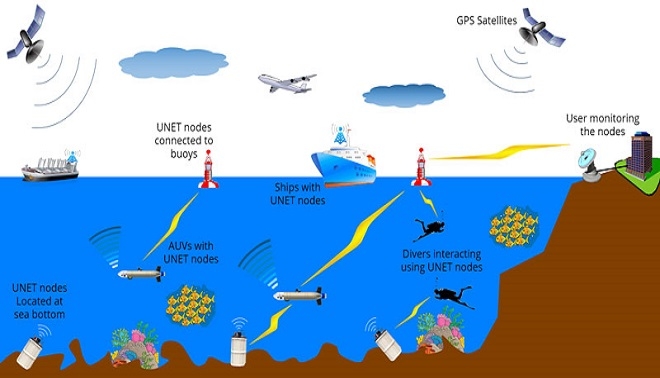
Introduction The vast and mysterious underwater world has long remained a realm of secrets and wonders. However, advancements in technology are now unlocking the potential to connect and explore this hidden realm like never before. The Internet of Underwater Things (IoUT) is revolutionizing our understanding of ocean depths by harnessing …
Read More »