 International Defense Security & Technology Your trusted Source for News, Research and Analysis
Related Articles
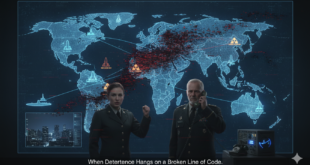
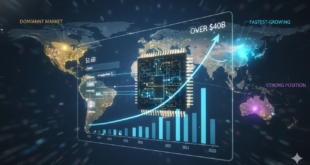

Cyber attacks on power grids and nuclear plants are no longer just a distant possibility—they’re happening now. With critical infrastructure increasingly targeted by hackers, the risks extend from economic disruption to national security crises. This article explores the threats, real-world incidents, and the urgent efforts underway to safeguard our energy future.
Introduction: A Nation in the Dark
Picture this: a blackout that doesn’t end in hours but stretches into days or weeks. Streets go silent as shops remain shuttered, digital payments fail, and communication networks collapse. Hospitals struggle to keep patients alive on dwindling generator power. Clean water runs short, sanitation systems break down, and fuel for transportation disappears.
What once sounded like a plot from a Hollywood thriller has now become a national security concern. Energy systems—the backbone of modern life—are under constant digital siege. According to U.S. government reports, the energy sector is now the most targeted critical infrastructure in cyberspace, surpassing even healthcare, finance, and transportation combined.
The stakes could not be higher. Cyber attacks on energy infrastructure are not hypothetical. They’re happening today, with increasing frequency, sophistication, and consequences.
The Scale of the Threat: More Than Just an Outage
The energy sector has rapidly become one of the most attractive—and vulnerable—targets for cyber attackers. According to the latest U.S. government reports, hackers now target energy companies more than any other part of the nation’s critical infrastructure. In fact, the industry reports more cyber incidents than healthcare, finance, transportation, water, and communications combined—and those figures only reflect the intrusions that are actually detected and disclosed.
The trend is accelerating. Over the past two years, cyber attacks on critical infrastructure, including power grids, have surged sharply. Security experts warn that the barrier to entry is also falling, with increasingly sophisticated tools making it easier for attackers to compromise key operational equipment. A recent assessment by Darktrace, the UK-based cybersecurity firm, highlights just how exposed the sector has become—painting a sobering picture of an industry under constant digital siege.
The fallout from a successful attack on the power grid extends far beyond temporary inconvenience. Its impacts ripple across every sector of society. A study by Lloyd’s of London estimated that a prolonged outage across 15 U.S. states could cost the economy hundreds of billions of dollars and leave 93 million people in the dark. The economic toll alone would be staggering, but the cascading consequences extend far beyond financial losses. Power is the invisible backbone of modern life, and its sudden disappearance exposes vulnerabilities that ripple across every sector of society.
Public safety is one of the first and most severe casualties. Without electricity, water treatment plants, sanitation systems, and hospitals quickly grind to a halt, triggering a public health emergency in days, if not hours. Life-saving equipment in intensive care units, refrigeration for medicines, and even the ability to deliver clean drinking water depend on a reliable power supply. A cyber attack on the grid therefore doesn’t just cause inconvenience—it puts lives directly at risk.
Beyond the immediate danger, there is the erosion of public confidence. Data breaches involving sensitive customer information can lead to crippling fines, litigation, and reputational damage that may take years to recover from. Citizens who lose trust in utilities and government institutions may become more vulnerable to disinformation, further destabilizing social cohesion.
The risks are equally severe for national defense. Modern military readiness is inseparable from the civilian power grid, which supports logistics, communication networks, and defense production. A well-timed cyber attack on domestic grids during a conflict could cripple response times, weaken deterrence, and provide adversaries with a significant strategic advantage. Alarming survey data highlights the urgency: more than half of utilities report recent breaches or shutdowns, yet fewer than half consider their cybersecurity readiness to be strong. The gap between threat and preparedness is one that attackers are poised to exploit.
Case Studies: The Warning Shots
The threat of cyber attacks on energy and nuclear facilities is no longer speculative; real-world incidents have already demonstrated their disruptive potential. One of the most striking examples came from Ukraine in 2015 and 2016, when coordinated hackers—widely believed to be linked to Russia—took over utility operator workstations and remotely opened circuit breakers at substations. They then unleashed the “KillDisk” malware, wiping critical systems and ensuring recovery was painfully slow. As a result, 225,000 people were left without power in the middle of winter. This marked a watershed moment: the first confirmed instance of a cyber attack causing a large-scale power outage.
In 2020, the United Kingdom faced its own reminder of energy-sector fragility. Hackers breached Elexon, the company responsible for handling £1.7 billion worth of annual energy market transactions. While the attack did not directly interrupt electricity supplies, it underscored how deeply the stability of the grid relies not only on power plants and substations but also on financial and administrative nodes. By targeting these “soft spots,” adversaries can destabilize entire energy ecosystems without ever touching a transformer.
India’s Kudankulam Nuclear Power Plant experienced a chilling warning in 2019. The Nuclear Power Corporation of India Ltd. confirmed that malware had infected its administrative network, with investigations later linking the attack to a North Korean group. Although critical reactor controls remained unaffected, the breach shattered assumptions about the invulnerability of air-gapped systems. Even nuclear facilities with limited internet connectivity are not immune when attackers use sophisticated intrusion methods.
Iran’s Natanz nuclear facility stands as the most infamous example of cyber sabotage with physical consequences. In 2010, the Stuxnet worm—widely attributed to U.S. and Israeli intelligence—disrupted and destroyed nuclear centrifuges by manipulating industrial control systems. This event remains one of the most sophisticated cyber operations ever uncovered. A decade later, in 2020, Natanz suffered a mysterious explosion and fire that severely damaged its centrifuge assembly hall. Cyber sabotage was strongly suspected, signaling that adversaries continue to view Iran’s nuclear program as a high-value target.
The pattern has only intensified in recent years. In 2021, another attack on Natanz temporarily crippled its enrichment operations, reportedly destroying or disabling thousands of centrifuges. Iranian officials blamed Israel, citing cyber sabotage. These successive incidents reveal how persistent and multi-pronged cyber campaigns can not only disrupt operations but also delay strategic programs for years. Unlike financial hacks or temporary outages, these are assaults designed for long-term geopolitical impact.
More recently, Russia launched multiple waves of cyber attacks against Ukraine’s grid during its 2022 invasion, including an operation targeting high-voltage substations. While Ukrainian defenders—assisted by Western partners—managed to prevent the most catastrophic outages, the incidents highlighted how cyber campaigns can be used as force multipliers alongside conventional warfare. The blending of kinetic and digital strikes marks a dangerous evolution in modern conflict.
In 2022, Iran-linked hackers also carried out destructive cyber attacks against Albania’s government systems, disrupting essential public services and forcing the temporary shutdown of key digital infrastructure. While not directly tied to the energy grid, the incident reinforced how critical national infrastructure—including energy and utilities—remains at risk from politically motivated cyber campaigns. Analysts warn that similar tactics could be repurposed to target power plants or grid operators in future escalations.
Taken together, these case studies highlight a sobering reality: cyber operations against energy and nuclear facilities are not isolated events but part of a growing trend. From freezing Ukrainian homes to crippling Iran’s nuclear ambitions and disrupting entire governments, the battlefield has shifted from physical bombs to digital code. Each incident serves as a warning shot to the rest of the world—critical infrastructure is now firmly in the crosshairs of state-sponsored cyber warfare.
Why the Energy Sector Is So Vulnerable
The power grid rests on two interconnected pillars: the physical infrastructure, which encompasses transmission lines, substations, and generation plants, and the Supervisory Control and Data Acquisition (SCADA) system, which forms the control network responsible for monitoring and managing grid operations. Physical attacks typically disrupt the infrastructure itself, while cyberattacks compromise the control systems that provide situational awareness and operational command. On their own, the effects of a physical attack can often be contained if the control center receives accurate, real-time data and can rapidly reroute power flows or activate reserves. However, when cyber intrusions mask or falsify the status of affected zones, operators lose visibility into the grid’s true condition. This combination significantly raises the risk of cascading failures, where small disturbances amplify into widespread instability, potentially triggering large-scale blackouts and threatening both reliability and resilience of the entire energy system.
The energy sector is uniquely exposed to cyber threats because of the rapid digital transformation reshaping how power is generated, transmitted, and consumed. The shift toward smart grids, automation, and the Internet of Things (IoT) has integrated millions of new devices—from sensors and smart meters to automated control systems—into the grid. While these innovations improve efficiency and monitoring, they also expand the “attack surface,” giving hackers countless new entry points to exploit. Each connected device, if poorly secured, can become a potential gateway into critical systems.
Compounding the challenge is the heavy reliance on legacy systems. Much of the grid’s operational technology (OT)—the hardware and software that manage substations, turbines, and nuclear control rooms—was designed decades ago. These systems were engineered for reliability and longevity, not for cyber resilience. Many still run on outdated software that was never meant to be connected to the internet, making them highly vulnerable when integrated with modern IT networks. Retrofitting security into these systems is both technically complex and extremely costly, leaving utilities with difficult trade-offs.
The convergence of IT and OT has further blurred traditional security perimeters. Historically, corporate IT systems—such as billing and employee email—were separate from industrial control systems that physically manage electricity flow. Today, those boundaries are eroding as companies seek operational efficiencies. Unfortunately, attackers exploit this overlap: a phishing email to a corporate employee can open the door to the OT network, allowing hackers to move laterally until they reach the crown jewels—control systems that can shut down plants or disrupt grids.
Supply chain vulnerabilities represent another weak point. Utilities often purchase equipment and software from global suppliers, prioritizing cost and availability over cybersecurity. Foreign-made components may carry hidden vulnerabilities or intentional backdoors that adversaries can later exploit. Even trusted vendors can be compromised, as seen in the SolarWinds hack, where attackers used a legitimate software update to infiltrate thousands of organizations worldwide. For power grids and nuclear facilities, this means an adversary may not need to break in directly—they can simply ride in through compromised hardware or software already in use.
Beyond technology, there is a human dimension to the vulnerability. Many utilities face workforce shortages and limited cybersecurity budgets, making it difficult to recruit and retain skilled defenders. According to industry surveys, fewer than half of utilities rate their cybersecurity readiness as high, even though more than half have already reported recent breaches or attempted intrusions. This gap between the scale of the threat and the sector’s preparedness leaves a dangerous opening for hostile actors.
Together, these factors—digitization, legacy systems, IT-OT convergence, supply chain risks, and workforce challenges—paint a picture of an industry racing to modernize while struggling to secure itself. The very technologies designed to build a smarter, more efficient grid are simultaneously making it a more tempting and accessible target for cyber adversaries. Unless these vulnerabilities are addressed head-on, the energy sector will remain one of the most attractive and dangerous battlegrounds in cyberspace.
The Military Dimension: A National Security Imperative
The vulnerability of the power grid carries profound consequences for national defense. Modern militaries depend on uninterrupted electricity to sustain command centers, fuel communications, and maintain global surveillance and weapons systems. In the United States, the Department of Defense relies heavily on commercial power infrastructure, meaning that a cyber blackout targeting regional grids could paralyze operations at major bases, disrupt intelligence sharing, and cripple response capabilities during a conflict. Cyber warfare has blurred the line between civilian and military domains, making the energy grid itself a frontline target.
To reduce this risk, the Pentagon is investing in resilient solutions such as solar-powered microgrids, on-site energy storage, and hardened backup systems. These localized, self-sustaining grids enable bases to “island” themselves from the larger network, ensuring mission-critical operations continue even if the national grid is compromised. The Navy has already deployed microgrids at installations like Pearl Harbor, while the Air Force’s Energy Assurance program is scaling resilience across multiple bases. Similar initiatives are underway globally—NATO is conducting war-gaming scenarios around cyber energy attacks, Israel has hardened its grid against hostile cyber actors, and India is expanding microgrid deployment at sensitive border and naval installations.
This shift underscores a new reality: energy resilience is not just an economic safeguard, but a cornerstone of defense strategy worldwide. By treating the grid as critical battlefield infrastructure, nations are working to ensure that their militaries can operate under siege—whether the threat comes from missiles in the sky or malware in the network.
Securing the Grid: From AI to Quantum Resistance
Protecting the energy sector from cyber threats requires more than firewalls and antivirus software—it demands a multi-layered, proactive approach. At the heart of this strategy is the adoption of Zero-Trust Architecture, a model that assumes no user, device, or system should be trusted by default. Every access request must be authenticated, authorized, and continuously verified, whether it originates from inside or outside the organization. For utilities that manage sprawling, interconnected networks, this approach helps prevent attackers from moving laterally once they’ve breached a single point of entry. Countries such as Singapore have already mandated zero-trust models for critical national infrastructure, setting an example for global utilities.
Equally important is the concept of Active Defense. Unlike traditional, passive cybersecurity models that focus on monitoring and blocking known threats, active defense requires trained professionals to hunt adversaries inside networks in real time. This is particularly critical for industrial control systems (ICS), where even minor delays can cause physical disruptions. However, the sector faces a severe talent shortage—experts estimate there are fewer than 1,000 highly qualified ICS cybersecurity professionals worldwide. Nations like Israel, known for their cyber defense expertise, are addressing this gap by creating specialized training pipelines to develop ICS defenders, while the European Union is investing in cross-border cyber training initiatives.
Emerging technologies like Artificial Intelligence (AI) and Machine Learning (ML) are beginning to tip the scales in favor of defenders. These tools can analyze massive streams of network traffic, identify anomalies that humans might miss, and even automate responses to unfolding attacks. Artificial intelligence (AI) and machine learning can be trained to find attacks, which are similar to known attacks. Next generation Adaptive Machine Learning (ML) algorithms can collect intelligence about new threats, attacks and breaches and learn from them. AI can also automate processes for detecting attacks and reacting to breaches. In future, AI/ML can make cyber security fully automated. The U.S. Nuclear Regulatory Commission, for instance, has begun exploring AI-powered solutions to strengthen nuclear plant defenses. Similarly, the European Union Agency for Cybersecurity (ENISA) is piloting AI-driven monitoring platforms for cross-border grid operations, while Japan is testing AI-powered anomaly detection for its nuclear plants in earthquake-prone areas.
Governments are also stepping in to play a larger role. In the United States, initiatives such as the Energy Sector Pathfinder program promote collaboration between the Department of Energy, Homeland Security, and the Department of Defense to secure critical systems. Meanwhile, executive orders aim to protect the utility supply chain from foreign tampering, ensuring that equipment imported from abroad does not carry hidden vulnerabilities. In Europe, the EU’s Network and Information Security (NIS2) Directive has introduced legally binding cybersecurity requirements for energy providers. Elsewhere, India has launched its National Critical Information Infrastructure Protection Centre (NCIIPC), focusing specifically on safeguarding the energy and nuclear sectors.
Cybersecurity Best Practices for Utilities
While government policies and cutting-edge technologies are critical, utilities themselves remain the first line of defense. Strengthening resilience requires embedding cybersecurity into daily operations.
One key step is network segmentation, ensuring business IT systems remain separate from critical operational technology. This containment strategy prevents attackers who breach a corporate email server, for example, from gaining access to control rooms.
Equally important is regular patch management. Many high-profile breaches exploit unpatched vulnerabilities, some of which have fixes available for years. Establishing a disciplined patching cycle reduces these low-hanging risks.
Human factors are another major vulnerability. Employee training and phishing awareness programs equip staff to recognize social engineering attempts, preventing attackers from using employees as unintentional entry points.
Utilities also benefit from incident response drills. By simulating attacks, organizations can test their resilience, identify weaknesses, and refine recovery procedures before a real-world crisis hits.
The supply chain must also be secured. Third-party risk assessments ensure vendors and contractors meet the same high cybersecurity standards, reducing the risk of compromised hardware or software entering the grid.
Finally, adhering to industry frameworks such as the NIST Cybersecurity Framework or ISA/IEC 62443 gives utilities structured guidance tailored to critical infrastructure. These standards provide a roadmap for continuous improvement in security posture.
Quantum Technology as a Solution
One of the biggest challenges in securing energy infrastructure is that defenses often lag behind evolving threats. Traditional encryption measures, designed for the last wave of attacks, will not withstand forthcoming quantum threats.
Looking further ahead, the rise of quantum computing presents both a challenge and an opportunity. Once powerful quantum machines become operational, they could render today’s encryption methods obsolete, leaving critical infrastructure dangerously exposed.Quantum computers, harnessing the power of superposition and entanglement, could potentially break current public-key systems—putting critical infrastructure at serious risk. Recognizing this, new standards for post-quantum cryptography are being introduced, focusing on algorithms designed to resist quantum attacks. These steps mark the beginning of a broader shift toward long-term digital resilience. Preparing for this future requires quantum-safe cryptography, including the use of Quantum Random Number Generators (QRNG) and post-quantum encryption algorithms that resist attacks even from quantum computers.
In parallel, governments and industry leaders worldwide are accelerating efforts to build quantum-safe infrastructure. Major initiatives are underway to develop quantum-secure communication networks and quantum-resistant cryptographic systems for critical sectors such as energy, transportation, and healthcare. Forward-looking utilities and regulators are already testing these technologies: the EU’s Quantum Flagship initiative is funding quantum-safe pilots for grid communications, while the U.S. National Institute of Standards and Technology (NIST) has begun standardizing post-quantum algorithms.
For utilities, preparing now means adopting quantum-resistant algorithms, leveraging Quantum Random Number Generators (QRNGs) for true randomness, and building agility into cryptographic systems to allow smooth transitions as standards evolve. The race to secure the energy grid in a post-quantum world has already begun, and early adoption will be key to ensuring resilience against future threats.
Ultimately, securing the grid is not a single project but a continuous process—an arms race between defenders and adversaries. It requires the integration of cutting-edge tools, skilled professionals, and strong government oversight, all working in tandem. The stakes are enormous: a resilient, cyber-secure energy sector is not just about keeping the lights on, but about safeguarding national security, economic stability, and public trust.
Conclusion: A Call for Vigilance and Investment
The lights may still be on, but the warning signs are impossible to ignore. From Ukraine to Iran, recent events prove that cyber attacks on energy systems are not hypothetical—they are active weapons shaping the battlefield of the 21st century. Protecting the grid is no longer just an engineering problem; it is a strategic necessity for economic resilience, public safety, and national defense.
A determined adversary will eventually find a way in. The mission, therefore, is not to create an impenetrable wall but to make every intrusion costly, to detect and respond instantly, and to ensure that systems can isolate damage and recover without collapse. Achieving this demands sustained investment in secure technologies, tighter regulatory frameworks, and unprecedented international cooperation. Just as importantly, it requires training a new generation of cybersecurity defenders capable of protecting the lifeblood of modern civilization.
Governments, utilities, and private industry must act now. Energy is the foundation of national power, and securing it is the defining security challenge of the digital era. The question is no longer if attackers will strike, but when—and whether we will be ready to keep the lights on when they do.
References & Further Reading
- U.S. Department of Homeland Security (DHS) Reports on Critical Infrastructure Security
- Lloyd’s of London & University of Cambridge Study: Business Blackout
- Dragos Inc. Reports on ICS/OT Cybersecurity
- The Bulletin of the Atomic Scientists: Lessons from the Cyberattack on India’s Largest Nuclear Power Plant
- U.S. Department of Energy: Energy Sector Pathfinder Initiative


