 International Defense Security & Technology Your trusted Source for News, Research and Analysis
Related Articles


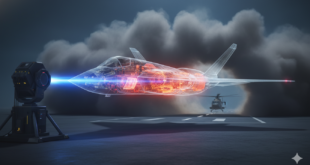
DARPA’s enduring legacy stems not just from its breakthrough technologies—like the Internet, GPS, and stealth aviation—but from a culture that marries autonomy, speed, and tolerance for failure. Around the world, nations are attempting to mirror that model. While some have made impressive gains, few have duplicated DARPA’s unique innovation ecosystem. Their stories are a testament to both ambition and institutional friction.
The DARPA Model: Driving Technological Breakthroughs
Since its establishment in 1958, the Defense Advanced Research Projects Agency (DARPA) has served as the United States’ premier incubator for transformative defense technologies. Its mission is to prevent technological surprise by investing in high-risk, high-reward research that could decisively enhance national security. The agency’s unique model integrates visionary program managers, flexible contracting mechanisms, and short, outcome-driven project timelines, enabling it to move faster than traditional defense acquisition pipelines. This agility allows DARPA to rapidly explore emerging scientific concepts, bridge the gap between basic research and field deployment, and create entirely new technological domains—ranging from stealth aircraft and precision-guided munitions to the internet and GPS.
A hallmark of DARPA’s success is its ability to foster interdisciplinary collaboration across government, academia, and industry. Its structure empowers small, autonomous teams to operate with significant creative freedom while being held to measurable milestones. This model not only accelerates innovation but also ensures that promising prototypes can transition into operational capabilities before adversaries can close the gap. The result is a steady pipeline of breakthrough technologies that both redefine military advantage and spill over into civilian applications.
The Global Influence of DARPA’s Success
The consistent track record of DARPA’s programs has not gone unnoticed on the global stage. Recognizing the strategic advantage the U.S. gains from such an innovation engine, other nations have sought to replicate or adapt the DARPA model to fit their own defense ecosystems. Russia has established advanced research entities like the Foundation for Advanced Studies (FPI) to pursue disruptive technologies in aerospace, robotics, and AI. China has created the National Defense Science and Technology Innovation Institute and other “military-civil fusion” structures to accelerate dual-use innovations in quantum computing, hypersonics, and next-generation communications. In Europe, initiatives like the European Defence Fund have also incorporated DARPA-like rapid prototyping and competitive funding models to bridge innovation gaps.
This global trend underscores a growing recognition: in an era of accelerating technological competition, the nation that can most effectively translate cutting-edge research into deployable capabilities will hold a decisive strategic advantage. DARPA’s model has become the benchmark for such success, driving both allies and rivals to rethink how they fund, structure, and manage defense innovation.
Europe’s Bold Experiments
In the UK, the Advanced Research and Invention Agency (ARIA) emerged in the post-Brexit landscape with a £800 million budget over five years, designed to inject agility and risk-taking into the nation’s R&D ecosystem. Helmed by Ilan Gur, a seasoned innovation leader with DARPA experience, ARIA was built to sidestep the slow pace and rigid frameworks of traditional funding bodies. Its remit spans an eclectic range of high-stakes domains—from neurotechnology to climate science—while giving program managers the authority to pivot, radically redirect, or terminate projects at speed. This flexibility, paired with a willingness to embrace failure as a learning tool, mirrors DARPA’s hallmark approach to high-risk, high-reward innovation.
On the European continent, several countries have attempted to replicate aspects of DARPA’s model. France’s Defense Innovation Agency is primarily geared toward accelerating military technology adoption, often working closely with defense contractors to fast-track prototypes into the armed forces. Germany’s Federal Agency for Disruptive Innovation (SPRIND) focuses more broadly on groundbreaking civil technologies, from quantum computing to green hydrogen production, while Italy’s initiatives are generally embedded within broader national R&D strategies. Meanwhile, the Joint European Disruptive Initiative (JEDI) seeks to unite EU member states under a common disruptive innovation banner, emphasizing moonshot-style challenges.
However, while these agencies share DARPA’s aspirational DNA, they often operate under narrower mandates, heavier political oversight, and with more modest funding. Unlike DARPA’s relatively insulated and mission-driven framework, European equivalents can be more exposed to shifting political priorities and budgetary constraints, which can dilute their ability to pursue long-term, radical innovation. The result is a more cautious interpretation of the model—effective in targeted areas but less likely to produce the kind of transformative, system-level breakthroughs that DARPA is known for.
Russia: Revisiting Military Innovation
Russia’s closest equivalent to DARPA is the Advanced Research Foundation (Fond Perspektivnykh Issledovaniy, FPI), established in 2012 to bridge the gap between the country’s defense needs and its fragmented R&D ecosystem. Modeled in part on DARPA’s rapid, high-risk development cycles, the FPI focuses heavily on defense and dual-use technologies, operating under the Ministry of Defense. While its budget is smaller and its autonomy more limited than DARPA’s, the agency has been positioned as a catalyst for strategic technological independence in the face of Western sanctions and geopolitical isolation.
FPI’s approach blends long-term strategic projects with more targeted prototypes. Unlike DARPA’s broad scientific remit, the foundation often zeroes in on technologies with clear military applications, reflecting Russia’s defense-first priorities. This has resulted in a focus on areas like autonomous weapons, advanced robotics, next-generation combat systems, and hypersonic technology. The agency also works closely with defense industry giants like Rostec to ensure that R&D transitions rapidly into deployable capabilities.
Major FPI programs include the Marker unmanned ground vehicle, autonomous underwater drones, and next-generation exoskeleton systems for soldiers. However, Russia’s sanctions-constrained economy and reduced access to global supply chains have slowed some of FPI’s ambitions, leading to a heavier reliance on domestic manufacturing and incremental innovation. Despite these challenges, FPI remains a central pillar of Russia’s attempt to leapfrog certain Western technologies.
While the FPI has achieved notable breakthroughs, its impact has been tempered by funding constraints, limited transparency, and the broader structural inefficiencies of Russia’s research sector. However, in the current geopolitical climate, the agency’s role in maintaining technological parity with Western adversaries is more critical than ever.
China’s Centralized Innovation Ecosystem
China’s DARPA-like structure is less centralized, reflecting its sprawling state-driven innovation system, but the Central Military Commission Science and Technology Commission (CMC S&T Commission) is widely regarded as the closest counterpart. Formed in 2016, it serves as the military’s high-level R&D command hub, tasked with accelerating disruptive innovation for the People’s Liberation Army (PLA). Complementing the CMC S&T Commission are initiatives within the State Administration for Science, Technology, and Industry for National Defense (SASTIND) and the National Natural Science Foundation of China (NSFC), all working in concert under the “Military-Civil Fusion” doctrine championed by Beijing.
China’s model draws lessons from DARPA’s integration of academia, industry, and government, but amplifies them with state-led industrial policy, massive funding, and strategic espionage to shorten development timelines. Rather than funding many small, risky projects in parallel, China often concentrates resources on large-scale programs aligned with long-term military modernization goals, such as AI-enabled warfare, quantum communications, and hypersonic strike capabilities.
Key programs target quantum communication, hypersonics, AI-enabled surveillance, and directed-energy weapons. Large-scale initiatives like the China Brain Project in neuroscience and AI, and space-based solar power experiments, reflect China’s ambition to seize first-mover advantage in emerging domains.
China’s DARPA-like efforts benefit from massive political backing, a coordinated industrial ecosystem, and fewer bureaucratic hurdles for technology deployment compared to many democracies. However, their focus on state control over innovation can sometimes stifle the type of radical, bottom-up creativity that DARPA thrives on. Nevertheless, the scale and speed of China’s advancements suggest that its model is a formidable competitor in the race for 21st-century defense innovation.
Other National Initiatives: Japan & Australia
Japan is advancing its DARPA-style approach through the planned establishment of the Acquisition, Technology & Logistics Agency – Advanced Technology Office (ATLA-ATO), which will concentrate on high-impact defense technologies such as quantum sensing, hypersonic systems, advanced materials, and AI-enabled command-and-control platforms. The agency aims to break free from Japan’s traditionally risk-averse R&D culture by granting program managers more autonomy and fostering partnerships with private industry and academia. With growing security challenges from North Korea, China, and Russia, Japan’s model emphasizes both technological sovereignty and rapid deployment capability.
Australia, meanwhile, is implementing its own Advanced Strategic Capabilities Accelerator (ASCA), launched in 2023 with a mission to fast-track defense innovation for the Indo-Pacific theater. ASCA’s portfolio will span autonomous systems, directed energy weapons, resilient space capabilities, and cyber warfare tools. Structured to avoid bureaucratic gridlock, ASCA draws heavily from DARPA’s “high-risk, high-reward” philosophy, using rapid prototyping and flexible funding mechanisms to get critical systems into the hands of the Australian Defence Force faster. By decentralizing decision-making and deepening collaboration with the private sector, ASCA aims to enhance Australia’s deterrence posture and maintain a technological edge in a region marked by accelerating military modernization.
A New Global Innovation Race
The proliferation of DARPA-like agencies marks a shift in how nations think about technology leadership. Whether in the U.S., Europe, Russia, China, Japan, or Australia, these organizations are designed to break free from the inertia of traditional R&D and deliver transformative capabilities on accelerated timelines.
However, replication does not guarantee replication of results. DARPA’s success rests not only on its structure but on its culture—empowering visionary leaders, tolerating failure, and maintaining a portfolio that balances risk with potential impact. For countries seeking to emulate it, the challenge will be fostering the same environment of creative urgency while navigating their own political, economic, and cultural constraints.
The UK’s ARIA demonstrates how autonomy, rapid decision-making, and failure tolerance encourage breakthrough innovation in a civilian context. But its budget constraints and United Kingdom’s institutional resistance are hurdles. In contrast, Russia and China emphasize grand strategy and state control, sacrificing operational flexibility. The lesson? Emulating DARPA requires more than replicating structure—it demands replicating mindset. Few international efforts have yet to fully capture the “DARPA magic” of empowered individuals, rapid experimentation, and institutional independence.
Highlighted Major Programs
| Country/Agency | Notable Programs |
|---|---|
| UK / ARIA | Neurotechnology, AI safety, climate tipping-point forecasting |
| Germany (SPRIND) | Rolling disruptive R&D funding calls |
| France / Defense Innovation Agency | Autonomy and defense systems experimentation |
| Russia / FPI | Hypersonics, directed-energy weapons, autonomy |
| China / Military Science Committee | Stealth aircraft, electromagnetic cannon, AI swarming infrastructure |
| China / 863 Program | Supercomputers (e.g. Tianhe), Loongson CPUs, quantum and ASAT tech |
| Japan | Upcoming defense-focused DARPA-like R&D agency |
| Australia | Strategic technology innovation agency for Indo-Pacific defense |