 International Defense Security & Technology Your trusted Source for News, Research and Analysis
Related Articles
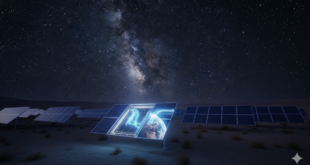


For decades, dominance over the electromagnetic spectrum has defined superiority in defense and security. Microwave radars have enabled long-range detection, while infrared sensors have tracked heat signatures. Yet, between these two lies a little-explored region of the spectrum—the terahertz (THz) band. Occupying the frequencies between 0.3 and 3 THz, this “terahertz gap” is now being filled with rapid innovation. With its unique properties, THz technology is emerging as a disruptive force that could reshape not only the battlefield but also medicine, communications, and industrial inspection.
The terahertz (THz) frequency range, spanning from 300 to 3000 gigahertz, occupies the unique boundary between electronics and optics. This positioning gives it disruptive potential across diverse sectors, from medical imaging, biological research, pharmaceutical monitoring, and semiconductor testing to advanced manufacturing, quality control, communications, and security. In particular, its role in defense and national security is attracting growing attention, as terahertz technologies promise capabilities that conventional radar and sensing systems cannot achieve.
The Fundamental Advantages of THz Waves
Terahertz waves possess several distinctive properties—strong penetrability, high bandwidth, excellent directionality, and inherent safety—that make them suitable for both civilian and military applications.
What makes terahertz radiation remarkable is its combination of penetration, resolution, and safety. It can pass through non-metallic materials such as smoke, clothing, plastics, and drywall, revealing details hidden to conventional systems. Its short wavelengths provide imaging detail far beyond that of microwave radar, yet it avoids the harmful ionizing effects associated with X-rays. In practice, this allows terahertz systems to deliver fine-grained images of objects while remaining safe for human exposure. Combined with the vast bandwidth available at these frequencies, THz technology is creating entirely new possibilities for detection, identification, and communication.
The promise of terahertz technology comes from four core advantages. First, it offers extraordinary resolution in a compact package. Because the wavelengths are much shorter than those used in traditional radar, antennas and apertures can be smaller and lighter while still achieving detailed imagery. This makes THz systems particularly attractive for platforms where size and weight are critical constraints, such as satellites, unmanned systems, or handheld scanners.
Second, terahertz radiation penetrates many non-metallic materials while remaining non-ionizing. Unlike X-rays, which carry risks to human health, THz waves can be safely used around people, enabling non-invasive imaging for both security and medical applications.
Third, the enormous bandwidth available in the terahertz range allows radars to distinguish objects separated by only millimeters. This ability to resolve fine structural details enables not just detection but precise classification of targets.
Atmospheric Opacity & Transparency:
Finally, the way THz waves interact with the atmosphere is both a challenge and an opportunity. Water vapor absorbs these frequencies, limiting long-range terrestrial use. Yet this very absorption makes them ideal for short-range, secure communications that are difficult to intercept. In the vacuum of space or on high-altitude platforms, where atmospheric losses disappear, terahertz sensing and imaging can operate at their full potential.
Terahertz technology
Researchers worldwide are working on multiple approaches to develop effective terahertz imagers. One approach leverages passive imaging techniques, which have been successful in the millimeter-wave regime, by scaling them into the terahertz range. However, passive imagers face significant challenges at these frequencies because the atmosphere itself emits more background radiation, reducing scene contrast. This makes it difficult to achieve high-quality imaging in short integration times.
Active terahertz imaging provides an alternative. In this approach, a target is illuminated by a terahertz source, and the reflected or scattered radiation is detected to form an image. While active imaging can overcome some of the limitations of passive techniques, it introduces its own challenges. Background clutter, reflections, and glint can reduce image fidelity unless there is favorable alignment between the imaging system and the target. Despite these hurdles, advances in terahertz sources, detectors, and signal processing are steadily improving the performance and reliability of terahertz radar, bringing it closer to deployment in real-world defense and security scenarios.
The growing demand for advanced surveillance technologies—whether for airport security screening or battlefield checkpoints—has accelerated the development of terahertz (THz) imagers and sensors. Imaging at terahertz frequencies offers several distinct advantages over traditional microwave or infrared systems. Terahertz wavelengths are short enough to achieve high-resolution imaging with relatively modest apertures, yet long enough to penetrate clothing and concealments. Unlike infrared, terahertz imaging is also less affected by environmental conditions such as dust, fog, and rain, making it highly valuable for both civilian and defense applications.
Recent years have seen rapid progress in terahertz radar technology, fueled by advances in compact sources, sensitive detectors, and supporting devices. High-resolution imaging systems have been demonstrated in laboratories, pushing the boundaries of real-time target classification and battlefield awareness. The United States pioneered the concept of terahertz radar and has conducted proof-of-concept experiments at 0.2, 0.6, and 1.56 THz, validating the feasibility of high-resolution radar in this frequency domain and laying a foundation for future military deployment. With continued breakthroughs, terahertz technologies are poised to redefine both defense strategy and civilian applications in the coming decade.
Key Military and Defense Applications
Within the defense domain, terahertz is often referred to as the “fifth battlespace,” offering revolutionary opportunities in secure communications, chemical and biological threat detection, and ultra-wideband radar for counter-stealth operations. Its ability to resolve fine structural details and provide spectroscopic insights into target materials makes it a transformative tool for next-generation defense systems.
Terahertz Radars
Radar has been one of the most transformative technologies in modern warfare, serving as the backbone of surveillance, targeting, and navigation systems. From its early role in World War II to today’s advanced electronic battlefields, radar has consistently provided militaries with the decisive advantage of situational awareness. Modern innovations are pushing radar beyond traditional detection, enabling stealth-resistant tracking, real-time battlefield mapping, and integration with network-centric warfare systems. As conflicts become increasingly multi-domain—spanning land, air, sea, space, and cyberspace—radar remains indispensable, evolving to meet the demands of faster, more agile, and more contested environments.
Counter-Stealth Technology
Similarly, the technology offers unique advantages in counter-stealth missions. Unlike traditional radar bands, terahertz systems can employ pico- and nanosecond pulses at gigawatt levels across tens of thousands of frequency species, yielding detailed information about a target’s composition. This ability effectively negates many stealth measures—whether based on airframe shaping, coatings, or plasma cloaking—since such methods are typically optimized only for narrow electromagnetic bands.
Stealth aircraft and missiles are designed to avoid detection by radar systems operating in specific frequency bands. They use angled surfaces and radar-absorbent materials to scatter or absorb signals, making them nearly invisible to traditional sensors. Terahertz systems pose a significant challenge to this paradigm. Because THz waves can penetrate certain composite materials and stealth coatings, they can reflect off the metallic structures beneath, exposing signatures that would otherwise remain hidden.
Moreover, stealth technology is optimized for narrow frequency bands. A broadband THz radar, by illuminating targets across a wide spectrum, can render stealth coatings far less effective.
Global interest in this capability is intense, with research institutions demonstrating increasingly powerful terahertz sources. China has claimed significant advances, with researchers from the China Academy of Engineering Physics reporting a THz device capable of generating pulses with a peak power of nearly one megawatt. While translating such lab power into a field-deployable, mobile radar remains a significant engineering challenge, it underscores the global interest in this counter-stealth application. China has already claimed progress in terahertz radar capable of exposing stealth aircraft like the F-35.
Space and Missile Defense
While ground-based applications of terahertz technology are often hindered by strong atmospheric absorption from water vapor and oxygen, these limitations are largely absent in air-based or space-based platforms. This makes terahertz radar particularly promising for detecting and tracking space targets such as ballistic missiles or space debris—capabilities that are vital for modern space defense systems. Traditionally, surveillance and recognition of such targets have relied on space-based infrared detectors and ground-based microwave radars. Infrared systems are effective in detecting missile launches during the boost and ascent phases, but their utility diminishes during the midcourse stage as infrared signatures fade. Ground-based microwave radars, meanwhile, face constraints from line-of-sight limitations, atmospheric attenuation, and decoys released during midcourse flight, which complicate reliable warhead identification.
Terahertz radar provides a compelling solution to these challenges. Its broader bandwidth allows for more detailed target characterization, improving detection probability and recognition ability in midcourse engagement scenarios. One of the most difficult problems in missile defense is discriminating between a real nuclear warhead and lightweight decoys during the midcourse phase of flight. Infrared sensors can be fooled by heat signatures, while microwave radars often lack the resolution to differentiate small objects in space. Terahertz radar offers a new approach by exploiting the micro-Doppler effect.
Every object in motion has tiny vibrations, rotations, or oscillations that alter the frequency of radar signals reflected from it. At terahertz frequencies, these micro-Doppler shifts are amplified many times over, making them easier to detect. A real warhead, spinning in a controlled way, generates a distinct signature compared to a tumbling decoy. By combining traditional wide-area radar for initial tracking with terahertz sensors for fine discrimination, missile defense systems could achieve unprecedented accuracy in identifying lethal threats.
However, due to its narrow beam width, terahertz radar is less suited for wide-area searches. As a result, it is often envisioned as a complementary system working in coordination with traditional microwave radars, which can perform the initial wide-area search before terahertz systems refine identification.
Imaging Through Obscurants and Walls
Modern battlefields are often obscured by dust, smoke, and debris, conditions in which optical and infrared systems struggle. Terahertz waves can cut through these visual barriers, offering a decisive advantage in situational awareness. In urban combat, THz imaging systems under development are capable of producing three-dimensional images of rooms and structures behind walls. This could allow soldiers to detect threats or locate hostages without breaching doors or exposing themselves to ambush.
Terahertz waves, offer several unique advantages: high frequency and short wavelength for fine spatial resolution, strong signal-to-noise characteristics, and relatively low propagation loss in dusty or smoke-filled environments. Importantly, THz waves can penetrate walls and other common building materials, making them especially valuable in urban and counterterrorism operations where hidden threats must be detecte
China has been actively advancing terahertz (THz) radar technology with the development of an all-solid-state imaging radar system capable of scanning through walls and visualizing objects inside buildings. This could allow soldiers to identify hidden threats, hostages, or weapons in urban combat and counter-terrorism scenarios without breaching a door.
Systems like the one prototyped by China’s CETC, which uses Inverse Synthetic Aperture Radar (ISAR) at THz frequencies, aim to generate 3D images of objects and structures behind walls. The system has successfully demonstrated one-dimensional range profiling and Inverse Synthetic Aperture Radar (ISAR) imaging at terahertz frequencies. By combining terahertz imaging with ISAR techniques, these systems can produce detailed two- and three-dimensional images of concealed objects, including weapons, vehicles, or personnel, even in visually obscured conditions. While ISAR has long been used in maritime patrol aircraft to identify airborne or seaborne targets with high fidelity, its integration with terahertz radar expands its potential into urban warfare, security screening, and disaster response scenarios.
In aviation, terahertz imaging addresses the dangers of “brownouts” during helicopter landings in desert environments, where rotor wash generates dense dust clouds. Systems already demonstrated in trials have shown that pilots can navigate and land safely with the aid of THz imagery, reducing accidents and improving troop safety in combat zones.
Security and Quality Control
Beyond the battlefield, terahertz imaging has immediate applications in security screening and industrial inspection. At airports, THz scanners could provide non-invasive detection of concealed objects under clothing, offering greater security while reducing the need for intrusive pat-downs.
Helicopter landings in desert environments often cause brownouts—a thick cloud of dust that completely blinds pilots. Active THz imagers, like L3Harris’s Active Covert Terahertz Imager (ACTI), operating at 330 GHz, have demonstrated the ability to provide actionable imagery through dense dust, enabling safe landing and navigation.
In manufacturing, these systems are already used to test advanced materials. Aircraft components, pharmaceuticals, and electronic devices can all be inspected for hidden defects without damage, ensuring safety and quality in industries where failure is not an option.
Dual-Use Commercial Applications
Although radar has long been driven by defense needs, the technology has steadily expanded into the civilian domain, offering critical benefits across industries. In healthcare, radar-based imaging and sensing systems are being developed as non-invasive tools for patient monitoring. For instance, radar can track heart rate, breathing patterns, and movement without requiring direct contact, making it useful in neonatal care, elderly patient monitoring, and even early disease detection where continuous, unobtrusive observation is vital.
The growing demand for advanced surveillance technologies—whether for airport security screening or battlefield checkpoints—has accelerated the development of terahertz (THz) imagers and sensors. Imaging at terahertz frequencies offers several distinct advantages over traditional microwave or infrared systems. Terahertz wavelengths are short enough to achieve high-resolution imaging with relatively modest apertures, yet long enough to penetrate clothing and concealments. Unlike infrared, terahertz imaging is also less affected by environmental conditions such as dust, fog, and rain, making it highly valuable for both civilian and defense applications.
Industrial inspection is another area where radar is proving invaluable. High-resolution radar imaging can be used to monitor the structural health of bridges, tunnels, pipelines, and aircraft components. It enables engineers to detect corrosion, cracks, or internal stress without damaging the structure, ensuring both safety and cost efficiency. Non-destructive testing with radar is also becoming more important in industries such as construction, energy, and transportation, where reliability is paramount.
The communications sector is beginning to leverage radar principles as well. Millimeter-wave and radar-based technologies are integral to high-speed wireless communications and autonomous systems. Automotive radar, for example, is already a key enabler of advanced driver-assistance systems (ADAS) and autonomous vehicles, providing real-time situational awareness in challenging weather or low-visibility conditions. Future 6G networks are also expected to integrate radar-like sensing features, blurring the lines between communication and detection technologies.
Looking further ahead, radar is expected to play a central role in managing new domains of activity. Space traffic monitoring will rely heavily on radar systems to track the growing number of satellites and debris in Earth’s orbit, reducing the risk of collisions as commercial and governmental space operations expand. Closer to the ground, drone traffic management in urban areas may use radar to ensure safe navigation and collision avoidance as unmanned aerial vehicles become part of daily logistics and transport networks.
These dual-use applications show how advancements in radar are spilling over into civilian life, enabling breakthroughs in healthcare, infrastructure monitoring, communications, and even the management of space and drone traffic, while still serving as a cornerstone of national defense.
The Challenges Ahead
For all its promise, terahertz technology faces significant hurdles before it achieves widespread adoption. Chief among them is the challenge of power generation. Producing high-power, compact, and efficient THz sources remains difficult, and current prototypes are often bulky or limited in performance. Atmospheric absorption presents another limitation, as humidity and weather reduce the effectiveness of THz systems for long-range terrestrial applications.
System integration also poses challenges. Many THz prototypes still reside on laboratory benches, far from the rugged, size- and weight-optimized systems needed for deployment on aircraft, satellites, or mobile units. Finally, cost and standardization will play a decisive role. Without affordable hardware and harmonized protocols, terahertz systems will remain confined to specialized niches rather than achieving widespread use.
Conclusion
Terahertz radar and imaging technologies are moving rapidly from concept to reality. Their ability to combine the detail of optics with the penetration of radar offers unprecedented opportunities in stealth detection, missile defense, and battlefield awareness. At the same time, their safe and high-resolution properties are opening new horizons in medicine, industry, and communications.
Although engineering challenges remain, the global race to close the terahertz gap is well underway. With investments from the United States, China, and Europe driving forward both military and civilian applications, THz technology is poised to change the way we see, sense, and connect. What was once a gap in the spectrum is fast becoming a bridge to the next era of sensing and communication.
References and Further Reading:
-
Lu, Z., et al. (2017). “Application of terahertz technology in cooperative detection of space targets”, IEEE.
-
South China Morning Post: “China powers up new radar tech to unmask stealth fighters”
-
U.S. Army Report on the Active Covert Terahertz Imager (ACTI) by Mustang Technology (now L3Harris).
-
NATO SET-216 Lecture Series: “Terahertz Technology for Military Applications”.