Home / Critical & Emerging Technologies (page 247)

Critical & Emerging Technologies

DARPA’s SD2 developing tools to design complex systems like synthetic biology, neuro-computation and polymer chemistry
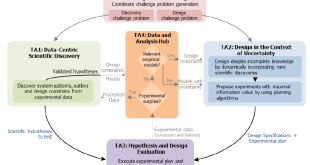
Engineers regularly use high-fidelity simulations to create robust designs in complex domains such as aeronautics, automobiles, and integrated circuits. In contrast, robust design remains elusive in domains such as synthetic biology, neuro-computation, and polymer chemistry due to the lack of high-fidelity models. DARPA’s Synergistic Discovery and Design (SD2) program aims …

Read More »

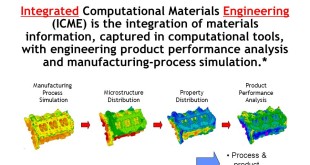
Researchers employing Simulation and Integrated Computational Materials Engineering (ICME) to accelerate the development of new materials

Finding new materials has traditionally been guided by intuition and trial and error,” said Turab Lookman, a physicist and materials scientist in the Physics of Condensed Matter and Complex Systems group at Los Alamos National Laboratory. “But with increasing chemical complexity, the combination possibilities become too large for trial-and-error approaches …

Read More »

DARPA developing milimmter wave wireless communications to connect dismounted warfighters using UAVs and provide 100 Gb/s RF Backbone (100G)using High-altitude, long-endurance platforms.

Modern expeditionary military missions generate and exchange massive amounts of data that are used to produce situational awareness and guide decision-making. Much of the data must travel long distances along backbone communications networks composed of high-capacity links that connect command centers.   Fiber optic cables provide the core backbone for …

Read More »

Airborne or Spaceborne Synthetic aperture ladar (SAL) for centimeter-class resolution battlefield awareness

Conventional optical imagers are limited in spatial resolution by the diffraction limit of the telescope aperture, as well as by the practical difficulties in increasing the telescope aperture. Synthetic aperture (SA) techniques can increase resolution beyond the diffraction limit of the receiving aperture.   Just as synthetic aperture radar(SAR) working …

Read More »

DARPA CHESS Program plans for human intellect teamed with autonomous technology for cyber defense

The Department of Defense (DoD) maintains information systems that depend on Commercial off-the-shelf (COTS) software, Government off-the-shelf (GOTS) software, and Free and opensource (FOSS) software. Securing this diverse technology base requires highly skilled hackers who reason about the functionality of software and identify novel vulnerabilities. This process requires hundreds or thousands of hours of …

Read More »

Soldiers require Secure, low-intercept and low-detection communications and networking technologies for future battlefield

The vision for the future soldier is to be combat effective and also highly mobile, adaptive, networked, sustainable with total battle space situation awareness and information assurance. Therefore, he is equipped with night- vision goggles, radios, smartphones, GPS, infrared sights, a laptop as well as batteries to power them. All …

Read More »

Auxetics, new materials for lightweight body and vehicle armor that strengthen when a bullet strikes

What do a flea and an eagle have in common? They can store energy in their feet without having to continuously contract their muscles to then jump high or hold on to prey. Now scientists Now scientists at Queen Mary University of London and University of Cambridge have created materials that …

Read More »

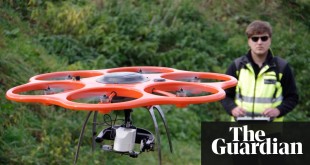
German scientists are using drones equipped with sensors to locate metals needed for wind turbines and solar panels

The sustainable growth of renewable energies depends on the availability of key materials, for example Lithium is the key limiting resource for most batteries – while rare earth metals, in particular “lanthanides” such as neodymium, are required for the magnets in wind turbine generators.  Copper is the conductor of choice …

Read More »

‘Parallel Reality’: New screen technology that uses ‘magic pixel’ to display personalised content to multiple people

Synaps Labs displayed a billboard in Moscow changed the ad on its display based on the brand of car passing by. The billboard was created by, which used high-speed cameras placed 180 meters in front of the billboard to take pictures of cars. Machine-learning software determined each car’s make and …

Read More »

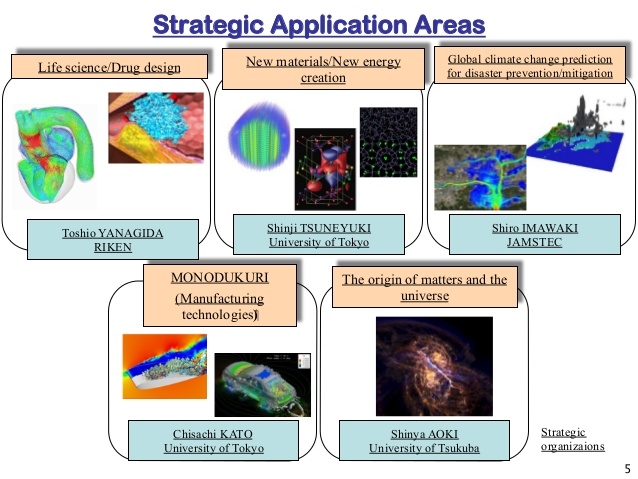
US Regains TOP500 Crown with Summit Supercomputer, China gradually increasing its lead over other countries in Supercomputer race

A supercomputer is a computer with a high level of computing performance compared to a general-purpose computer. Performance of a supercomputer is measured in floating-point operations per second (FLOPS) instead of million instructions per second (MIPS). There are supercomputers which can perform up to nearly a hundred quadrillions of FLOPS, …

Read More »
wpChatIcon
wpChatIcon