Category Analysis, Reviews & Explainers

ANGSTRM Project: Pioneering Next-Generation Rad-Hard Memory for Strategic Space Applications

Introduction The ANGSTRM project is an ambitious initiative by U.S. Space Force researchers aimed at revolutionizing memory technology for military space and strategic systems. By combining advanced radiation hardening techniques with state-of-the-art CMOS and memory technologies, the project seeks to…
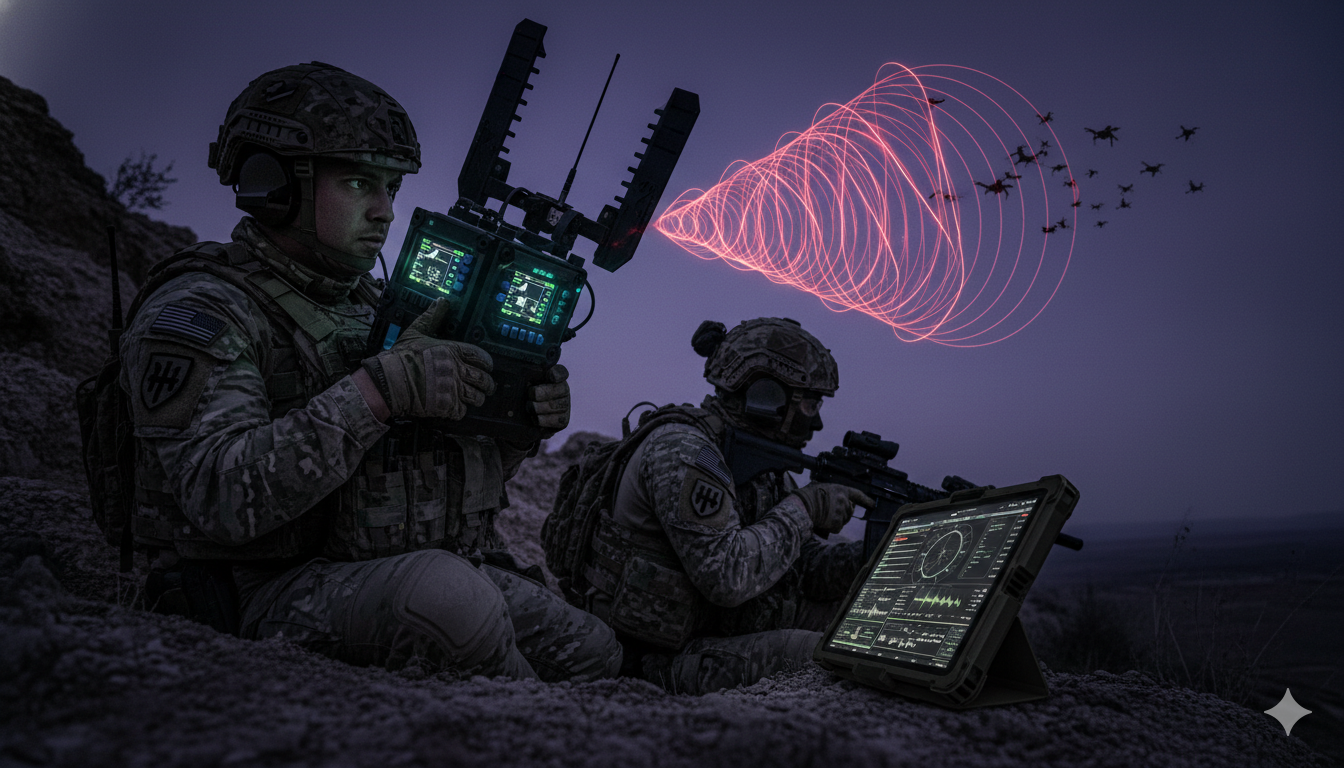

Militaries Fielding Portable Manpack Electronic Warfare Systems: Intelligence and Offensive Capabilities on the Go

In modern warfare, dominance isn’t just about firepower—it’s about controlling the electromagnetic spectrum. Militaries worldwide are increasingly fielding portable manpack electronic warfare (EW) systems, enabling soldiers to detect, deceive, and disrupt enemy communications, drones, and radar systems while on the…

China’s AG600 “Kunlong” Enters Mass Production, Accelerating PLA Amphibious Capabilities

Strategic Milestone Achieved China has reached a significant milestone in military aviation with the mass production of the AG600 “Kunlong” amphibious aircraft. Developed by the Aviation Industry Corporation of China (AVIC), the AG600 received its production certification from the Civil…

Japan’s thrust on indigenous Defense capability and defense cooperation : Rising to Regional Security Challenges

As geopolitical tensions continue to escalate in the Indo-Pacific, Japan is taking decisive steps to bolster its national defense and assert its strategic presence. The year 2025 marks a transformative period for Japan’s Self-Defense Forces (SDF), characterized by increased defense…

Beyond Hydrocarbons: The Ammonia-Hydrogen Revolution in Zero-Carbon Power and Propulsion

Hydrogen & Ammonia: Dual Fuels Leading the Clean Energy Revolution Hydrogen and ammonia are emerging as powerful partners in decarbonizing aviation, shipping, and heavy industry—reshaping the future of global energy. The Carbon Conundrum For over a century, hydrocarbon fuels (CₓHᵧ)…

Multi-Domain Advancements in Sensor Architectures and Electronic Warfare: The Future of Air Force Battle Management

Modern warfare is evolving rapidly, with conflicts extending beyond traditional battlefields into the cyber, space, and electromagnetic spectrum (EMS) domains. To maintain superiority, the U.S. Air Force is accelerating efforts to enhance its Advanced Battle Management System (ABMS)—a core component…

Understanding the Cyber Kill Chain: A Strategic Framework to Combat Cyber Threats

Cyber warfare refers to the strategic use of technology to attack nations, governments, or individuals, causing disruption and damage comparable to traditional warfare. Over the years, it has evolved into a complex battleground where both state and non-state actors deploy…

Advanced Microfluidics for Synthetic Biology and Biomedical Applications

Microfluidics Redefines Healthcare and Defense: A New Era of Smart Biomedical Systems From lab-on-chip diagnostics to battlefield biosensors, microfluidics is revolutionizing synthetic biology, medicine, and national security. Introduction Microfluidics has emerged as a transformative technology, enabling precise manipulation of fluids…

China’s Ambitious Cybersecurity Strategy: Building Capabilities to Dominate the New Cyberspace Battlefield

As the digital age progresses, cyberspace has emerged as the fifth domain of warfare, alongside land, sea, air, and space. Governments worldwide are investing heavily in cyber capabilities, but few nations have pursued this objective with the fervor and strategic…

Unveiling the Power of Computational Biology Software: Transforming Modern Science

Unveiling the Power of Computational Biology Software Explore how cutting-edge software is transforming biology into a digital science—driving breakthroughs in medicine, genetics, and global health.   Biology has traditionally relied on experimental methods to unravel the mysteries of life, from…