
Mechanical systems remain the foundation of modern technology, transforming energy into motion, force, precision, and control across defense, aerospace, industrial, and transportation sectors. Advances in propulsion, robotics, autonomous systems, actuators, manufacturing technologies, and physical engineering are enabling more capable, efficient, and resilient platforms. As artificial intelligence, advanced materials, and digital technologies converge with traditional engineering disciplines, mechanical systems are evolving into increasingly autonomous, adaptive, and high-performance solutions for complex operational environments.
IDST Intelligence Briefings
Robotics, propulsion systems, actuators, power transmission, and autonomous mechanical platforms.
Why This Magazine Exists
While software and digital technologies often dominate attention, physical engineering ultimately determines what systems can move, endure, and accomplish in the real world. This sub-magazine examines the technologies, designs, and engineering innovations shaping next-generation mechanical systems, robotics, propulsion, and industrial platforms, assessing both emerging capabilities and the practical challenges of deployment at scale.
What We Track
- Robotic and autonomous mechanical systems
- Propulsion and power transmission
- Reliability, maintenance, and sustainment
- Human-machine interfaces
- Engineering trade-offs and constraints
Latest Analysis & Intelligence
-

Visual Navigation to Autonomous Air Refueling: Revolutionizing Aerial Refueling for Contested Airspace
Introduction: Autonomous Refueling Becomes a Strategic Necessity Air-to-air refueling has long been one of the defining capabilities of modern air power, enabling strategic bombers, fighter aircraft, intelligence platforms, airborne early warning aircraft, and long-range unmanned systems to operate across global distances without dependence on forward operating bases. For decades, this capability has provided the United…
-
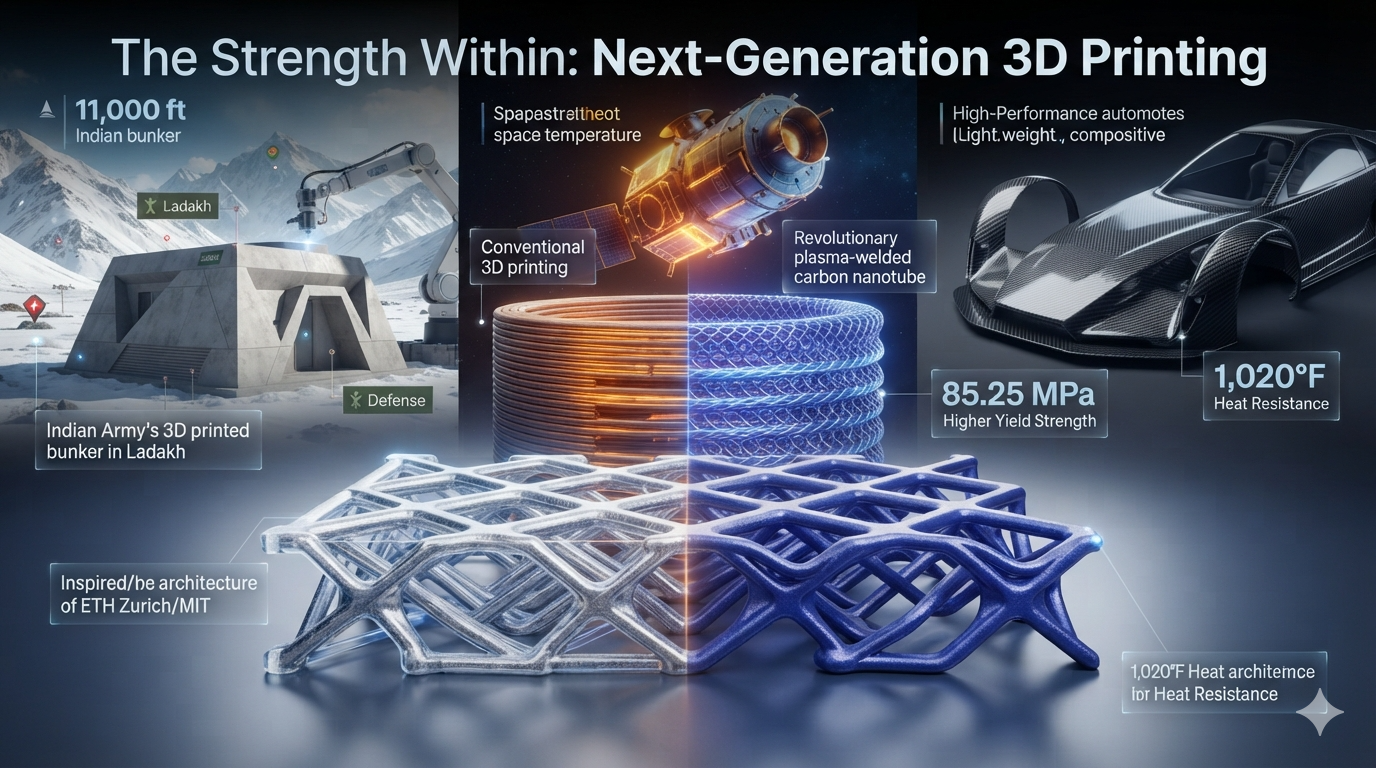
Advanced Materials Revolution in Additive Manufacturing: Engineering High-Performance 3D Printed Components for Defense, Aerospace and Industry
The Materials Race Reshaping Advanced Manufacturing The global additive manufacturing revolution has entered a decisive new phase. While the first generation of 3D printing transformed product development through rapid prototyping and design flexibility, the next generation is being driven by an even more important factor—the emergence of advanced printable materials capable of delivering mechanical, thermal,…
-
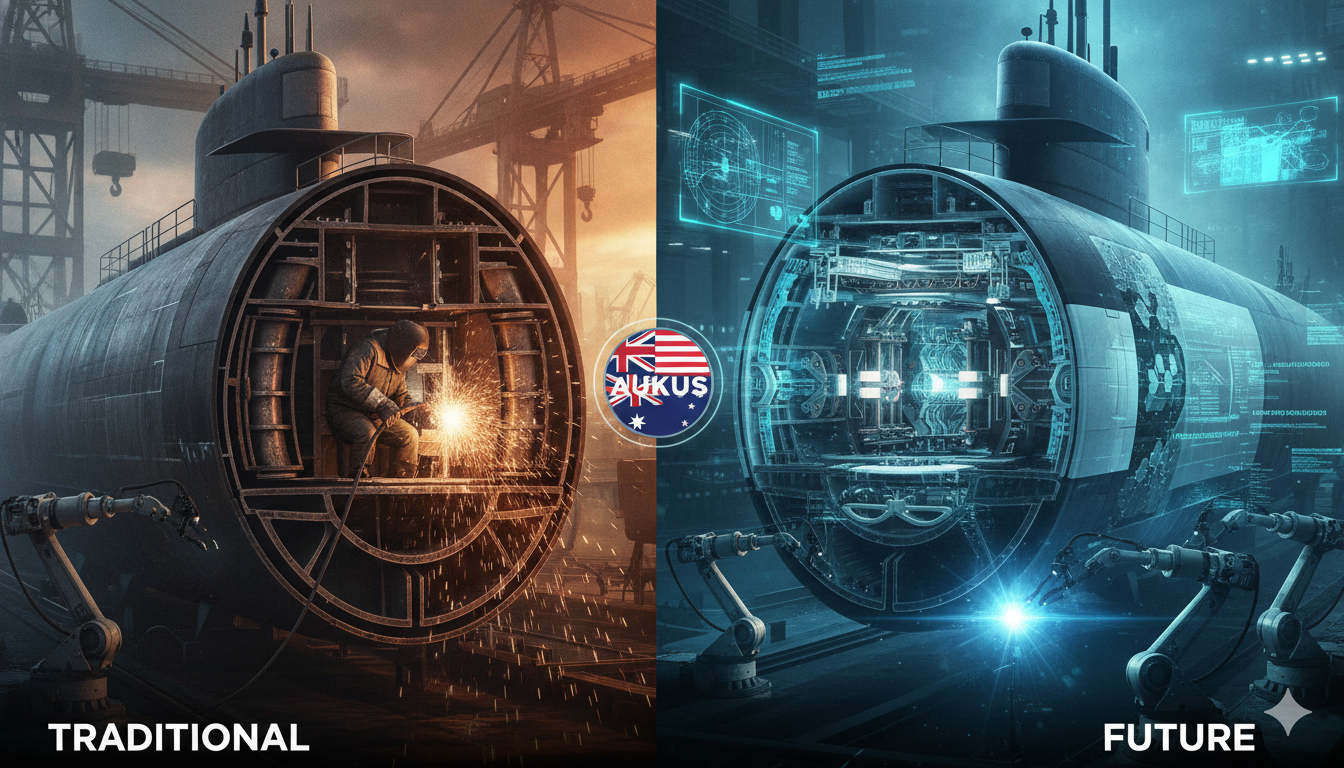
Advanced Materials and Technologies Transforming Submarine Hulls for Enhanced Warfighting Capabilities
Introduction: Materials Innovation Becomes a Strategic Undersea Competition The global undersea battlespace is entering one of its most significant periods of transformation since the Cold War. Intensifying geopolitical competition across the Indo-Pacific, Arctic, North Atlantic, and other contested maritime regions has elevated submarines from traditional naval assets to strategic instruments for deterrence, intelligence collection, long-range…
-
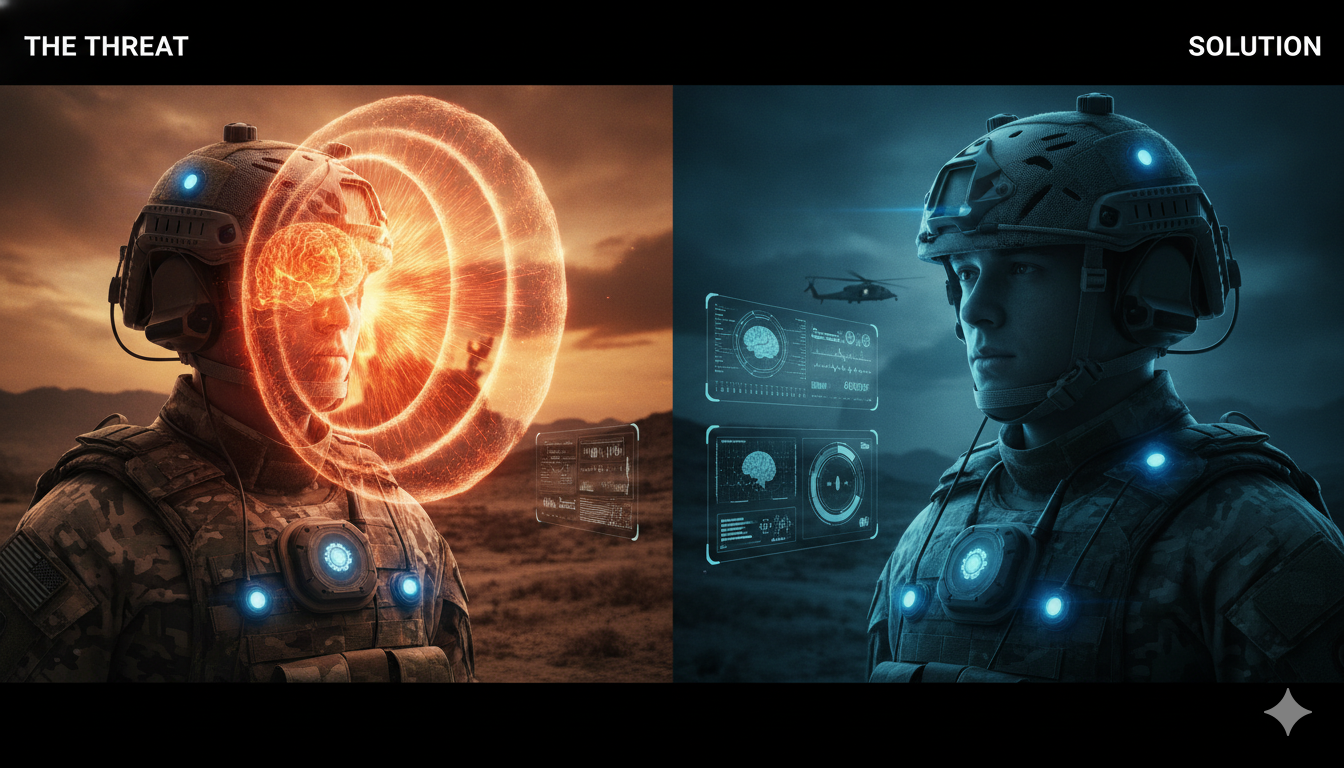
Advancements in Blast Pressure Sensors and Protection Against Traumatic Brain Injury
The Invisible Battlefield: Blast Overpressure and the New Challenge of Modern Warfare Modern warfare is exposing soldiers to an unprecedented neurological threat that often leaves no visible wounds. While advances in body armor, helmets, battlefield medicine, and rapid evacuation have dramatically improved survival rates, they have also revealed a growing epidemic of blast-induced traumatic brain…
-

Quantum Biology: How Nature’s Quantum Mechanisms Are Shaping the Future of Medicine, Computing, Sensing, and Defense
Introduction: From Scientific Curiosity to Strategic Technology For decades, quantum mechanics and biology were considered fundamentally separate scientific domains. Quantum phenomena such as superposition, coherence, tunneling, and entanglement were thought to exist only in highly controlled environments at extremely low temperatures, while biological systems were viewed as warm, noisy, and incompatible with delicate quantum effects.…
-

DARPA CRYSTAL: Building the Foundation for Next-Generation Quantum, Photonic, and RF Systems
Introduction: Why Advanced Materials Integration Matters Now The future of military and commercial technology increasingly depends not on individual breakthroughs in semiconductors, photonics, quantum science, or advanced sensing, but on the ability to integrate diverse materials into a single high-performance system. As artificial intelligence, quantum technologies, electronic warfare, space systems, and next-generation communications evolve, the…
-

Entry, Descent, and Landing (EDL) Technologies: Enabling the Next Era of Mars Exploration and Planetary Operations
Introduction: Why EDL Matters Now Humanity is entering a new era of planetary exploration characterized by renewed competition among major space powers, expanding commercial activity beyond Earth orbit, and growing ambitions for sustained human presence on the Moon and Mars. Governments, private companies, and defense organizations increasingly view space as a strategic domain whose future…
Related Domains & Cross-Cutting Themes
Autonomous systems, logistics, human systems, manufacturing, and battlefield sustainment.
Ethics, governance, and technology control
Industrial scaling and supply-chain constraints
Human–machine teaming and trust
Interoperability across platforms and institutions
Export controls and technological rivalry
Explore the Critical & Emerging Technologies Magazine →
Explore the Industry, Markets & Supply Chains Magazine →
Explore the Space Technology, Defense & Exploration Magazine →