
Nanotechnology enables the manipulation and engineering of matter at the atomic and molecular scale, where materials can exhibit entirely new physical, chemical, electrical, and biological properties. These capabilities are driving breakthroughs across defense, aerospace, electronics, energy, healthcare, and manufacturing, enabling stronger materials, advanced sensors, next-generation electronics, targeted medical therapies, and novel protective systems. As the ability to engineer matter with atomic precision advances, nanotechnology is emerging as a foundational technology with the potential to reshape multiple industries and strategic capabilities.
IDST Intelligence Briefings
Nano-materials, nano-sensors, coatings, and emerging nano-enabled systems.
Why This Magazine Exists
Nanotechnology promises transformative capabilities, but translating laboratory breakthroughs into scalable, reliable, and economically viable systems remains a significant challenge. This sub-magazine examines emerging nanomaterials, nanosystems, and engineered matter technologies, assessing their technical progress, real-world applications, industrial readiness, and strategic implications across defense, security, healthcare, energy, and advanced manufacturing.
What We Track
- Nano-materials and coatings
- Nano-sensing and detection
- Energy and storage applications
- Manufacturing scalability challenges
- Dual-use and regulatory implications
Latest Analysis & Intelligence
-

Beyond CMOS: How Spintronics Is Powering the Next Revolution in AI, Quantum Computing, and Defense Electronics
Strategic Introduction: Why Spintronics Has Become a Global Technology Race For more than half a century, the digital age has been built on a simple principle: moving electrical charge through billions of silicon transistors. This approach transformed computing, communications, aerospace, and modern defense systems, enabling everything from smartphones and cloud computing to precision-guided weapons and…
-
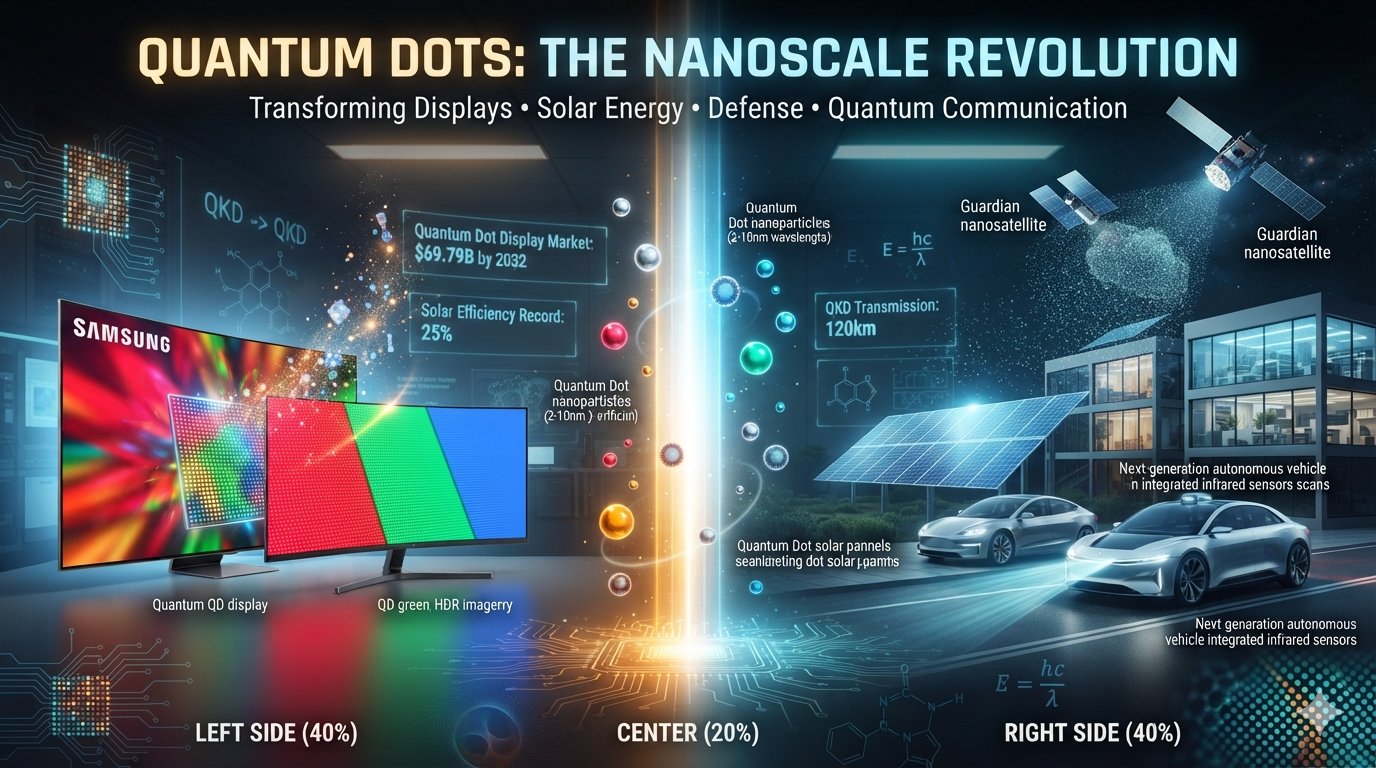
Quantum Dots: The Nanoscale Revolution Reshaping Displays, Energy, Quantum Communications and Defense Technologies
Strategic Context: Why Quantum Dots Have Become a Critical Technology The global competition for technological leadership is increasingly being fought not only through artificial intelligence, semiconductors, and quantum computing, but also through advanced materials capable of enabling entirely new classes of electronic and photonic systems. Among these, quantum dots have emerged as one of the…
-

The Flat Lens Revolution: How Meta-Optics Are Reshaping Imaging, Sensing, and Photonics in 2026
Introduction: Why Meta-Optics Matter Now For centuries, optical systems have relied on curved glass lenses to manipulate light. From microscopes and cameras to telescopes and military sensors, advances in optics were largely achieved by adding more lens elements, improving glass quality, and refining manufacturing precision. However, as industries demand increasingly compact, lightweight, and intelligent devices,…
-

Carbon Nanotubes: Powering the Carbon Revolution for the Post-Silicon Era (2026 Update)
Introduction: From Laboratory Curiosity to Strategic Technology Platform For more than three decades, carbon nanotubes (CNTs) have occupied a unique place in advanced materials science—celebrated as one of the strongest, lightest, and most electrically conductive materials ever discovered, yet repeatedly constrained by manufacturing complexity, purity challenges, and commercialization bottlenecks. In 2024–2026, that long transition from…
-
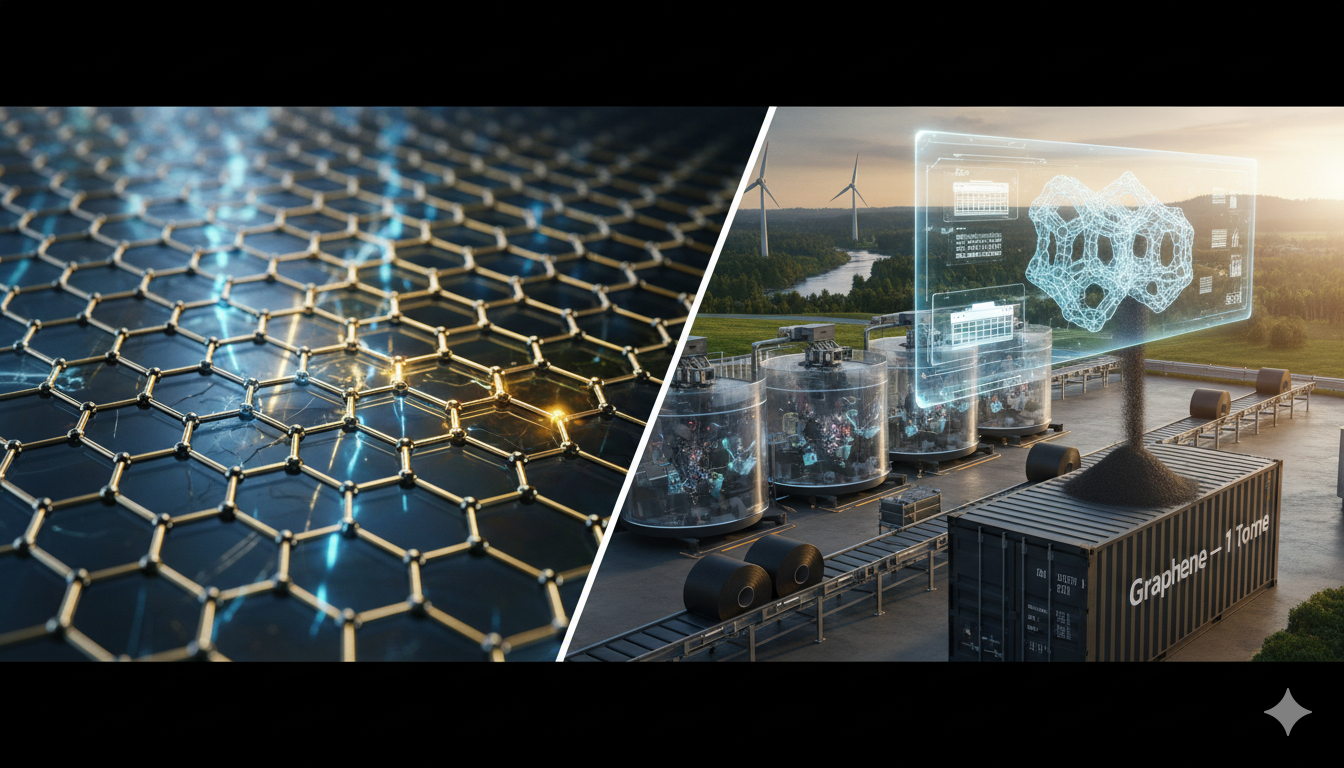
Graphene’s Industrial Breakout: How Scalable Manufacturing Is Transforming the Wonder Material
Introduction: From Scientific Wonder to Strategic Industrial Material For nearly two decades, graphene has occupied a unique place in global technology discourse: celebrated as a revolutionary “wonder material,” yet persistently constrained by the realities of manufacturing economics. Since its isolation in 2004 by researchers at University of Manchester, graphene has repeatedly demonstrated extraordinary performance in…
-

The Race for the Best Qubit Technology: Paving the Way for Quantum Computers and Sensors: 2026 Update
The State of Quantum Computing in 2026: Crossing the Threshold In the quest for quantum supremacy, the race to develop the best quantum bit (qubit) technology is heating up. Quantum computers, which leverage the principles of quantum mechanics, promise to solve problems that are currently intractable for classical computers. However, achieving practical quantum computing and…
-

How 2D Materials Are Rewriting the Rules of Quantum Technology (2026 Update)
Two decades after Andre Geim and Konstantin Novoselov isolated graphene, the field of two-dimensional (2D) materials has transitioned from laboratory curiosity to a foundational pillar of next-generation quantum technologies. What began as a single atomic layer of carbon has expanded into a vast materials ecosystem—including transition metal dichalcogenides (TMDs), MXenes, tellurene, and engineered moiré heterostructures—each…
Related Domains & Cross-Cutting Themes
Materials science, electronics, biotechnology, and advanced manufacturing.
Ethics, governance, and technology control
Industrial scaling and supply-chain constraints
Human–machine teaming and trust
Interoperability across platforms and institutions
Export controls and technological rivalry
Explore the Critical & Emerging Technologies Magazine →
Explore the Industry, Markets & Supply Chains Magazine →
Explore the Space Technology, Defense & Exploration Magazine →