
Space Technology, Defense & Exploration examines how space has evolved from a support domain into a contested, operational, and strategic environment. This magazine analyzes satellites, launch systems, space surveillance, missile defense, advanced aerospace platforms, and emerging domain-control capabilities that shape modern deterrence and power projection. The focus is on resilience, access, and strategic leverage in space—how nations protect, contest, and exploit orbital and near-space environments to secure long-term technological and geopolitical advantage.
IDST Intelligence Briefings
The intelligence briefings below provide visual, systems-level context to complement long-form written analysis. These videos focus on how space technologies function in practice, how they integrate with military and strategic architectures, and why specific capabilities matter for deterrence, surveillance, and power projection. Rather than news-driven coverage, the emphasis is on enduring concepts, architectures, and capability trajectories shaping the future of space security.
Why This Magazine Exists
Space has transitioned from a benign support domain into a contested strategic environment where surveillance, communication, navigation, deterrence, and power projection increasingly depend on orbital and near-space systems. As military, commercial, and civil actors expand their presence beyond Earth, control, resilience, and denial in space have become central to national security and geopolitical competition. This magazine exists to provide intelligence-grade analysis of how space technologies, policies, and systems are reshaping modern conflict, deterrence stability, and long-term strategic balance.
What We Track
This magazine tracks developments across the full space and advanced-domain security ecosystem, including:
- Military and dual-use satellites (ISR, communications, navigation, early warning)
- Space situational awareness, tracking, and orbital resilience
- Counterspace capabilities and space-control strategies
- Missile defense, hypersonic sensing, and space-based sensors
- Launch systems, reusable platforms, and access-to-space economics
- Space policy, norms, militarization, and strategic competition
- Integration of space assets with air, cyber, and terrestrial forces
Latest Analysis & Intelligence
-
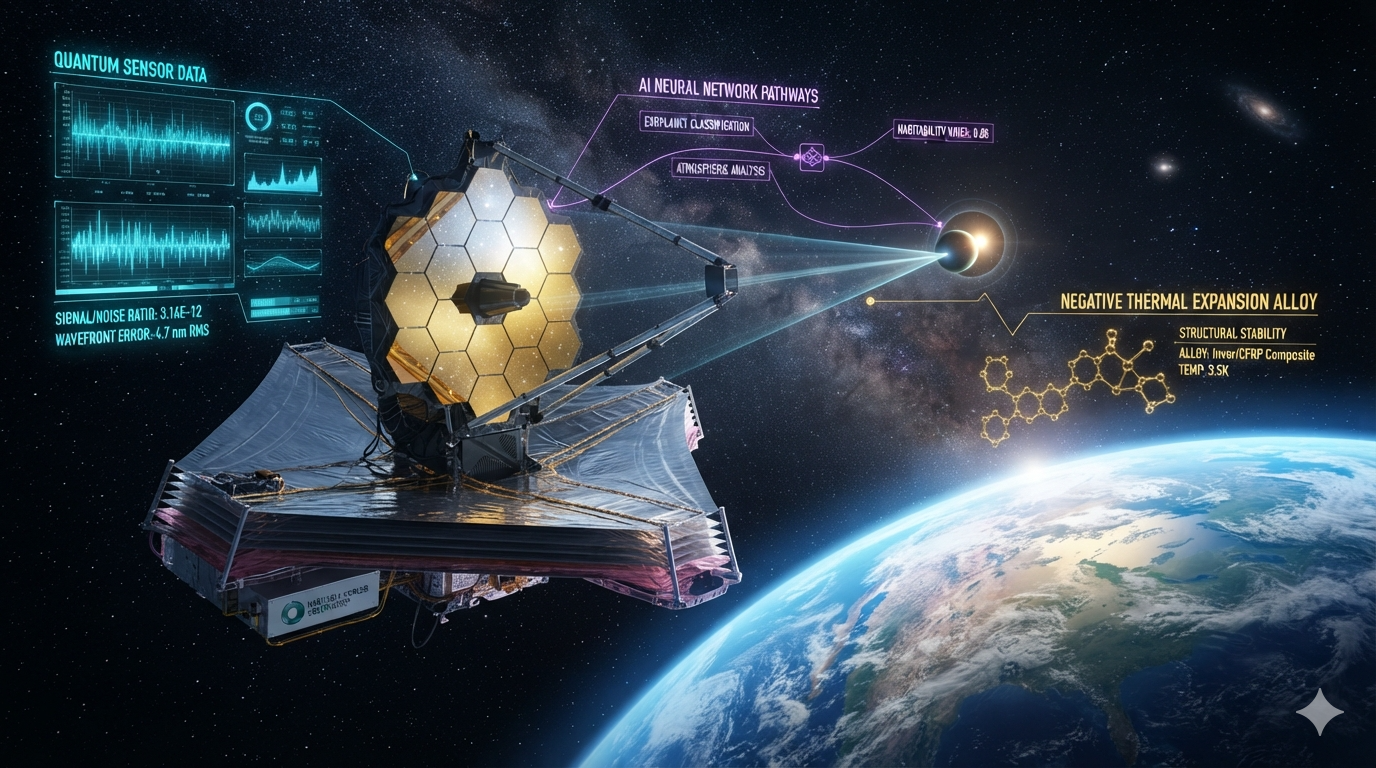
Eyes on the Cosmos: How AI, Quantum Technologies, and Advanced Materials Are Revolutionizing Astrophysics and Space Observation
Introduction: The New Era of Intelligent Astrophysics Astrophysics is entering one of the most transformative periods since the launch of the Hubble Space Telescope. The next generation of observatories is expected to answer some of humanity’s oldest questions: Are Earth-like planets common throughout the galaxy? Does life exist beyond our solar system? What are the…
-

Beyond GPS: How AI, Quantum Technologies, and Autonomous Robotics Are Revolutionizing Deep Space Navigation
Introduction: Navigation as the Foundation of the New Space Age As humanity prepares to establish a sustained presence beyond Earth, navigation has become one of the most strategically important enabling technologies of the modern space era. NASA’s Artemis campaign is laying the foundation for permanent lunar exploration, China is expanding its International Lunar Research Station…
-
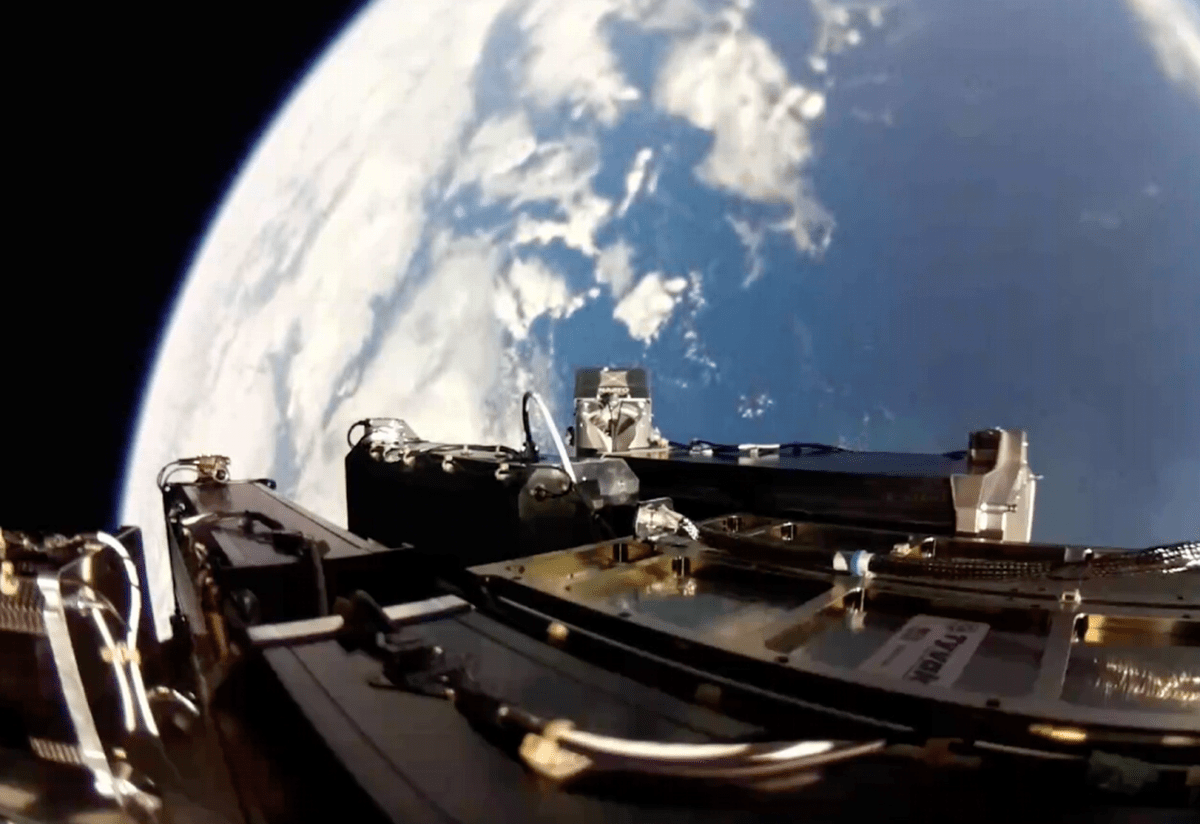
The Global Race for Space-Based Quantum Sensors: Revolutionizing Earth Intelligence, Space Exploration, and Strategic Security
Introduction: Quantum Sensors Become the Next Strategic Space Race The global competition for technological leadership in space is entering a new phase. After decades dominated by launch vehicles, satellite constellations, and communications infrastructure, attention is rapidly shifting toward space-based quantum sensing—a technology capable of measuring gravity, magnetic fields, acceleration, and time with accuracies previously thought…
-
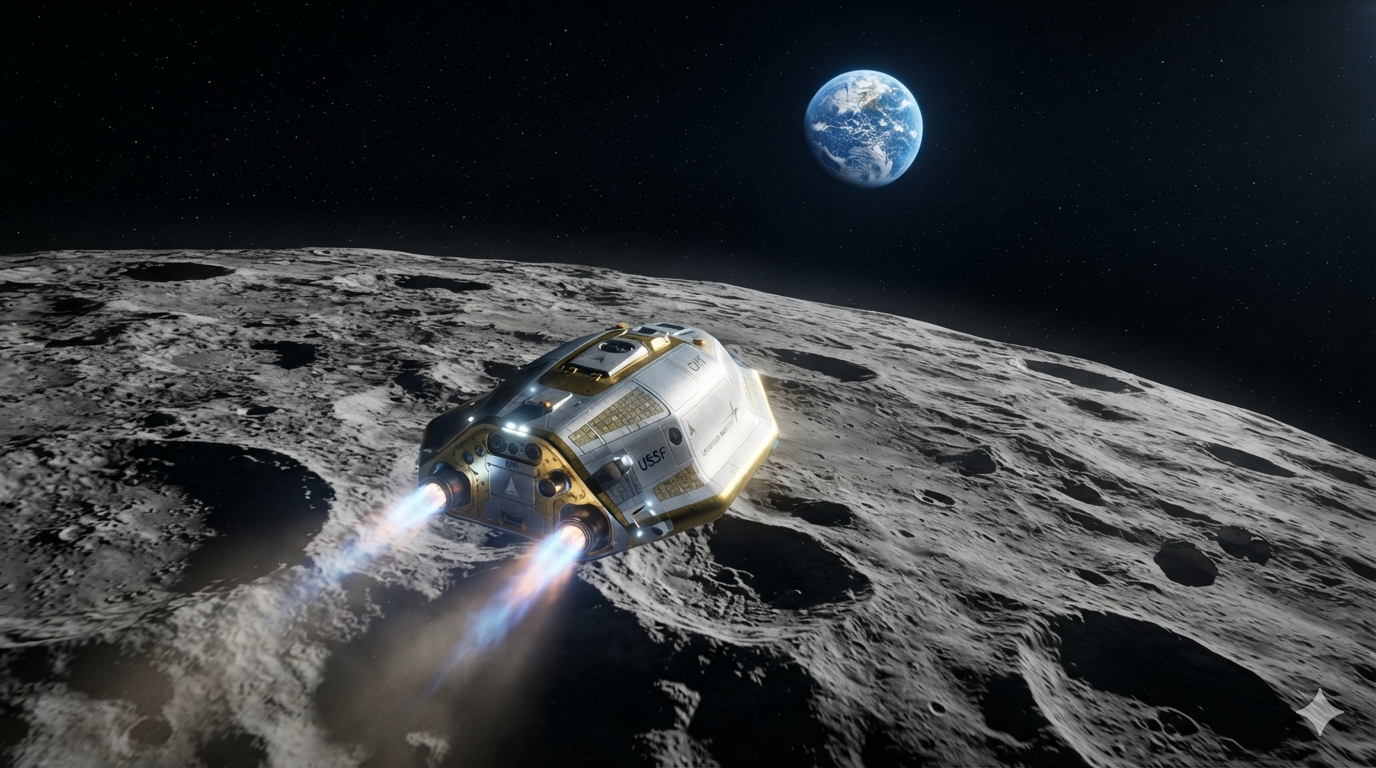
DARPA’s LASSO Program: Building the Space Force’s Cislunar Intelligence Network for the New Lunar Economy
Introduction: Cislunar Space Emerges as the Next Strategic High Ground The strategic competition that once centered on Low Earth Orbit (LEO) and Geostationary Earth Orbit (GEO) is rapidly expanding into cislunar space—the vast region extending from Earth orbit to the Moon. Driven by NASA’s Artemis program, China’s International Lunar Research Station (ILRS), commercial lunar ventures,…
-

Laser Directed Energy Propulsion: Building the High-Speed Space Transportation Network for the Cislunar Economy and Interstellar Future
Strategic Context: Laser Propulsion and the New Space Transportation Revolution The next great revolution in space exploration will not be defined solely by bigger rockets or more powerful engines, but by the ability to separate propulsion from the spacecraft itself. As global space powers compete to establish permanent lunar bases, exploit cislunar resources, deploy space-based…
-

The Earth–Moon Information Superhighway: China’s Cislunar Network and the Race for Strategic Space Dominance
Introduction: Cislunar Space Becomes the New Strategic High Ground The global space race has entered a new phase. Success is no longer determined simply by landing astronauts on the Moon or launching larger rockets, but by controlling the digital infrastructure that will connect, navigate, monitor, and sustain human and robotic activity throughout cislunar space. Just…
-
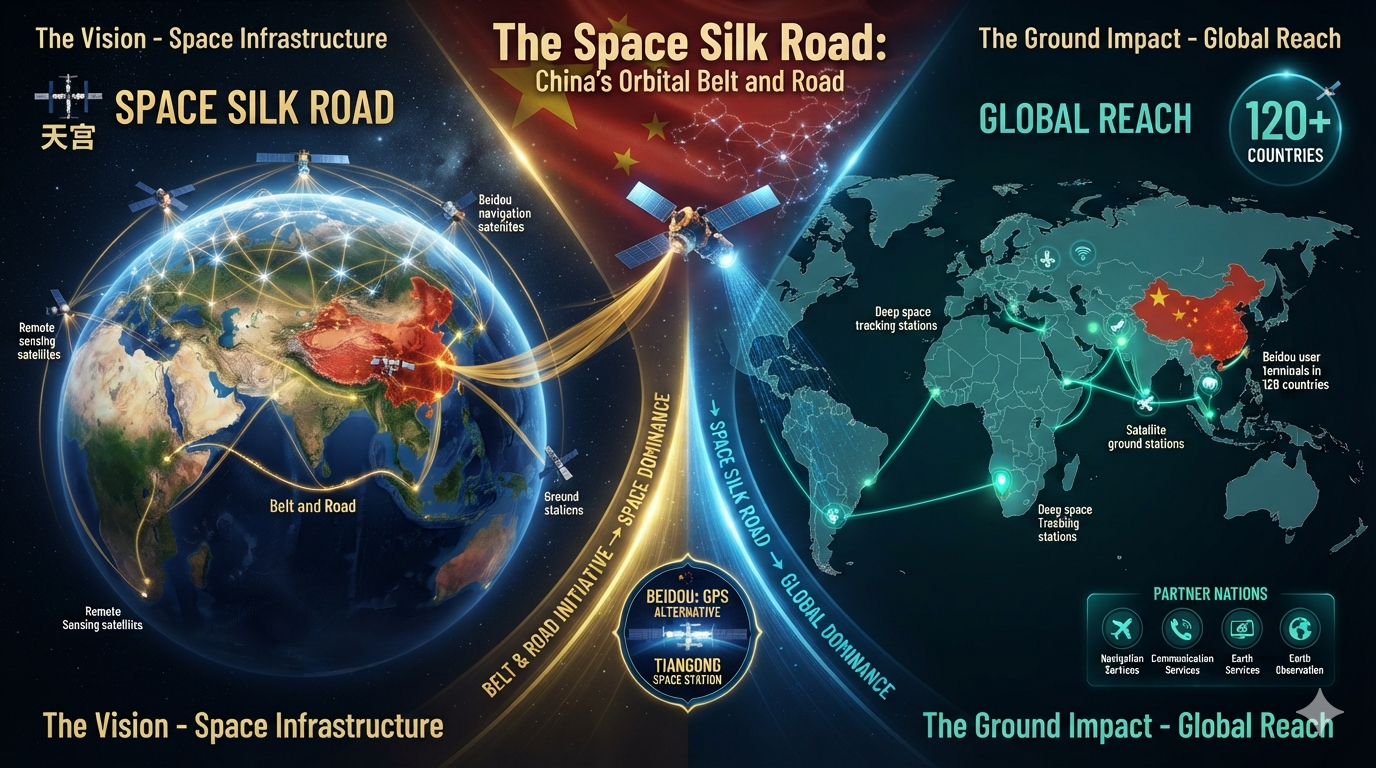
China’s Space Silk Road: How Beijing Is Building a Global Space Architecture to Challenge Western Space Leadership
Introduction: Space Silk Road and the Rise of China’s Space Geopolitics Space has become the newest arena of geopolitical competition. Once dominated by scientific exploration and prestige missions, the space domain is now central to economic resilience, military power, digital infrastructure, intelligence collection, and global technological leadership. Satellites underpin virtually every aspect of modern society—from…
Related Domains & Cross-Cutting Themes
Space does not operate in isolation. Coverage within this magazine frequently intersects with cyber operations, missile systems, advanced aerospace platforms, and emerging technologies. Readers interested in deeper technical, industrial, or geopolitical dimensions are encouraged to explore related magazines across the IDST intelligence network.