
Artificial intelligence and data-driven systems are reshaping how decisions are made, risks are assessed, and operations are coordinated across defense, security, and strategic industries. Their power lies not in autonomy alone, but in how information is processed, trusted, and acted upon under pressure.
Rather than replacing human judgment, AI increasingly acts as a force multiplier—compressing decision cycles, revealing hidden patterns, and enabling coordination at scales no human organization can manage unaided.
IDST Intelligence Briefings
Our intelligence briefings examine how AI is integrated into real systems and workflows, including:
- AI-enabled intelligence, surveillance, and reconnaissance (ISR)
- Decision-support and command systems
- Predictive analytics and risk modeling
- Autonomous and semi-autonomous operations
- Human-machine teaming and cognitive augmentation
Each briefing places algorithms within institutional, operational, and ethical contexts.
Why This Magazine Exists
AI is often framed either as a silver bullet that guarantees dominance or as an existential threat that escapes human control. This sub-magazine exists to move beyond both extremes.
Its purpose is to analyze how AI actually works in practice—where it delivers advantage, where it fails, and how organizational design, data quality, trust, and governance determine real outcomes.
What We Track
- Military and intelligence AI applications
- Data pipelines, training regimes, and model reliability
- Human-AI interaction and decision authority
- AI safety, robustness, and adversarial risks
- Institutional adoption, regulation, and ethics
Latest Analysis & Intelligence
-
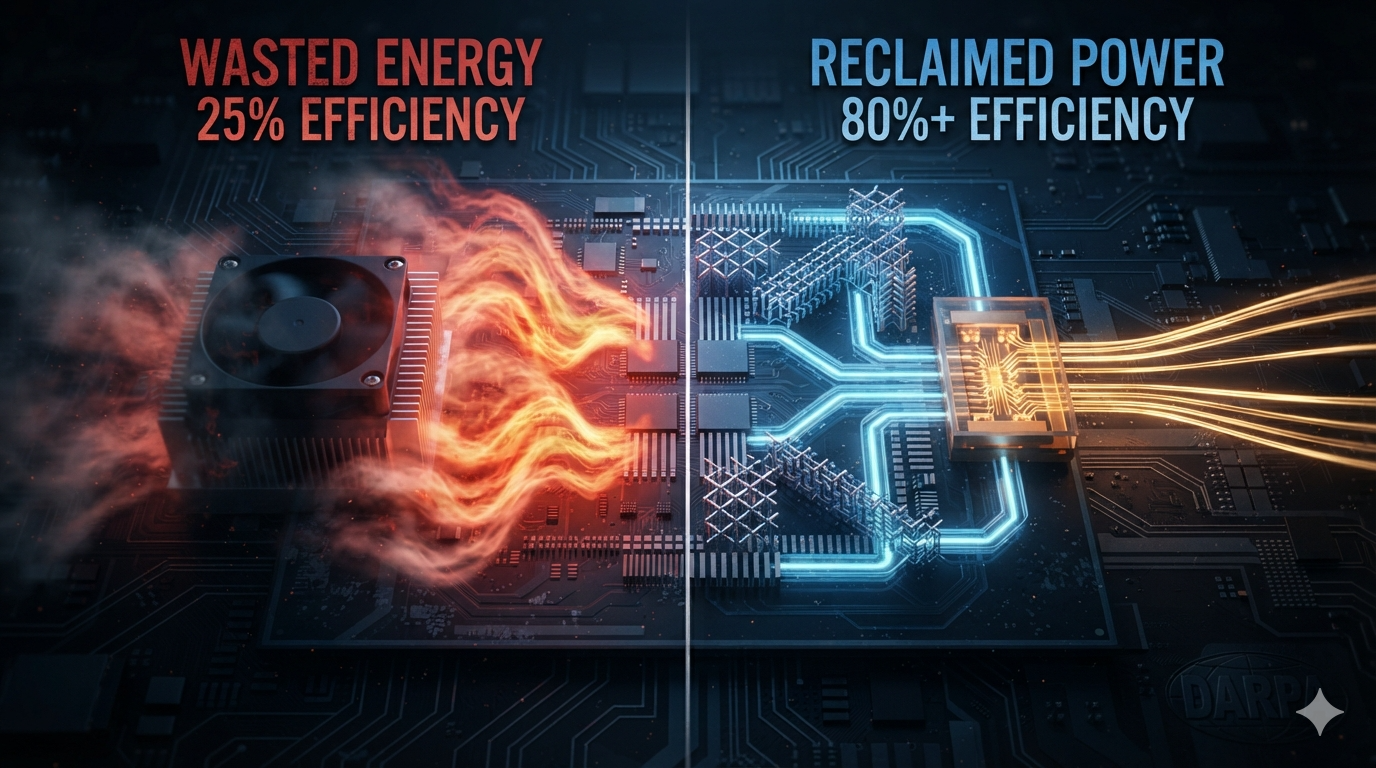
DARPA’s Microsystem Electricity Generation (MEG): Turning Waste Heat into Power for the Next Generation of Military AI and Semiconductor Systemsa
Introduction: Transforming Thermal Waste into Strategic Power The exponential growth of artificial intelligence, advanced semiconductor manufacturing, and autonomous defense systems is creating an unprecedented energy challenge. Every modern processor—from AI accelerators inside hyperscale data centers to mission computers aboard fighter aircraft, satellites, autonomous drones, and missile systems—converts nearly all of its electrical power into heat.…
-

The AI Mathematician Race: DARPA’s expMath Program and the Future of AI-Driven Scientific Discovery
Introduction: Mathematics Becomes the Next Strategic Battleground Artificial intelligence is transforming warfare, biotechnology, quantum computing, semiconductor design, cybersecurity, and autonomous systems—but behind every one of these technologies lies a less visible strategic asset: advanced mathematics. Every breakthrough in cryptography, machine learning, optimization, radar signal processing, quantum algorithms, hypersonic guidance, and digital communications ultimately depends upon…
-
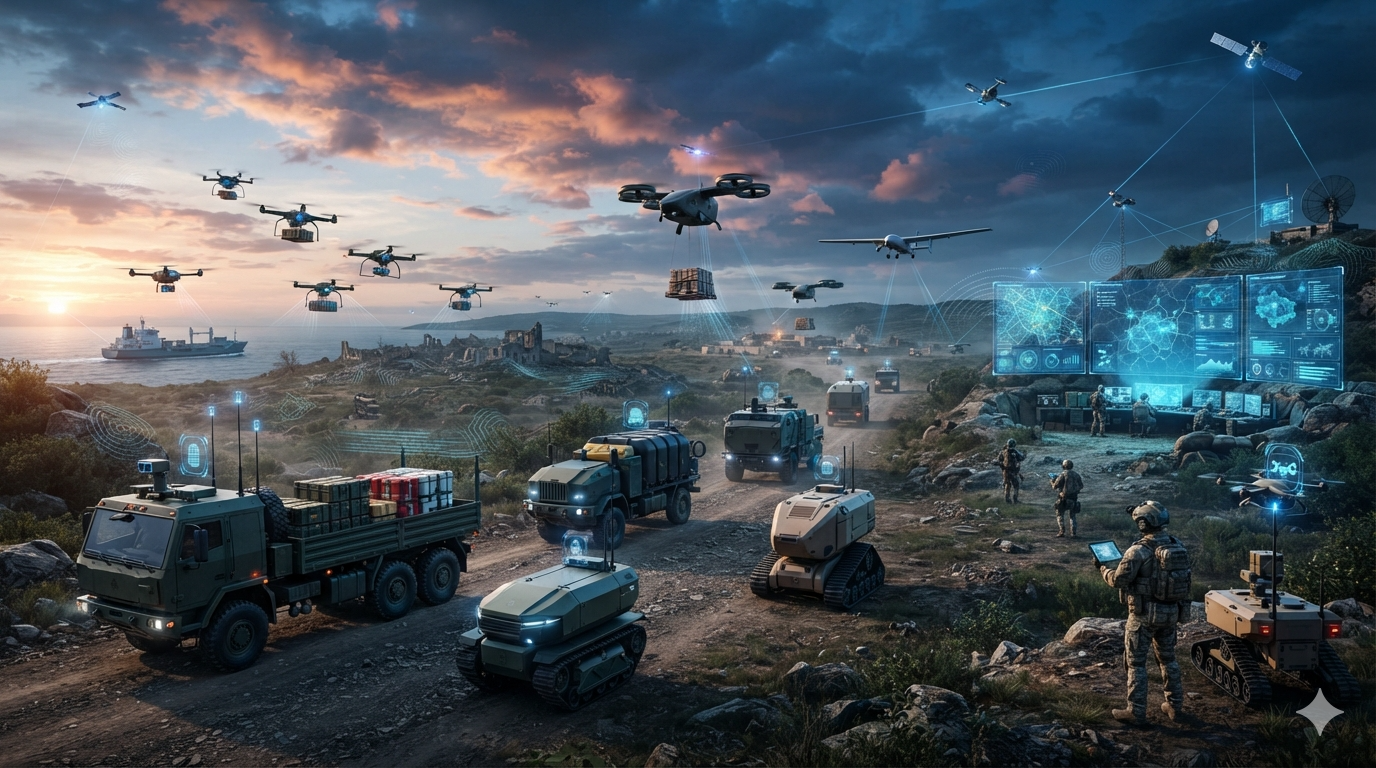
Securing Military AI: DARPA SABER and the Race to Build Trusted Battlefield Artificial Intelligence
Introduction: Strategic Context Artificial intelligence has rapidly evolved from a decision-support capability into a core element of modern military power. Across contemporary battlefields, AI now enables autonomous drones, unmanned ground vehicles, precision targeting, electronic warfare, intelligence analysis, logistics optimization, missile defense, and multi-domain command-and-control. The conflicts in Ukraine, the Middle East, and the Indo-Pacific have…
-
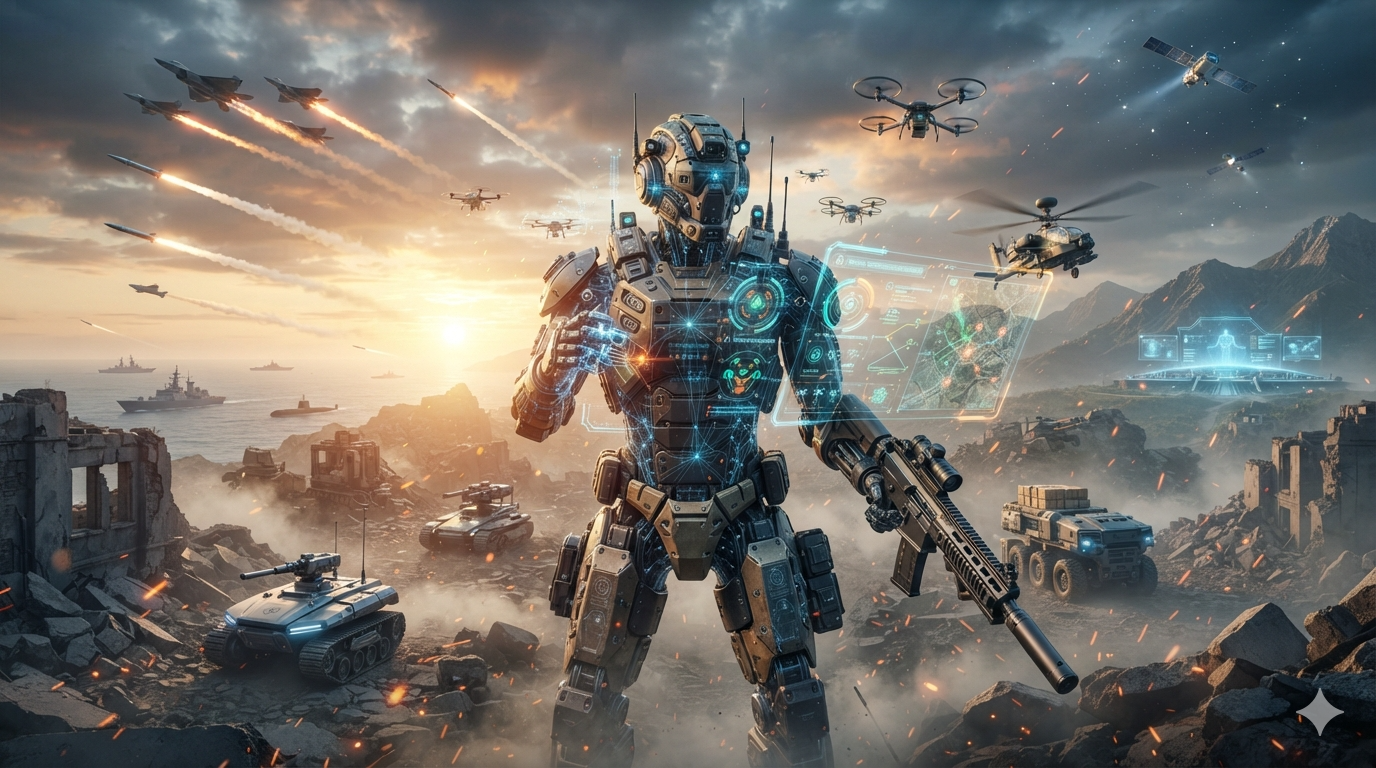
Humanoid Military Robots: The Race to Build the AI Soldier of the Future
Introduction: The Dawn of Embodied Warfare Artificial intelligence is rapidly evolving beyond software into the physical world, creating what many experts describe as the next revolution in military technology: embodied AI. For decades, militaries have relied on unmanned aerial vehicles, autonomous underwater vehicles, and ground robots designed for specialized missions. The next generation of defense…
-
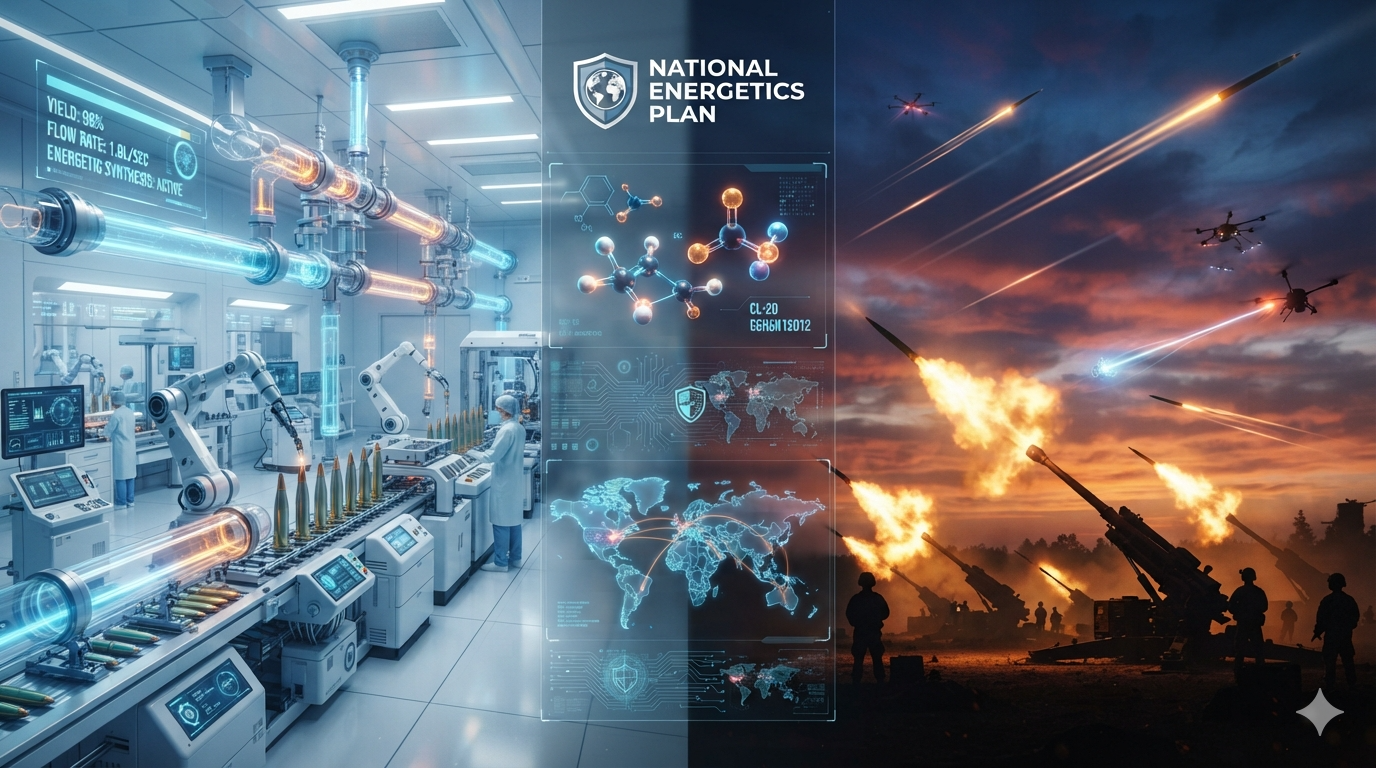
The New Energetics Revolution: How Advanced Propellants, Smart Manufacturing, and Industrial Innovation Are Reshaping Military Power
Introduction: The Strategic Importance of Energetics in Great Power Competition Behind every missile launch, artillery strike, hypersonic weapon, rocket motor, and precision-guided munition lies a critical but often overlooked technology domain—energetics. Explosives, propellants, pyrotechnics, and advanced energetic materials determine not only the range, speed, and lethality of modern weapons but also the ability of nations…
-

The Quantum Operating System Revolution: How QNodeOS Is Building the Software Foundation for the Quantum Internet
Introduction: Quantum Networking Enters the Software Era For decades, progress in quantum computing has been dominated by advances in hardware—superconducting processors, trapped ions, neutral atoms, photonic qubits, and diamond-based quantum systems. Yet despite rapid improvements in quantum hardware, one critical limitation has prevented the emergence of practical quantum networks: every experimental platform has required its…
-

Deploying Advanced AI at the Tactical Edge: Overcoming the Challenges of Real-Time Intelligence for Defense, Autonomous Systems, and National Security
Introduction: The New Battlespace for Artificial Intelligence Artificial intelligence is rapidly transforming modern military operations, industrial automation, and autonomous systems, but its greatest impact is emerging far from cloud data centers. The future battlespace increasingly depends on AI operating directly at the tactical edge—aboard unmanned aircraft, autonomous ground vehicles, naval platforms, satellites, wearable soldier systems,…
Related Domains & Cross-Cutting Themes
Emerging technologies rarely operate in isolation. Their real impact is shaped by integration, governance, and human-system interaction. Cyber security and information warfare, electronic and sensor systems, command and control, autonomous platforms, governance and ethics, and long-term strategic competition
Ethics, governance, and technology control
Industrial scaling and supply-chain constraints
Human–machine teaming and trust
Interoperability across platforms and institutions
Export controls and technological rivalry
Explore the Critical & Emerging Technologies Magazine →
Explore the Industry, Markets & Supply Chains Magazine →
Explore the Space Technology, Defense & Exploration Magazine →