
Manufacturing transforms scientific breakthroughs and engineering designs into deployable products, operational systems, and strategic capabilities. Beyond innovation itself, industrial competitiveness depends on production capacity, advanced tooling, skilled workforces, quality assurance, and resilient supply chains. In an era of geopolitical competition and technological disruption, manufacturing capability has re-emerged as a critical determinant of economic strength, military readiness, and national resilience.
IDST Intelligence Briefings.
Factories, production lines, surge capacity, industrial modernization, and manufacturing failures
Why This Magazine Exists
Innovation matters only when it can be produced at scale, at cost, and on time. This sub-magazine examines how advanced products and systems are designed, manufactured, tested, and delivered across strategic industries. It analyzes emerging manufacturing technologies, industrial automation, additive manufacturing, smart factories, supply-chain resilience, workforce development, production economics, and industrial bottlenecks to understand how nations and industries convert technological potential into real-world capability under both normal conditions and strategic stress.
What We Track
- Production rates and bottlenecks
- Workforce and skills pipelines
- Tooling and industrial modernization
- Quality control and yield issues
- Supply-tier dependencies
Latest Analysis & Intelligence
-
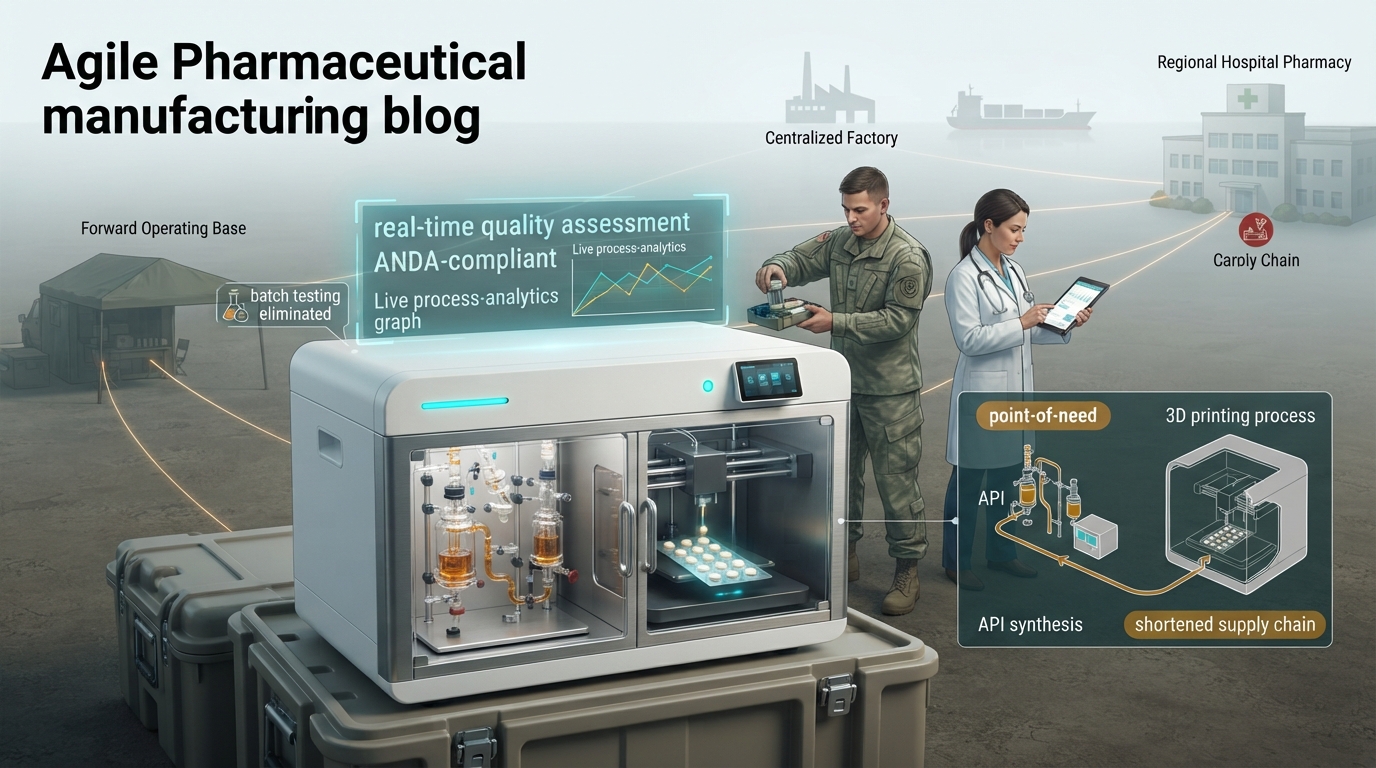
DARPA EQUIP-A-Pharma: The Future of On-Demand Drug Manufacturing for Military Readiness and National Health Security
Introduction: Strategic Context — Pharmaceutical Supply Chains as a National Security Vulnerability Modern military operations depend on a reliable supply of pharmaceuticals, from essential antibiotics and pain medications to treatments for chronic conditions and emergency medical countermeasures. Yet pharmaceutical supply chains remain exposed to concentrated manufacturing capacity, dependence on overseas suppliers and precursor chemicals, transportation…
-

The Rise of Agentic AI: How Autonomous Testing Is Revolutionizing Quality Assurance
Introduction: Strategic Context Software development is entering an era in which the economics of creating code are changing faster than the economics of validating it. Generative AI and coding agents can translate natural-language requirements into software, modify entire repositories, debug implementations and increasingly perform multi-step engineering tasks with limited human intervention. Gartner now describes enterprise…
-

Robotic Servicing of Geosynchronous Satellites: How RSGS Is Transforming Space into a Resilient, Upgradeable Warfighting Domain
The Fragile Backbone of Modern Warfare Geosynchronous Earth orbit has become one of the most strategically valuable pieces of infrastructure above Earth. Communications, missile warning, weather, intelligence, navigation augmentation and national-security missions depend on satellites that must remain operational for years or even decades. Yet the traditional spacecraft model remains fundamentally limited: once a satellite…
-
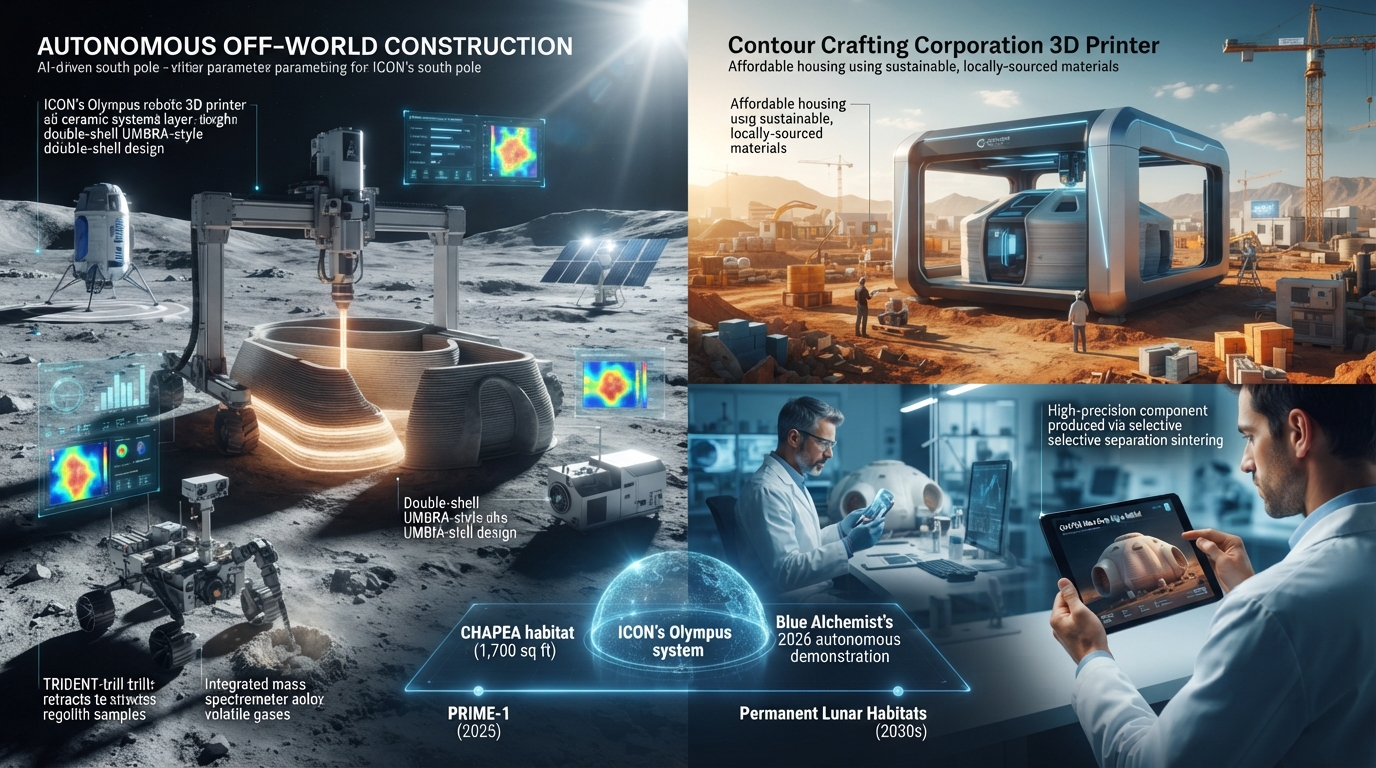
Robotic 3D Printing for Extraterrestrial Construction: Building the Future on the Moon and Mars
Introduction: From Lunar Exploration to Autonomous Space Infrastructure The next phase of the space race will not be defined simply by who reaches the Moon first, but by who can build, power, repair, and expand infrastructure after landing. The emerging lunar economy is shifting from an expeditionary model, in which every kilogram of equipment is…
-

Integrated Brillouin Photonics in 2026: Steering Light with Sound for GPS-Free Navigation, 6G Communications, and Quantum Systems
Introduction: Light, Sound, and the Next Strategic Revolution in Photonics As modern militaries and commercial industries prepare for an era defined by autonomous platforms, resilient communications, quantum technologies, and contested electromagnetic environments, photonic integrated circuits (PICs) are rapidly becoming foundational strategic infrastructure. Future navigation, sensing, electronic warfare, satellite communications, and 6G networks will require signal…
-

Beyond the Error Threshold: How Fault-Tolerant Quantum Computing Is Becoming Reality Through Next-Generation Error Correction
Introduction: The Race Toward Fault-Tolerant Quantum Computing Quantum computing has long promised to revolutionize defense, artificial intelligence, cryptography, pharmaceutical discovery, financial modeling, advanced manufacturing, and national security. Unlike classical computers that manipulate bits representing either 0 or 1, quantum computers exploit superposition, entanglement, and quantum interference to solve certain classes of problems that would require…
-
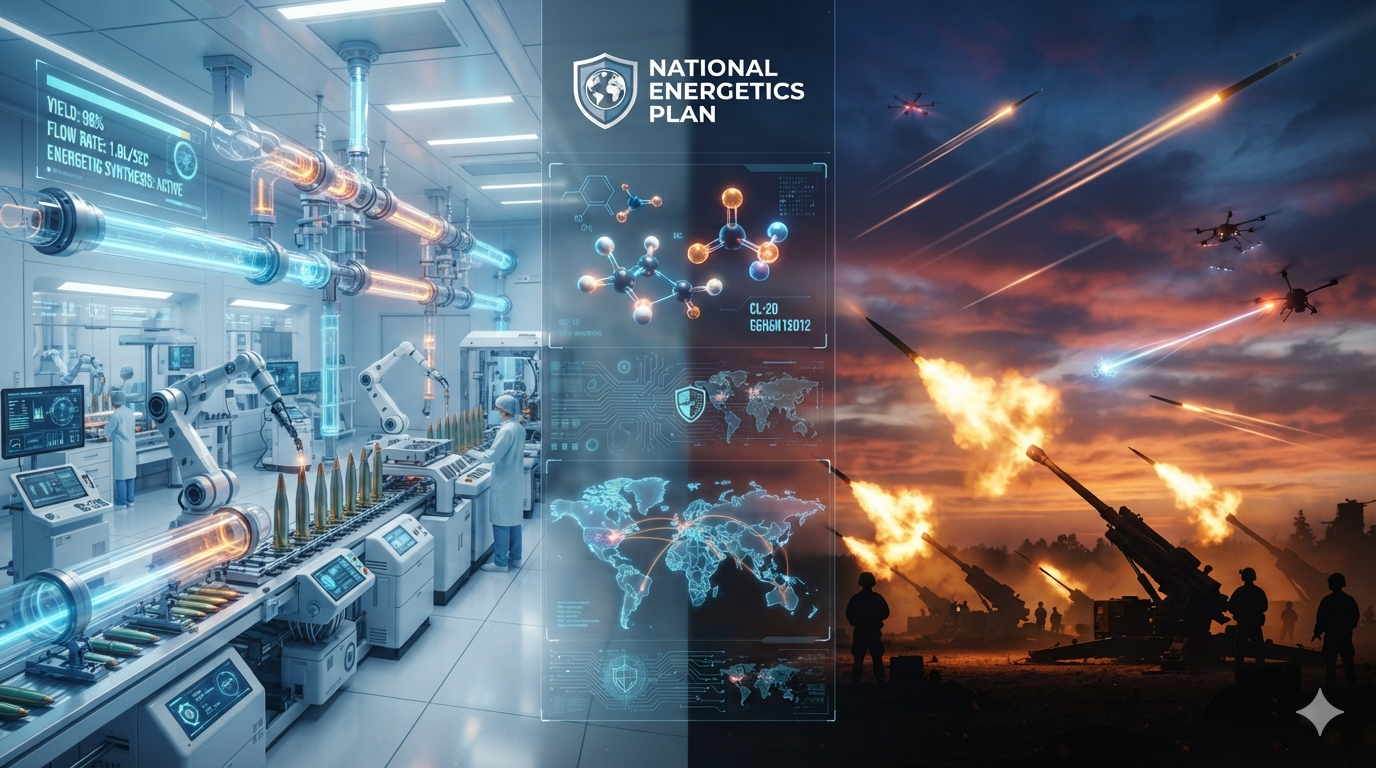
The New Energetics Revolution: How Advanced Propellants, Smart Manufacturing, and Industrial Innovation Are Reshaping Military Power
Introduction: The Strategic Importance of Energetics in Great Power Competition Behind every missile launch, artillery strike, hypersonic weapon, rocket motor, and precision-guided munition lies a critical but often overlooked technology domain—energetics. Explosives, propellants, pyrotechnics, and advanced energetic materials determine not only the range, speed, and lethality of modern weapons but also the ability of nations…
Related Domains & Cross-Cutting Themes
Materials, test & measurement, logistics, and industrial policy..
Industrial capacity and supply chains
Cyber-physical security
Climate, geography, and environmental stress
Human-machine coordination
System survivability under disruption
Explore the Critical & Emerging Technologies Magazine →
Explore the Industry, Markets & Supply Chains Magazine →
Explore the Space Technology, Defense & Exploration Magazine →