
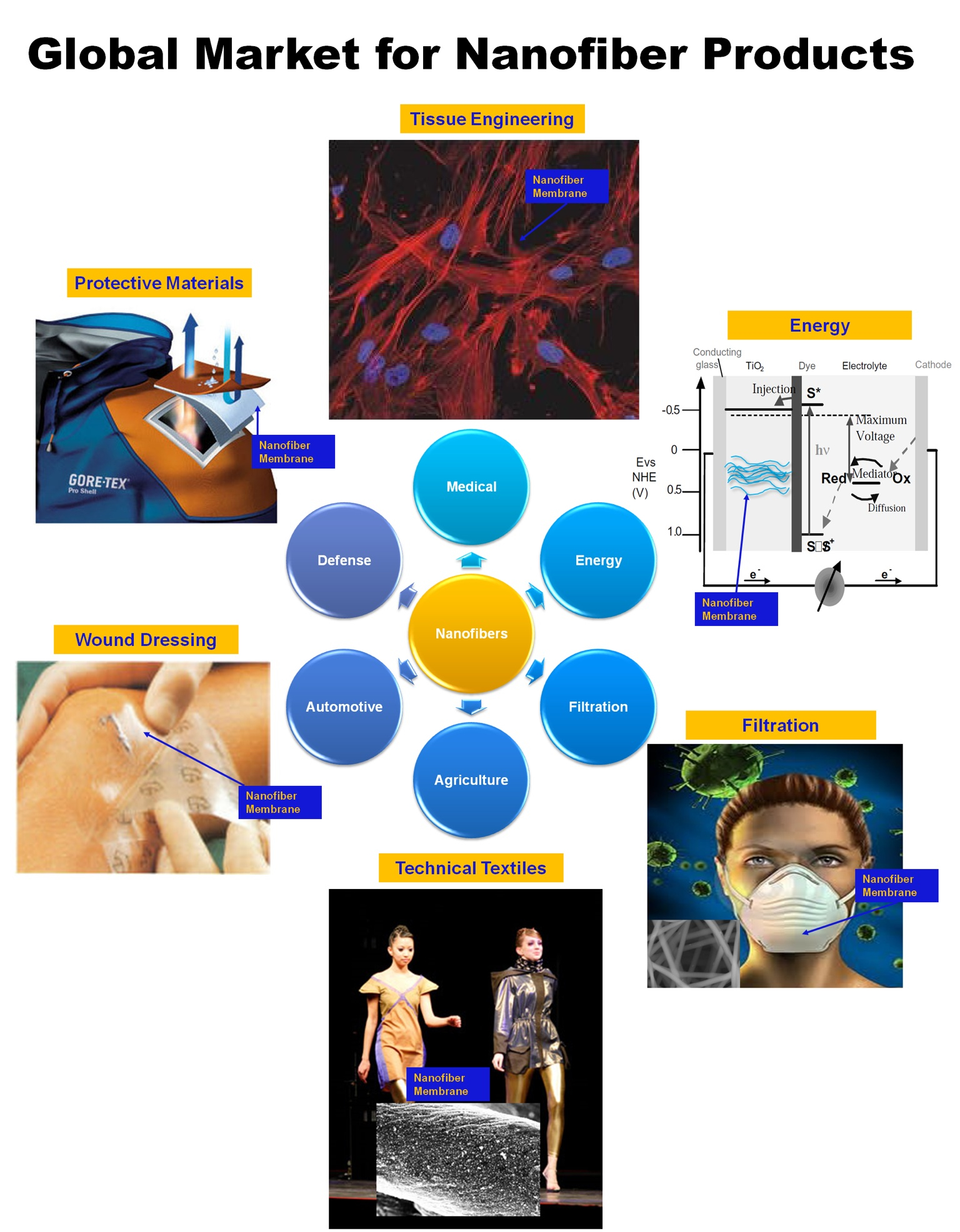

A nanofiber is a fiber with a diameter of 100 nanometers or less. The nanofibers due to some special properties are being investigated for a myriad of potential applications in the fields of medicine, electronics and other material sciences. Such fibers have a high ratio of surface area to volume. This makes them particularly useful for solar cells, which try to maximize exposure to sunlight. In addition, nanofibers yield materials that are permeable at the small scale, which makes them suited for use as water filters. The fibers, when bound, are also relatively strong.
Some of the most promising applications of this material include capturing individual cancer cells in the blood stream stimulating cartilage production in damaged tissues, delivering therapeutic drugs to diseased cells, developing silicon nanowire and germanium nanowire anodes for battery electrodes allowing for fast charging and current delivery, chemical and biological defence through sensors that can change color when exposed to certain chemical vapors. Earlier research has also showed that coating furniture with carbon nanofibers could serve as a flame retardant.
Reseachers are using nanofibers to delivery thrapeutic drugs. The have developed an elastic material that is embedded with needle like carbon nanofibers. The material is intended to be used as balloons which are inserted next diseased tissue, and then inflated. When the balloon is inflated the carbon nanofibers penetrate diseased cells and delivery therapeutic drugs.