Home / Critical & Emerging Technologies / Electronics & EW / DARPA’s SYNC Program: Rewriting Undersea Warfare with “Orthogonal” UUV Defenses

DARPA’s SYNC Program: Rewriting Undersea Warfare with “Orthogonal” UUV Defenses

The Stealth Threat in Our Harbors

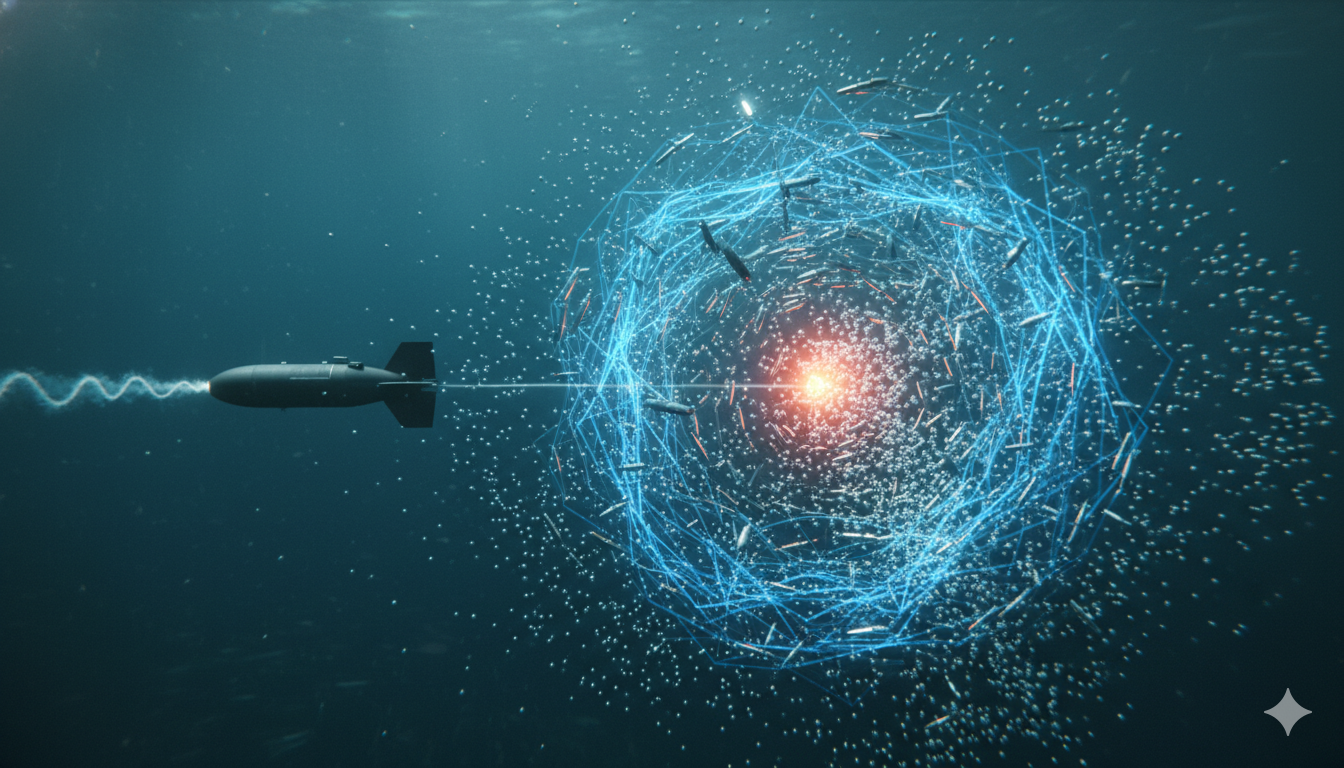
Unmanned Undersea Vehicles (UUVs)—ranging from low-cost reconnaissance drones to armed “kamikaze” systems—are fast becoming one of the most asymmetric threats to U.S. maritime infrastructure. Adversaries use these quiet, stealthy platforms to mine harbors, spy on naval bases, or sabotage undersea assets with near impunity. Traditional sonar systems struggle to detect them, especially in noisy, cluttered environments like ports. In response, DARPA has launched the SYNC (Synthetic, Unpredictable, Non-local Countermeasures) program, a bold initiative announced in September 2024. SYNC’s radical vision is not to hunt UUVs but to make them irrelevant—deploying “orthogonal” approaches that neutralize UUV threats without ever needing to detect or track them.

This departure from conventional defense doctrine aims to outflank the cost, complexity, and unpredictability of detection-based systems. Instead of engaging in a losing battle of sensors versus stealth, SYNC proposes a future where UUVs are rendered inoperable by the environment itself—whether by sabotaged propulsion systems, disrupted sensors, or forced navigation errors.

Why Orthogonal? Replacing Detection with Denial

Traditional approaches to UUV defense operate within a rigid framework: detect, track, and engage. Each of these steps, however, introduces critical vulnerabilities. Advanced stealth coatings, non-acoustic propulsion, and low-profile designs allow modern UUVs to evade even the most sophisticated sonar systems. Compounding the issue, the economics are unfavorable—an adversary’s low-cost drone can force millions of dollars in defensive spending. Meanwhile, harbor environments are inherently hostile to detection: propeller noise, tidal currents, and debris-filled water columns generate acoustic clutter that masks UUV signatures entirely.

DARPA’s SYNC program proposes a radical break from this model. Its core philosophy is simple yet transformative: don’t detect—deny. Rather than chasing elusive UUVs, SYNC aims to render them inoperable without ever pinpointing their position. This orthogonal strategy enables the deployment of wide-area countermeasures that function autonomously and indiscriminately—technologies that shift the burden of failure onto the attacker, not the defender.

Imagine reactive harbor zones where a UUV’s presence alone triggers electromagnetic fields that fry its circuitry, or smart hydrogels that harden instantly around intruding hulls, locking them in place. These defenses don’t need to see the threat—they reshape the operational environment so that entry becomes impossible or suicidal. In doing so, SYNC reframes undersea warfare from a game of cat and mouse into one of preemptive denial and environmental dominance.

From Simulation to Poolside Showdowns

The SYNC program is structured into a 15-month Base Period designed to prioritize agility, risk-taking, and rapid prototyping. The first six months focus on advanced modeling and simulation, with DARPA performers using classified threat libraries to validate the physical feasibility of their concepts. This digital sandbox allows developers to stress-test ideas and weed out non-starters before committing resources to fabrication.

The next six months involve hardware-in-the-loop experimentation, where prototype countermeasures interface with simulated UUVs inside virtual dock environments. Performance metrics during this phase include cost per engagement, area coverage, environmental impact, and false-negative rates. The final phase consists of pool testing—live demonstrations in controlled aquatic environments where top solutions will showcase real-world functionality. Successful concepts could advance to an expansion phase with additional funding and potential deployment opportunities.

Table: SYNC’s Evaluation Criteria

Parameter Threshold Goal
Response Time <5 minutes Near-instantaneous
Cost per Engagement <$100K <$10K
Area Coverage 1 km² harbor zone Scalable to 10+ km²
Platform Agnosticism Effective vs. >3 UUV types All known UUV classes

DARPA’s evaluation goals are ambitious. Ideal solutions should respond within five minutes, cost under $10,000 per engagement, and scale to defend areas larger than 10 square kilometers—all without needing to be tailored to specific UUV types.

What Orthogonal Might Look Like

While proposal details remain classified, defense analysts are already speculating on possible technologies under development. Some foresee the use of localized electromagnetic pulses to disable UUV electronics, bypassing the need for line-of-sight targeting. Others anticipate swarms of biomimetic micro-UUVs that latch onto intruding vehicles and inject corrosive or obstructive agents. Another contender could be smart hydrogels that react chemically to UUV hull contact, immobilizing the vehicle in place. Acoustic spoofing, in which environmental signals are designed to mislead UUV navigation systems, also holds promise—tricking them into surfacing or spiraling out of control.

As a DARPA program manager aptly put it, “The goal isn’t to find the needle in the haystack—it’s to melt the needle before it pricks you.” That sentiment captures SYNC’s philosophy: if you can deny operational space to UUVs altogether, the need for detection disappears.

Strategic Implications: Beyond Harbor Defense

DARPA’s SYNC program is more than a point solution for harbor protection—it reflects a broader Department of Defense shift toward attritable, autonomous systems that prioritize scalability, affordability, and mission flexibility. SYNC’s orthogonal approach to UUV threats could become a foundational component in a rapidly evolving maritime defense architecture.

DARPA’s SYNC program represents a fundamental shift in undersea warfare strategy by introducing a paradigm that focuses not on detection, but on persistent environmental denial. This orthogonal defense approach aligns with the U.S. Department of Defense’s broader move toward attritable autonomous systems and distributed lethality, enabling scalable and cost-effective protection across various contested maritime domains.

One of the most significant implications of SYNC lies in its potential integration with offensive autonomous networks. The Defense Innovation Unit’s (DIU) development of “One-Way Attack” UUVs, capable of being launched from submarines for asymmetric strikes, opens the door for a synergistic relationship. In this framework, SYNC would serve as the defensive arm, disabling incoming threats through environmental denial, while DIU’s offensive drones deliver precision attacks. Additionally, SYNC complements the goals of the Pentagon’s Replicator Initiative, which emphasizes deploying large numbers of low-cost, autonomous platforms. SYNC’s ability to deny access without targeting specific vehicles offers an ideal pairing with Replicator’s swarming tactics, creating a layered, self-reinforcing system of automated maritime defense.

Beyond combat systems, SYNC holds strategic value in protecting global undersea infrastructure. Recent incidents, such as the sabotage of the Eastern Light cable in the Baltic Sea, underscore the vulnerability of transoceanic data pipelines. SYNC technologies—ranging from reactive smart materials to wide-area electromagnetic fields—could offer persistent, autonomous protection to undersea cable corridors without the need for constant human patrols. These innovations align closely with the EU-NATO Action Plan on Cable Security, which emphasizes the importance of prevention, detection, response, and deterrence through advanced technological measures. For instance, acoustic deterrent zones established through SYNC systems could autonomously discourage or disable unauthorized undersea activity.

The energy sector also stands to benefit substantially from the deployment of SYNC technologies. Offshore wind farms, particularly floating installations, face mounting risks of sabotage due to their exposed cables, mooring lines, and substations. Industry data reveals that over 80 percent of insurance claims for offshore wind projects stem from subsea cable failures, with repair costs accounting for up to 12.7 percent of total project value. By deploying biomimetic sentry drones or hydro-reactive barriers, SYNC could provide a proactive shield for these critical infrastructures, neutralizing threats before they result in costly damage or disruption. This becomes especially vital in contested regions like the Baltic Sea, where geopolitical tensions and state-sponsored undersea interference are on the rise.

Finally, SYNC’s orthogonal methodology offers a robust response to the growing challenge posed by UUV swarms developed by near-peer adversaries like China and Russia. These nations are increasingly operating swarms in strategic regions such as the South China Sea and the Baltic, aiming to disrupt shipping lanes and undersea infrastructure. SYNC’s ability to deploy broad-spectrum, non-target-specific countermeasures—such as acoustic spoofing or electromagnetic disruption—can effectively sever coordination among UUV swarms, forcing them to surface or self-destruct. In doing so, SYNC imposes steep operational costs on adversaries, compelling them to invest in complex and expensive counter-countermeasures, thus shifting the cost-benefit equation in favor of the United States and its allies.

Forward Deployment: SYNC’s Strategic Roadmap

Domain SYNC Application Timeline
Harbor Defense EMP fields immobilizing UUVs 2026 (Phase 1)
Cable Corridors Hydrogel barriers triggered by tampering 2027 (Phase 2)
Offshore Wind Farms Patrol drones with corrosive injectors 2028 (Phase 3)
Choke Point Control Acoustic spoofing in Malacca/Taiwan Strait 2029+

By shifting from reactive defense to persistent environmental denial, SYNC could redefine undersea warfare in both military and critical infrastructure domains.

Overcoming Critical Hurdles: Charting SYNC’s Path Forward

While SYNC presents a bold new frontier in undersea defense, its success hinges on navigating several formidable challenges.

Environmental Compliance: Energy-based countermeasures—such as electromagnetic pulses or reactive chemical barriers—pose potential risks to marine ecosystems. To gain operational approval, SYNC technologies must align with strict environmental regulations that protect marine flora and fauna. Solutions must strike a careful balance: powerful enough to neutralize threats, yet benign to non-target organisms.

Evolving Threats: Adversaries will not remain static. As SYNC technologies mature, it is likely that hostile UUV developers will engineer counter-countermeasures to bypass, confuse, or resist orthogonal defenses. This ongoing technological arms race demands that SYNC systems be adaptable, modular, and frequently updated to stay ahead of increasingly autonomous and resilient underwater platforms.

System Integration and Interoperability: For SYNC to transition from DARPA prototypes to deployable Navy assets, seamless integration with the Integrated Undersea Surveillance System (IUSS) and other maritime situational awareness platforms is essential. These countermeasures must not only function independently, but also enhance and extend the capabilities of existing detection, tracking, and response infrastructure across the fleet.

By addressing these hurdles head-on, the SYNC program can ensure its technologies are not just effective in test pools, but viable, scalable, and resilient in complex, contested maritime environments.

Yet the rewards are substantial. Proposers are eligible for base awards exceeding $4 million, with additional funding for those entering the expansion phase. Promising projects may even bypass traditional procurement through OTA (Other Transaction Authority) contracts—accelerating transition from concept to deployment. A classified addendum, available to qualified applicants by October 4, offers critical intelligence to inform designs.

Conclusion: A Paradigm Shift in Maritime Security

DARPA’s SYNC program represents more than a technical challenge—it’s a conceptual revolution. By discarding the need for detection and embracing preemptive environmental neutralization, it opens a new chapter in undersea defense. If successful, SYNC could establish a doctrine where adversary UUVs are not tracked or engaged—but simply cannot function.

“SYNC isn’t just protecting ports—it’s redefining sovereignty boundaries underwater. Whoever controls the ‘invisible terrain’ dictates undersea escalation.”
— Naval Strategic Analyst, ASPI 16

SYNC’s scalability makes it a cornerstone of next-gen maritime security, transforming oceans from vulnerabilities into strategic shields.

“Orthogonal isn’t a tactic—it’s a philosophy. Why chase threats when you can erase them?”

About Rajesh Uppal

Check Also

The Evolution of Stealth: Next-Generation Camouflage Technologies Redefining Modern Warfare

Introduction: In the ever-evolving landscape of modern warfare, the ability to conceal military assets and …

wpChatIcon
wpChatIcon