Home / Cyber & IW / The Cybersecurity Imperative: Safeguarding Global Transportation Networks in the Age of Digital Fragility

The Cybersecurity Imperative: Safeguarding Global Transportation Networks in the Age of Digital Fragility

Introduction: Securing the Backbone of Global Mobility

The transportation industry is the backbone of global commerce and connectivity. From aviation and railways to maritime shipping and trucking logistics, this vast network ensures the seamless movement of people, goods, and critical resources across borders. It fuels economic growth, enables supply chains, supports tourism, and plays a pivotal role in national defense—allowing for rapid military mobilization and emergency response.

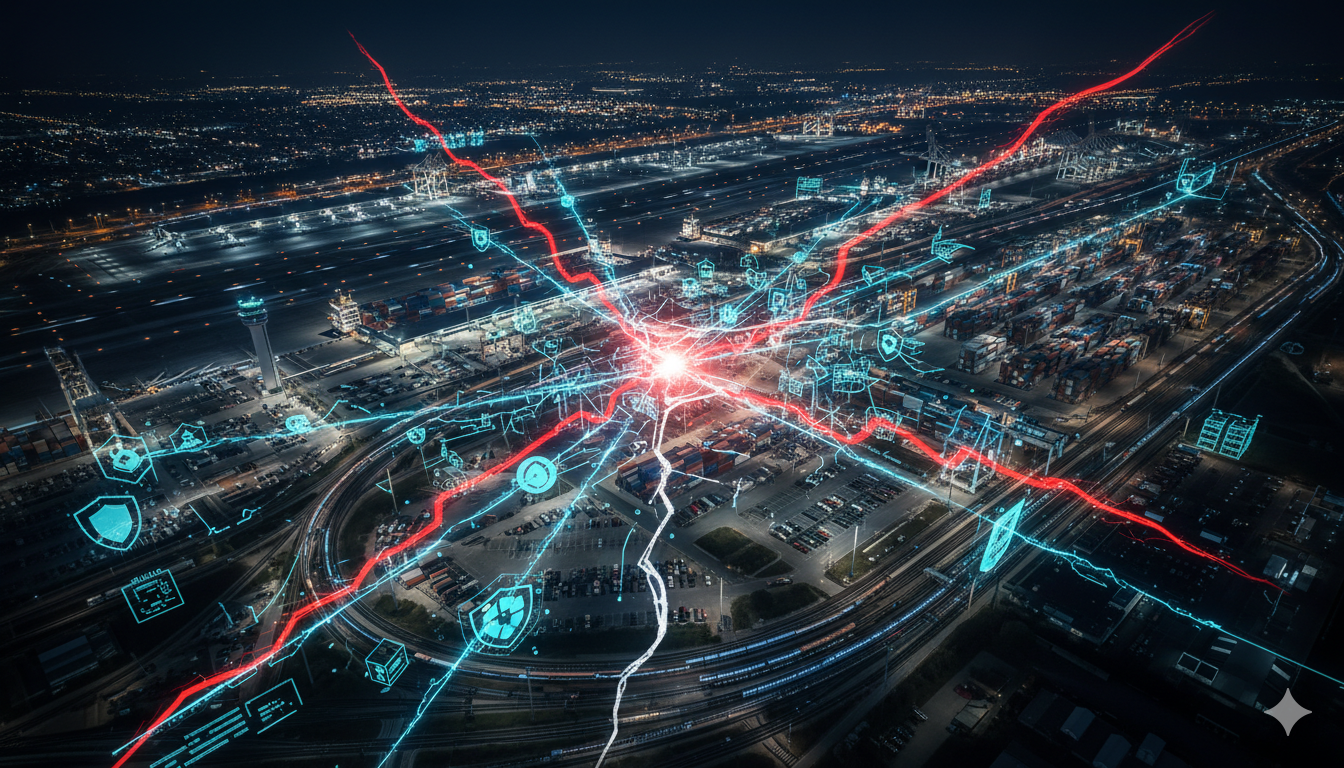
Yet in an era defined by digital transformation, the transportation sector stands at a crossroads. Advanced technologies—from cloud-based logistics platforms to AI-driven traffic management and smart sensors in autonomous fleets—are revolutionizing how transport systems operate. But this newfound efficiency comes with a price: heightened exposure to cyber threats. A single successful breach can paralyze port operations, ground aircraft, derail trains, or compromise sensitive personal and corporate data.

As cyberattacks on transportation networks surge in both frequency and sophistication, safeguarding this critical infrastructure has become not just a technical challenge, but a strategic imperative. This article explores how industry leaders are fortifying their digital defenses—through AI-driven threat detection, Zero Trust frameworks, quantum encryption, and resilient design—to ensure that transportation remains fast, safe, and secure in the 21st century.

The 181% Surge and Its $580,000 Wake-Up Call

In 2023, the global transportation sector faced an alarming 181% year-over-year surge in cyberattacks. These incidents compromised more than 12 million individuals across 44 major breaches, shifting cybersecurity from a back-office concern to an existential operational issue. Ransomware alone accounted for 38% of all attacks, paralyzing systems and pushing average incident-related costs to €580,000 in the aviation sector. One of the most disruptive examples was the 2024 ransomware attack on logistics giant JAS Worldwide, which froze global shipment tracking systems for days, illustrating the catastrophic ripple effects of a single breach. As digital and physical realms converge in aviation, maritime, rail, and trucking, cybersecurity is no longer optional—it is infrastructure.

A stark reminder of the fragility of digital infrastructure in transportation came in 2025 when a cyber-attack disrupted public Wi-Fi services across 19 major UK railway stations, including London Waterloo, Manchester Piccadilly, and Edinburgh Waverley. Commuters logging into the network were confronted with terror-related messages and images, triggering widespread alarm. Investigations revealed that the incident originated from an insider account within the internet provider’s network, underscoring how trusted third-party vendors can become vectors of cyber vulnerability. While described as an act of cyber vandalism rather than a direct breach of Network Rail’s systems, the attack highlighted the growing risks of interconnected digital ecosystems, where a single compromised account can ripple through critical public services. With global transportation systems—from rail and air traffic to ports and logistics—undergoing rapid digital transformation, this case underscores the urgent need for rigorous cybersecurity protocols, supply chain accountability, and resilience planning to protect passengers, infrastructure, and national security from increasingly sophisticated threats.

The Evolving Threat Matrix: Beyond Ransomware

The transportation sector is under siege from a growing variety of cyber threats that exploit both its digital complexity and physical scale. Each domain—aviation, maritime, rail, and trucking—faces distinct vulnerabilities. In aviation, attackers increasingly target passenger data and sensitive aircraft designs. Fraudulent airline websites surged by 40% in 2023, and a ransomware attack paralyzed baggage systems at Seattle-Tacoma International Airport for three weeks, causing operational chaos. Maritime operations, heavily reliant on operational technology (OT), have become prime targets for state-sponsored cyber sabotage. Today, nearly 60% of ransomware campaigns are aimed at disrupting supply chains, particularly ports. The rail sector has seen a sharp rise in hacktivist-led DDoS attacks, especially in Europe, where post-Ukraine tensions fueled a 300% increase in service outages. Meanwhile, the trucking industry is grappling with a new trend—cyber-enabled cargo theft—where telematics systems are hacked to misroute or intercept shipments, costing companies upwards of $400,000 annually.

But cyber risk is no longer confined to familiar threats like ransomware or denial-of-service attacks. Newer, more insidious techniques are emerging. Generative AI is now being used to create hyper-personalized phishing emails that evade traditional spam filters and deceive even well-trained employees. The proliferation of unsecured Internet of Things (IoT) devices across smart ports, highways, and fleets has created a sprawling attack surface—one increasingly exploited for botnet recruitment and coordinated DDoS campaigns. Compounding the threat is shadow IT: the uncontrolled spread of unvetted cloud apps and systems during rapid digitalization efforts, which exposes sensitive data like cargo manifests and customs documents to external actors.

These attack vectors fall into several key categories. Ransomware remains a primary weapon, encrypting critical data and demanding multimillion-dollar payouts to restore access—delaying shipments, grounding flights, and threatening reputational damage. Data breaches expose customer records, employee credentials, or intellectual property, often leading to cascading compliance violations. Cyber espionage poses a major threat to logistics companies with proprietary routing data or defense contracts, as attackers seek strategic trade or military intelligence. Phishing attacks, increasingly powered by AI, trick employees into handing over login credentials or launching malware-laced attachments. Denial-of-service (DoS) and distributed denial-of-service (DDoS) attacks can knock booking systems or cargo tracking services offline, disrupting operations and customer experience. Meanwhile, insider threats—often overlooked—can sabotage systems or leak data, especially in understaffed or poorly monitored facilities.

Perhaps the most alarming development is the rise of supply chain attacks, where bad actors compromise third-party vendors to infiltrate core systems. Transportation firms, reliant on a web of partners and subcontractors, are especially vulnerable. A breach in one logistics software provider or customs data handler can ripple across global shipping lanes or airline reservation systems. As attackers grow more sophisticated and persistent, the transportation industry must adapt with equally advanced defenses that account for the complexity of both digital and physical infrastructure.

Recent findings by the European Union Agency for Cybersecurity (ENISA) lend further weight to this evolving landscape, with hard data showing the surge in ransomware and data-centric attacks across transport domains.

The ENISA Report: A Wake-Up Call for European Transport Cybersecurity


ENISA’s Warning: A Fragmented, Yet Intensifying Threat Landscape

The European Union Agency for Cybersecurity (ENISA) in its March 2023 transport sector threat landscape report paints a sobering picture: ransomware has emerged as the most dominant cyber threat, accounting for 25% of all incidents in 2022—nearly doubling from 13% the previous year. Closely behind are data-related attacks involving breaches and leaks, targeting employee records, customer information, and intellectual property. These attacks, while rarely tailored specifically to transport operators, reveal opportunistic targeting by financially motivated cybercriminals who follow the “follow the money” philosophy. Indeed, over 55% of observed incidents during the reporting period were attributed to cybercriminal groups, underscoring the need for proactive cybersecurity investments across all modes of transport.

Notably, hacktivist attacks are on the rise, comprising nearly 23% of observed threats. These groups, often fueled by geopolitical tensions and ideological motivations, have increasingly launched distributed denial-of-service (DDoS) attacks, particularly against European airports, railways, and national transport authorities. With the war in Ukraine and broader global unrest, politically motivated disruptions are becoming more frequent and strategically targeted. The transport sector is not being singled out, but it is consistently in the blast radius—especially where infrastructure is symbolically or functionally critical.

Sector-by-Sector Snapshot: Cyber Weaknesses and Attack Patterns

The aviation sector faces a barrage of data-focused threats, with increasing incidents of ransomware and malware targeting airlines and aircraft manufacturers. A spike in fake airline websites has also been noted, with attackers harvesting personal and payment information through elaborate impersonation schemes. In parallel, ransomware attacks on airports have led to prolonged operational disruptions, compromising both passenger safety and logistics.

In the maritime sector, state-sponsored attacks are increasingly responsible for incidents targeting port operators, vessel IT systems, and maritime OEMs. These attacks often involve ransomware, phishing, and malware, and are politically charged—designed to cripple shipping lanes or delay cargo movement. The vulnerabilities in port-based operational technology (OT) systems remain a major concern, especially as automation scales.

Rail networks have become a flashpoint for hacktivists. Post-invasion geopolitical backlash has spurred a 300% rise in DDoS attacks across Europe’s railway systems. These disruptions have primarily affected ticketing and mobile applications, although backend IT systems—responsible for scheduling and signals—have also come under siege. These incidents highlight the fragility of transport digitization when not matched by resilient security architecture.

The road transport sector, especially automotive OEMs and tier-X suppliers, has increasingly been targeted by ransomware campaigns, which have at times halted production entirely. Meanwhile, attackers have also shifted their focus toward stealing personal data, employee credentials, and confidential design files. Malware and data exfiltration attacks continue to rise, particularly as connected vehicle technologies (V2X) and telematics systems create new points of entry.

Bridging the Data Gap: Underreporting and Policy Remedies

Despite ENISA’s extensive research, the agency acknowledges a critical blind spot: many incidents remain unreported or only become public when attackers release information themselves. Even though EU Member States are legally bound to disclose major cyber incidents, enforcement remains inconsistent, and voluntary disclosures are often delayed or incomplete. This data asymmetry hampers collective threat intelligence and makes it difficult to assess the full scope of cyber risk in transport.

To combat this, the EU’s revised NIS2 Directive expands the legal requirement for mandatory cyber incident reporting and introduces more stringent provisions around incident classification, response timelines, and cooperation mechanisms. With stricter penalties and broader jurisdiction—including over third-party vendors—NIS2 aims to improve transparency and foster a shared security culture across the sector.

Preparing for Impact: Strategic Implications

ENISA’s findings reinforce a vital point: cyberattacks on transport are not just isolated IT issues—they are business continuity and national security threats. With ransomware, espionage, and geopolitical sabotage on the rise, transport organizations must invest in end-to-end cyber resilience. This means implementing zero-trust architectures, isolating operational technologies from IT networks, conducting routine cyber drills, and ensuring that third-party vendors meet high cybersecurity standards.

Training employees, deploying AI-driven monitoring tools, and embracing threat intelligence sharing platforms like FIATA’s Cyber Resilience Hub or the EU Cybersecurity Atlas are now non-negotiable. The transportation sector, straddling both physical and digital realms, has become a litmus test for the world’s ability to secure critical infrastructure in an era of accelerated cyber risk.


2025 Defense Frameworks: Integration, Intelligence, and Zero Trust

As cyber threats against global transportation networks grow more complex and targeted, the response is evolving into a highly coordinated framework centered on integration, intelligence, and Zero Trust. Zero Trust Architecture (ZTA) has moved from theory to baseline practice, especially in aviation and maritime systems where IT and OT networks are now being segmented with surgical precision. Combined with Secure Access Service Edge (SASE) deployments, organizations can reduce lateral movement during breaches by up to 70%, sharply limiting the blast radius of cyberattacks. Advanced encryption is also being prioritized—particularly through the rollout of quantum key distribution (QKD) links across maritime and aerospace infrastructure. These ultra-secure channels prevent GPS spoofing, signal injection, and eavesdropping by creating uncrackable encryption rooted in the laws of quantum mechanics.

Artificial intelligence is emerging as the strategic brain of transport cybersecurity. Machine learning algorithms trained on historical breach patterns and behavioral baselines are now capable of detecting anomalies within minutes, reducing threat detection times from an industry average of 200 days to just 15. Predictive patching has seen rapid adoption, with AI-driven scanners paired with blockchain-verified updates automatically identifying and closing vulnerabilities before they are exploited. This proactive posture has slashed ransomware entry points by up to 85%, transforming what was once reactive IT firefighting into a forward-looking cyber hygiene model.

However, no architecture is immune to human error. Recognizing this, leading transport firms are reimagining workforce training. Immersive VR phishing simulations, now deployed across several European logistics hubs, replicate real-world attack scenarios and have measurably reduced employee click-through rates on malicious emails—by as much as 63%, as seen in Maersk’s internal metrics. This “human firewall” development is being reinforced with strict third-party compliance mandates. Under the EU’s NIS2 directive, any vendor handling sensitive transportation data must adhere to stringent cybersecurity protocols or risk penalties of up to 10% of global revenue. As a result, cybersecurity audits are becoming a standard part of procurement and logistics supply chains.

In 2025, the shift is clear: transportation cybersecurity is no longer confined to firewalls and anti-virus software. It’s a dynamic, multilayered ecosystem that integrates AI, quantum encryption, immersive training, and regulatory muscle. This convergence of digital intelligence and operational resilience marks the beginning of a truly cyber-physical defense paradigm—one where security is woven into every layer of the transportation network, from flight decks and port cranes to smart traffic lights and electronic logging devices.

Building Cyber Resilience: Practical Mitigation Strategies for the Transport Sector

In today’s digitized transportation landscape, proactive defense is critical. One of the most effective foundational strategies is network segmentation, which breaks down expansive IT and operational technology (OT) networks into smaller, more secure zones. By isolating critical systems—such as ticketing, cargo tracking, or air traffic control—from general-access networks, companies reduce the risk of lateral movement during a breach. This approach, when paired with real-time monitoring through Intrusion Detection Systems (IDS) and Intrusion Prevention Systems (IPS), ensures anomalies are flagged before they escalate into operational failures.

Regular data backups form another essential pillar of resilience. Backups must be performed frequently, stored in secured offline locations, and regularly tested for integrity to guarantee rapid recovery in the event of a ransomware attack. Multi-Factor Authentication (MFA) further strengthens access control by requiring a second form of identity verification—be it biometrics or time-sensitive tokens—beyond just a password. This additional step is particularly effective in safeguarding user accounts from phishing and brute-force attacks.

Employee training is often the most overlooked—but most vulnerable—element in cyber defense. Routine education programs should be rolled out across all levels of the organization, helping employees recognize phishing tactics, maintain strong password hygiene, and understand secure data handling protocols. Meanwhile, encryption and firewalls remain critical technical controls: encryption shields sensitive data both at rest and in transit, while robust firewalls prevent unauthorized network intrusions.

Finally, no cybersecurity strategy is complete without regular security audits and software updates. Security assessments can uncover latent vulnerabilities in both legacy and new systems, while timely patching ensures protection against known exploits. With zero-day threats on the rise, updating software—especially third-party plugins and OT firmware—must become a routine process, not a reactive afterthought.

Sector-Specific Resilience Blueprints

Across different sectors of transportation, organizations are deploying customized cybersecurity blueprints tailored to their operational needs. In aviation, biometric identity meshes—combining facial recognition with blockchain-based tokens—are replacing traditional boarding passes, reducing the risk of credential theft. Runway operations are being fortified by AI systems that monitor instrument landing signals for anomalies, creating a cyber-physical shield around air traffic control.

Maritime operators are adopting containerized threat isolation models, where each cargo unit operates on its own logically segmented OT network slice, ensuring that a breach in one container cannot cascade. Automated manifest encryption systems powered by AI now classify shipments based on sensitivity and apply quantum-resistant encryption protocols accordingly. On the ground, trucking fleets are protecting their electronic logging devices (ELDs) with embedded hardware security modules that prevent hijacking or remote manipulation. AI-driven dynamic rerouting systems are also being deployed to detect cyber-physical threats—such as compromised traffic signals—and autonomously reroute vehicles to maintain flow and safety.

Incident Response: From Recovery to Resilience

Responding to cyberattacks in transportation now follows a strategic tri-phase approach that prioritizes speed, isolation, and continuity. In the first 12 hours of an incident, compromised network segments are quarantined using API-driven automation, and digital forensic bots are deployed to trace the breach origin. Between hours 12 and 48, blockchain-verified backups are restored, and analog fail-safes—like paper-based waybills—are activated to maintain essential operations. By the 72-hour mark, threat intelligence is shared with the wider ecosystem through platforms like FIATA’s Cyber Resilience Hub, enabling industry-wide alerting and hardening.

The value of this rapid-response strategy was made clear during the 2024 Pittsburgh Regional Transit ransomware attack. Thanks to segmented network architecture, the damage was contained to non-safety-critical systems, preventing any loss of life or significant operational collapse. This incident has since become a case study in how proactive design choices can avert worst-case outcomes.

Future-Proofing Through Convergence

As the threat landscape continues to evolve, a new class of emerging technologies promises to harden transportation networks even further. Neuromorphic chips are already being deployed in systems like the Airbus A220 avionics suite, capable of processing threat patterns 100 times faster than traditional silicon. Self-healing networks are being tested in European rail systems, where AI can autonomously regenerate compromised code blocks in signaling software. Decentralized identity frameworks, such as the IATA Travel Pass, now empower passengers to control what personal data is shared and with whom—transforming privacy from a vulnerability into a strength.

On the regulatory front, governments are raising the stakes. The European Union’s NIS2 directive introduces fines of up to 10% of global revenue for infrastructure operators that fail to uphold cyber due diligence. Meanwhile, some nations are incentivizing resilience: tax credits up to 15% are being offered to logistics firms implementing quantum-grade encryption technologies, creating a financial case for proactive investment in cybersecurity infrastructure.

Conclusion: From Cost Center to Strategic Enabler

Cybersecurity in transportation has evolved from a narrow IT function into the strategic backbone of operational continuity and public trust. As cyberattacks on the sector rise by an estimated 48% over five years, siloed defense models are no longer tenable. The new paradigm prioritizes preemptive AI systems capable of identifying threats before code executes, regenerative network architectures that recover in real time, and cross-sector intelligence sharing that neutralizes threats at scale.

As Stéphane Graber, Director General of FIATA, aptly put it: “Cyber resilience is no longer optional—it’s the toll gate on digitalization’s highway.” Organizations that adopt this mindset won’t merely withstand attacks; they will gain competitive advantage, regulatory favor, and customer loyalty. The transportation sector’s journey into the future must be armored not just by steel and engines, but by code and algorithms.


Additional Resources

For real-time threat advisories, subscribe to the Global Transport Cyber Alert Network.


Conclusion

In conclusion, cyber threats in transportation are a growing concern, and transportation companies must take necessary measures to mitigate these risks. The measures mentioned above, such as regular backups, employee education, use of encryption and firewalls, and regular security audits, can help protect transportation companies from cyber threats. By being proactive and taking necessary precautions, transportation companies can ensure the safety and security of their systems and data, and avoid the disastrous consequences of cyber attacks.


References and Resources also include:

https://www.enisa.europa.eu/news/understanding-cyber-threats-in-transport

About Rajesh Uppal

Check Also

The Silent Revolution: Ultrasonic Communications Reshaping Defense and Security Landscapes

Beyond the limits of human hearing, ultrasonic waves—frequencies above 20 kHz—are rapidly emerging as a …

wpChatIcon
wpChatIcon