
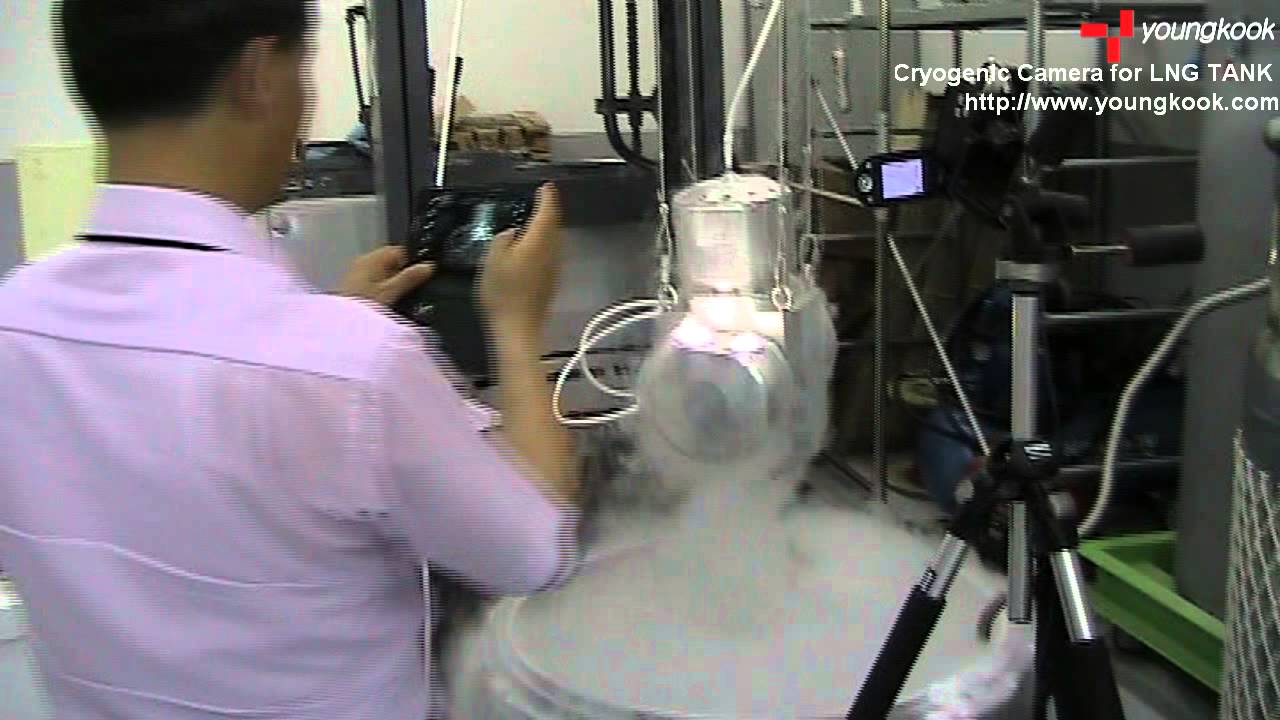

Cryogenics is the study of the production of extremely cold temperatures and is a field of science that looks at what happens when materials, whether metals or gases, are exposed to very low temperatures. The range of temperature associated with cryogenics does tend to vary but is usually associated with temperatures that are below -190 degrees Fahrenheit or 123 degrees Celsius..
There are a wide number of potential and actual applications that use cryogenics. For example, as well as mission-critical cooling systems for space and science projects, such as the Large Hadron Collider or the Planck Space Observatory, cryogenics is being used for cold storage and transportation in the food industry; in the prevention of overheating in underground cables and wind turbine technology as well as in aerospace, telecommunications and electronics.
It can improve the performance of the electronics in the form of lower noise, higher speed and increased efficiency. With cryogenic treatment of electronics, gaps within the structure of their metallic components can be reduced, so lowering the artifacts in the electrical current and producing a truer signal and providing better performance and endurance.
Among other attributes associated with cryogenics are that it has been found to extend the life of circuit boards in extreme conditions and that it reduces the residual stress found between the layers of thin film magnetic memory. It has also been found to increase the contact life of relays, circuit breakers and switches. Other benefits include: improved thermal and electrical conductivity, lower operating power, reduction of parasitic losses, diminished chemical and metallurgical degradation, and improved overall reliability.
Many sensors, such as infrared or X-ray detectors, used for astronomical observations or surveillance must operate at very low temperatures. In order to extract the ultimate performance from these sensors it is necessary to co-locate the initial signal-processing electronics with the sensors in the cold environment. Generally this environment is in the cryogenic temperature range.
Cryogenic electronics have been used for increasing the speed of supercomputers, enhancing the signal-to-noise of Microwave and millimeter-wave receivers used in radio astronomy and deep-space communication by NASA, preamplifiers for cell-phone base stations and nuclear magnetic resonance receivers for higher sensitivity and faster data acquisition, gravity-wave receivers, for better signal-to-noise.
Perhaps the most impressive embodiment of this idea was the ETA10 supercomputer, which had its central processor boards (each with about 240 integrated circuits) immersed in liquid nitrogen (77 K or −196°C). The cooling of amplifiers to reduce noise is well established and this has been employed for many years in the scientific community for receivers used in radio astronomy as well as for deep-space communications with distant spacecraft.
Cryogenic electronics has also many military applications such as development of ultrasensitive communications and electronic warfare systems. Superconducting nanowire single photon detector (SNSPD) arrays have many applications; as a fast, high efficiency, low noise detector for quantum key distribution, as a component in quantum computing and for enhanced quantum imaging.