
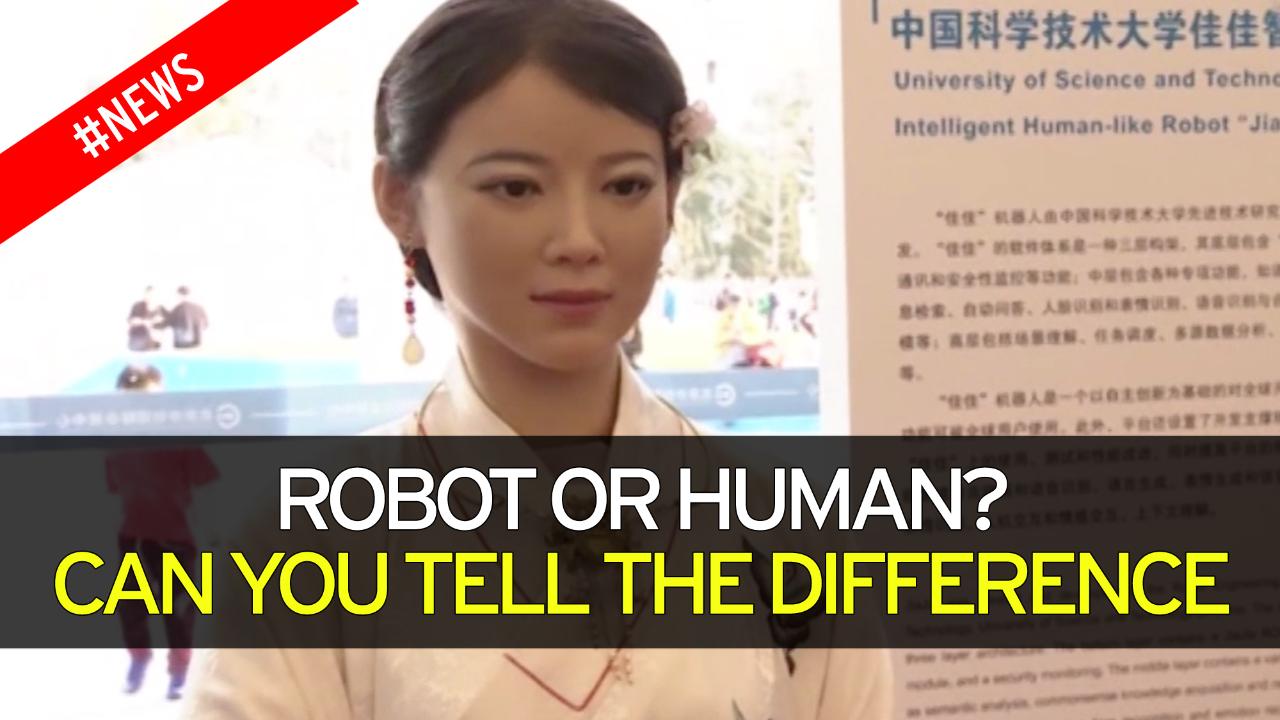

A robot, is any automatically operated machine that replaces human effort, though it may not resemble human beings in appearance or perform functions in a humanlike manner. A robot is a machine—especially one programmable by a computer—capable of carrying out a complex series of actions automatically. A robot can be guided by an external control device, or the control may be embedded within.
The robots tend to possess some or all of the following abilities and functions: accept electronic programming, process data or physical perceptions electronically, operate autonomously to some degree, move around, operate physical parts of itself or physical processes, sense and manipulate their environment, and exhibit intelligent behavior, especially behavior which mimics humans or other animals.
The robot revolution has arrived and they have become our invaluable assistants in factories, surgery, space exploration, agriculture, bomb disposal, and construction. Over the last few decades, robots have rapidly grown from specialized devices developed for select industry applications to household items.
Robots are also appearing in our hospitals, promising to help us fight the COVID-19 pandemic and perform other healthcare tasks in safer and more efficient ways. And NASA just landed the Perseverance rover on Mars, with an autonomous helicopter called Ingenuity attached to its belly.
The branch of technology that deals with the design, construction, operation, and application of robots, as well as computer systems for their control, sensory feedback, and information processing is robotics.
Service Robots assisting humans
They have invaded our lives helping us with everything from vacuuming, cutting grass, home security, and grocery shopping to driving cars and booking appointments. Robotics in personal and domestic applications has experienced strong global growth from floor cleaning robots, robo-mowers and robots for edutainment. Robots that deliver essential items, entertain and inform, or teach your kids are becoming more common.
Service robots of iRobot Corporation of Bedford, Massachusetts, have robots for domestic cleaning. China says it is developing a robotic system to cook meals and then deliver the food to the customer’s table; while Momentum Machines of California say it has created a “smart restaurants” robotic system that not only takes the order but then can create 360 gourmet burgers an hour.
Unlike their manufacturing ancestors, service robots must operate in offices, homes, hospitals, and warehouses—all of which are nonengineered environments in the real world. This is being enabled by their becoming more autonomous, they can now explore and build a model of their world, make plans for achieving targeted goals based on that model, and deal with changes and exceptions so as to respond appropriately.
The base technology building blocks for robots – sensors, open source robotic operating system (ROS), 3D printing, AI software – are now sophisticated and inexpensive enough to build robots that work safely around people, says Steve Cousins founder and CEO of Savioke, which develops and deploys autonomous robots. But safety is only a piece of the puzzle when designing robots that live and work in human environment. The overall design – size, shape, sounds, movement, and personality – are critical to a robot’s success if robots are to be accepted and trusted by humans.
Robotics and artificial intelligence (AI) systems are rapidly evolving over the years and are becoming our partners in our homes and office and machines that can learn, make decisions and automate tasks are already part of our lives.
They have also started to replace us like for example in Chengdu, China, Foxconn, a company making Apple and other electronics, has just built a factory run entirely run by robots. South Korean giant LG Electronics is the latest company that is planning to sell robots to solve tasks currently completed by humans.
A new study by the McKinsey Global Institute estimates that between 400 million and 800 million of today’s jobs will be automated by 2030. The study of 46 countries and 800 occupations by the McKinsey Global Institute found that up to one-fifth of the global work force will be affected. It said one-third of the workforce in richer nations like Germany and the US may need to retrain for other jobs. Machine operators and food workers will be hit hardest, the report says. Poorer countries that have less money to invest in automation will not be affected as much, according to McKinsey.
“A lot of jobs disappeared with the advent of the automobile,” CASBS director Margaret Levi said. “We don’t see the need for as many blacksmiths as we once did.” Levi noted some types of jobs for which society may need robots, because people will not take the positions on. These undesirable roles typically involve difficult or dangerous physical labor. Looking to the future, Levi cited the need for infrastructure development, where robots could play a critical part — already, machines are used to navigate mines and sewers.
In defence and security, they have automated our dull, dirty and dangerous jobs and free humans to focus on higher-value activities. Militaries are also planning to replace soldiers with robots. “We’re just around the corner from a world with no drivers,” said Adm. John Richardson, the chief of naval operations. “Machines are going to be driving us. What are we going to do with the sailors who were trained to drive? We have to be out in front of that problem and get them new skills and the technology to teach them new skills.”
Finally in the future the robots are predicted to become integrated with humans. Kurzweil predicts that humans will become hybrids in the 2030s. That means our brains will be able to connect directly to the cloud, where there will be thousands of computers, and those computers will augment our existing intelligence. He said the brain will connect via nanobots — tiny robots made from DNA strands. Elon Musk in one of his latest interviews speculates that in the nearest time humans should merge with artificial intelligence and create a new form of interaction interface.