
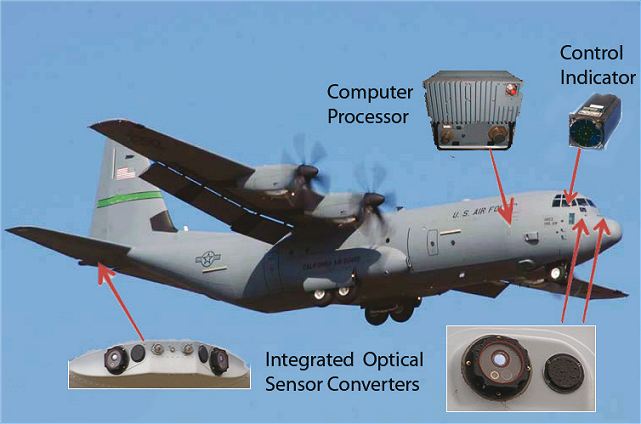

Compact, low cost, accurate hostile fire detection (HFI) solutions are essential to effectively protect aircraft and combat vehicles against small arms, RPGs, mortars, anti-aircraft artillery, and surface to air missiles. Detecting and classifying these types of threats is complicated by many factors including the need for full 360 coverage, requirement for high probability of detection with low false alarms, as well as variances in real world signatures.
The US Army is engineering a new Hostile Fire Detection system for its fleet of armored combat vehicles to identify, track and target enemy small arms fire. The ability of a tank team to identify the location of enemy fire, be it small arms or Anti Tank missiles, is invaluable. This ability, given its connection to other C2 system, can give fighting forces a great advantage in today’s battlefield, where threats comes from all directions, even from underground tunnels. Enabling counterattack is a fundamental element of this, because being able to identify enemy fire would enable vehicle crews to attack targets from beneath the protection of an armored hatch.
The Army currently deploys a targeting and attack system called Common Remotely Operated Weapons System, or CROWS; using a display screen, targeting sensors and controls operating externally mounted weapons, CROWS enables soldiers to attack from beneath the protection of armor.
Much of the emerging technology tied to these sensors can be understood in the context of artificial intelligence, or AI. Computer automation, using advanced algorithms and various forms of analytics, can quickly process incoming sensor data to ID a hostile fire signature. “AI also takes other information into account and helps reduce false alarms,” Gene Klager, Deputy Director, Ground Combat Systems Division, Night Vision and Electronic Sensors Directorate, explained.
AI developers often explain that computers are able to much more efficiently organize information and perform key procedural functions such as performing checklists or identifying points of relevance; however, many of those same experts also add that human cognition, as something uniquely suited to solving dynamic problems and weighing multiple variables in real time, is nonetheless something still indispensable to most combat operations.
This system, integrated onto Apache Attack helicopters, uses infrared sensors to ID a heat signature from an enemy weapon. The location of enemy fire could then be determined by a gateway processor on board the helicopter able to quickly geolocate the attack.
While Klager said there are, without question, similarities between air-combat Hostile Fire Detection technologies and those emerging for ground combat vehicles, he did point to some distinct differences.
“From ground to ground, you have a lot more moving objects,” he said.
Potential integration between Hostile Fire Detection and Active Protection Systems is also part of the calculus, Klager explained. APS technology, now being assessed on Army Abrams tanks, Bradleys and Strykers, uses sensors, fire control technology and interceptors to ID and knock out incoming RPGs and ATGMs, among other things. While APS, in concept and application, involves threats larger or more substantial than things like small arms fire, there is great combat utility in syncing APS to Hostile Fire Detection