
Introduction – Innovation at the Crossroads of Security and Sustainability
Quantum Technologies: Accelerating the Next Wave of Sustainable Innovation
Emerging quantum technologies—spanning quantum sensing, simulation, and computing—are poised to deliver capabilities that were once the realm of science fiction. By leveraging the strange but powerful principles of quantum mechanics, these systems can detect minute changes in physical phenomena, simulate complex processes at atomic precision, and solve optimization problems that would overwhelm even today’s fastest supercomputers. Such abilities are not just impressive in the lab; they have the potential to transform real-world domains ranging from next-generation healthcare diagnostics to renewable energy system design, climate resilience modeling, and sustainable resource management.
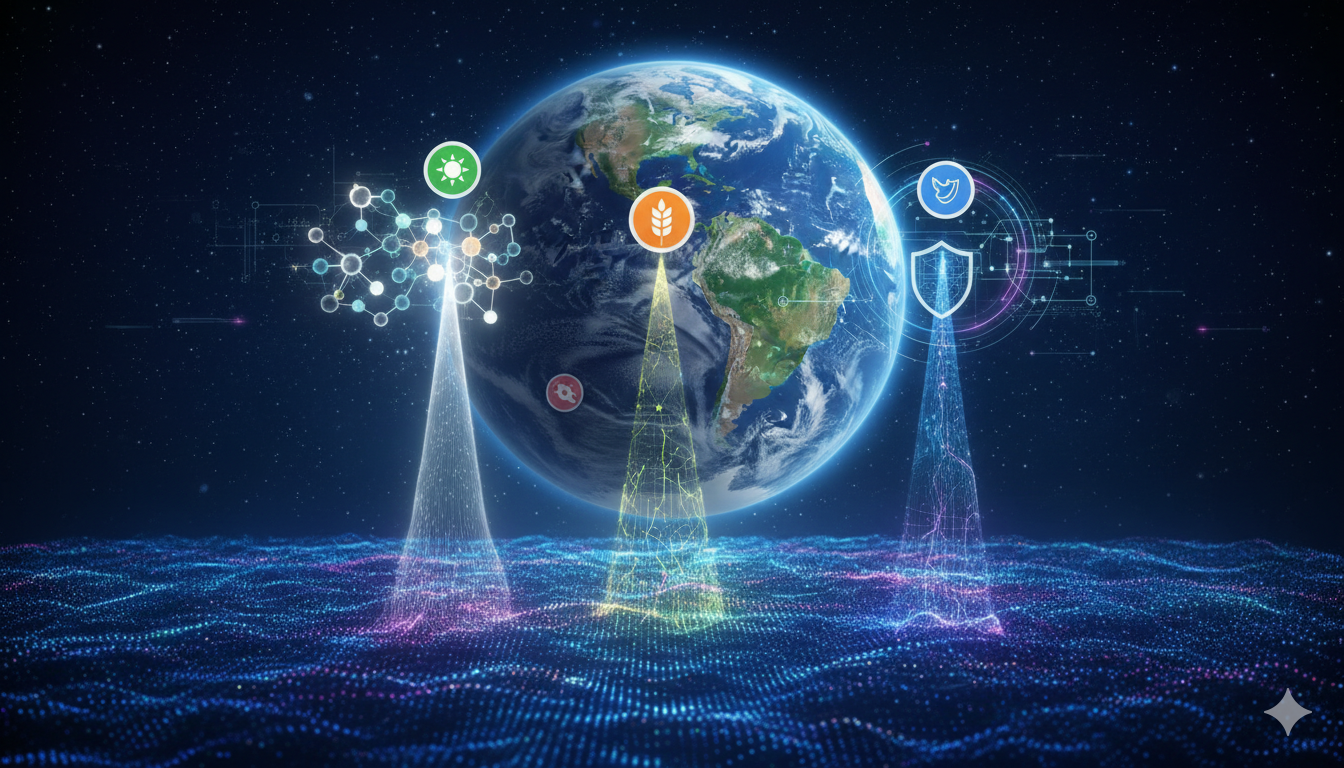
The significance of these breakthroughs becomes even clearer when viewed through the lens of the United Nations Sustainable Development Goals (SDGs). Quantum sensing could enable ultra-precise monitoring of environmental conditions, advancing SDG targets on clean water, climate action, and sustainable cities. Quantum simulation could accelerate the discovery of novel materials for energy storage and carbon capture, supporting affordable clean energy and climate mitigation efforts. Meanwhile, quantum computing could supercharge global health research by unlocking new drugs and treatment pathways for diseases that remain stubbornly resistant to current methods.
As nations race to develop quantum capabilities, the intersection between cutting-edge R&D and sustainable development is becoming a new arena of global competition. Countries see quantum breakthroughs not only as pathways to economic and security advantages, but also as tools to address shared planetary challenges. This dual-use nature—simultaneously driving national competitiveness and advancing global sustainability—positions quantum technology at the heart of a rapidly intensifying “innovation race” that blends geopolitical strategy with the urgent pursuit of the SDGs.
Quantum Sensing: Transforming Water Safety and Global Health
One of the most immediate opportunities for quantum sensing lies in the fight for clean water. In regions such as Sub-Saharan Africa, where millions still lack access to safe drinking water, quantum sensors could detect microscopic contaminants and pathogens with a precision no current method can match. Such capabilities would enable faster and more targeted interventions, improving public health outcomes and saving lives.
Quantum biosensors extend this potential into medicine. They could enable ultra-early detection of diseases, identifying cancer markers or infectious pathogens at extremely low concentrations—long before symptoms appear. This could revolutionize diagnostics in underserved areas with limited healthcare infrastructure, directly advancing SDG3: Good Health and Well-Being.
Quantum Simulation: Catalyzing Clean Energy and Climate Action
Quantum computers excel at simulating complex molecular and material interactions—something classical computers struggle to do efficiently. This strength could dramatically accelerate the search for high-efficiency solar cells, next-generation battery chemistries, and novel catalysts for carbon capture or clean fuel production. Such advancements would directly support SDG7: Affordable and Clean Energy.
In parallel, quantum-powered climate models could deliver far more precise forecasts, enhancing disaster preparedness and helping vulnerable communities adapt to extreme weather events. This capability would be a vital tool for achieving SDG13: Climate Action, especially as climate volatility intensifies.
Optimization at Scale: Smarter Systems for a Sustainable Future
Many sustainability challenges—from energy distribution to food security—are fundamentally optimization problems. Quantum algorithms have the potential to solve these faster and more effectively than classical computing. This could lead to smarter electricity grids capable of balancing variable renewable inputs in real time, supply chains that minimize food waste, and urban planning systems that design cities to be both livable and resource-efficient.
By improving efficiency across such complex systems, quantum optimization could cut emissions, reduce costs, and conserve natural resources, supporting SDG11: Sustainable Cities and Communities and SDG12: Responsible Consumption and Production.
Quantum for Society: Aligning with the SDGs
The report “Quantum for Society: Meeting the Ambition of the SDGs” underscores how quantum technologies are poised to become powerful enablers of the United Nations Sustainable Development Goals (SDGs). Rather than being confined to abstract physics or niche applications, quantum sensing, simulation, and computing are increasingly being directed toward pressing real-world challenges. These include diagnosing and treating diseases, expanding access to quality education, and mitigating the impacts of climate change. The report frames quantum R&D not as an isolated scientific pursuit, but as a strategic tool for tackling the most urgent issues facing humanity.
In healthcare, quantum technologies could dramatically improve diagnostic precision, drug discovery, and personalized medicine. Quantum-enhanced imaging and sensing can detect disease biomarkers at much earlier stages, enabling faster and more effective interventions. For education, the democratization of quantum computing resources—through cloud-based platforms and affordable quantum simulators—could provide students and researchers worldwide with access to cutting-edge tools, helping bridge global disparities in STEM capabilities.
Climate action is another area where the report sees quantum making a significant contribution. Quantum simulation could help model complex climate systems and predict the outcomes of intervention strategies with unprecedented accuracy, enabling better-informed policies. In the energy sector, quantum algorithms may optimize renewable energy grids, improve battery designs, and accelerate the discovery of new materials for clean energy generation.
Ultimately, “Quantum for Society” calls for a coordinated global effort to ensure these advances are deployed ethically and inclusively, so that quantum breakthroughs do not deepen technological divides but instead act as catalysts for achieving the SDGs. This vision aligns closely with the growing recognition that quantum innovation is not just a race for scientific dominance—it’s also a race to deliver tangible societal benefits.
From Potential to Impact: Building the Quantum-Sustainability Pipeline
While the promise of quantum technology is immense, the field is still emerging. To ensure meaningful contributions to the SDGs before 2030, governments, industry, and academia must work together to identify high-impact applications, channel resources into focused R&D, and develop a quantum-literate workforce. Policy frameworks must be agile enough to keep pace with rapid technological change, while global partnerships ensure that breakthroughs are shared with those who need them most.
Conclusion: A Quantum Leap Toward 2030
Quantum technology is no longer a far-off vision—it is a near-term enabler of sustainable development. By focusing on sensing, simulation, and optimization, we can address some of humanity’s most pressing challenges: clean water access, affordable renewable energy, climate resilience, and better global health outcomes. The clock is ticking toward the 2030 deadline, but with coordinated action, quantum innovation could help the world not just meet, but surpass, its sustainability goals
References and Resources also include:
https://www.iotworldtoday.com/quantum/quantum-tech-promises-to-support-un-sustainability-goals