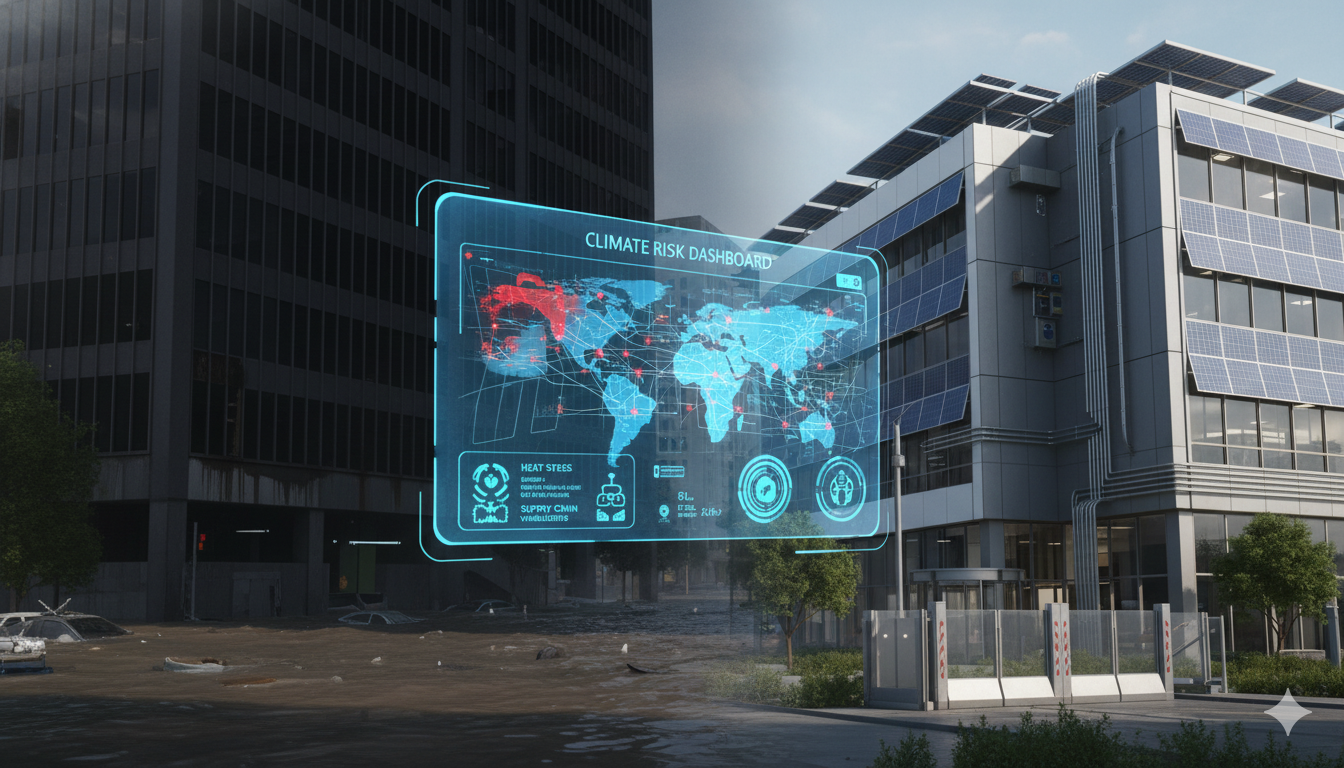

Climate change is no longer a distant threat—it is a clear and present danger to businesses worldwide. Flooding, extreme heat, drought, and severe storms are growing in both frequency and intensity, creating direct risks to infrastructure, operations, and financial stability. The United States set a record in 2024 with 27 separate billion-dollar weather and climate disasters, well above the long-term average since 1980. Those events disrupted supply chains, damaged critical assets, and jeopardized business continuity at a scale without precedent.
The first half of 2025 has continued that trend, with 15 U.S. billion-dollar disasters recorded from January through June, resulting in an estimated $99 billion in losses. With a La Niña watch in effect as of August 14, 2025, forecasters warn that late-season hurricanes and severe storms could be more active—further elevating risks in the months ahead.
For companies, the question is no longer if climate hazards will strike, but when and how severely. The time to assess vulnerabilities and implement resilience strategies is now.
Key Climate Hazards Threatening Businesses
Flooding and heavy precipitation remain among the most immediate and costly threats. Riverine floods, flash floods, and storm surges can submerge facilities, destroy equipment, and sever transportation links. Even in historically cooler regions, glacial outburst floods are intensifying. In August 2025, Juneau, Alaska experienced a record outburst flood but avoided widespread destruction thanks to temporary levees and pre-staged barriers—an example of how preparation can change outcomes.
Flooding and Heavy Precipitation
Flooding is one of the most immediate and destructive climate hazards businesses face. Overflowing rivers, flash floods, and storm surges can quickly submerge facilities, damage vital equipment, and bring transportation networks to a standstill. In low-lying or coastal areas, even a single extreme rain event can wipe out months of productivity. For instance, a manufacturing plant located in a flood-prone zone could suffer weeks of downtime if water damage disables its critical machinery. Such interruptions not only delay customer deliveries but can also trigger contractual penalties and loss of market share, especially when competitors are able to maintain operations.
Extreme Heat and Drought
Prolonged heatwaves pose a dual challenge: they increase the strain on cooling systems while simultaneously lowering workforce productivity, particularly in labor-intensive industries. Rising temperatures drive up energy costs and force companies to make unplanned investments in climate control. Drought adds another layer of risk, threatening any operation dependent on stable water supplies, from agriculture to semiconductor manufacturing. Consider a data center operating without sufficient cooling capacity during a heatwave—overheated servers can fail within minutes, causing outages that disrupt services, harm customer trust, and lead to significant financial losses.
Wildfires and Air Quality Deterioration
Wildfires not only destroy property but also degrade air quality across vast regions, affecting businesses far from the fire line. Smoke infiltration can render indoor spaces unsafe, forcing companies to halt operations and send employees home. This is particularly disruptive in regions where wildfire seasons are lengthening and becoming more intense. A corporate campus situated near wildfire-prone areas may have to invest in high-grade air filtration and sealing systems to ensure safe working conditions, protect employee health, and avoid prolonged shutdowns during smoke events.
Hurricanes and High-Wind Events
Tropical cyclones, severe windstorms, and other high-wind events can inflict structural damage, cause widespread power outages, and create cascading delays in supply chains. Businesses with coastal or exposed facilities are especially vulnerable to these destructive forces. A warehouse situated near the shoreline, for example, may need reinforced roofing, impact-resistant windows, and reliable backup generators to continue operating through Category 4 or stronger storms. Without such measures, even a brief loss of power or structural compromise can halt operations, damage inventory, and disrupt downstream customers for weeks.
Extreme heat and drought are straining cooling systems, slashing labor productivity, and inflating energy costs. Heat-exposed industries and data center operations are especially vulnerable when cooling resilience and water availability are not built into design. Wildfire seasons are lengthening, and smoke intrusions are routinely degrading air quality hundreds of miles away, forcing slowdowns and causing health-related absences. For coastal and wind-exposed assets, late-season hurricanes and severe wind events remain a major cause of catastrophic losses—risks that may be amplified in La Niña years.
Assessing Your Business’s Climate Vulnerability
Mitigation starts with a rigorous exposure and criticality assessment. Businesses should map assets and suppliers against floodplains, wildfire zones, heat stress maps, drought-prone regions, and wind-risk areas. Each asset should be evaluated for its importance to revenue and operations, with scenario planning that considers worst-case losses, including the complete shutdown of a major facility or supplier.
Walmart, for example, conducts scenario-based climate risk assessments that cover flood, heat, drought, extreme precipitation, and wind risks across its global network. These findings are integrated into enterprise risk management and capital planning to prioritize investments in climate resilience.
Mitigation Strategies: Hardening Infrastructure
Businesses must adapt now to avoid catastrophic failures later, and that begins with hardening their physical and digital infrastructure against the growing threat of climate hazards. Floodproofing measures, such as elevating electrical systems above projected flood levels and installing modular flood barriers, can prevent costly downtime and protect sensitive equipment. For example, a manufacturing plant located in a flood-prone region that elevates its control panels and critical machinery can resume operations quickly after a storm, avoiding weeks of lost production.
Heat resilience is another pressing priority, especially as prolonged heatwaves increasingly strain cooling systems and disrupt productivity. Implementing cool roof technology, investing in energy-efficient HVAC systems, and integrating real-time temperature monitoring can significantly reduce the risk of overheating. Data centers, for instance, are particularly vulnerable—without adequate cooling, servers can fail during extreme heat, leading to costly outages. By adopting advanced cooling designs and redundant systems, operators can maintain uptime even in peak summer conditions.
Wind resistance measures are vital for facilities in hurricane or high-wind zones. Reinforcing structural elements such as roofing, installing storm-resistant windows, and anchoring equipment can greatly reduce damage during severe storms. A coastal warehouse that upgrades to reinforced roofing materials and impact-rated windows can withstand Category 4 hurricanes with minimal disruption, protecting both inventory and personnel.
Finally, backup systems are critical for operational continuity in any disaster scenario. On-site generators and redundant data storage solutions ensure that essential functions remain online even during prolonged power outages. For example, a corporate headquarters equipped with a microgrid and cloud-synced data systems can continue serving clients even if the regional power grid fails during a wildfire or hurricane. These integrated strategies not only safeguard assets but also build resilience that directly translates into competitive advantage.
Hardening Infrastructure for Resilience: What Leading Firms Are Doing Now
Resilience pays when it is built into the design and operation of assets, not added as an afterthought.
Microsoft has redesigned its data centers with direct-to-chip cooling systems that save over 125 million liters of water per facility each year. Through water-reuse partnerships such as the Quincy Water Reuse Utility in Washington state, it has reduced on-site potable water use by 97% while returning more than 1.5 million cubic meters annually to the community. The company also holds a portfolio of 34 GW of contracted renewable energy across 24 countries, improving both energy resilience and long-term cost stability.
Walmart has accelerated its climate adaptation by supplying nearly half of its global electricity needs from renewable sources and achieving its Project Gigaton goal—avoiding or reducing more than one billion metric tons of emissions—six years ahead of schedule. The retailer is retrofitting refrigeration systems, piloting electric yard trucks, and updating operational targets to reflect new climate realities.
In manufacturing, semiconductor giants like TSMC and Intel are aggressively investing in water resilience. TSMC has expanded water recycling and secured reclaimed water contracts to buffer against Taiwan’s periodic droughts. Intel is working toward “net positive water” by 2030 through on-site conservation and watershed restoration projects, ensuring operational continuity in increasingly water-stressed regions.
Critical logistics hubs are adapting too. Maersk is working with risk specialists to reinforce port terminals against storm surges, high winds, and flooding, shifting the focus from recovery after disaster to maintaining operations through it.
The Cost of Inaction vs. Proactive Investment
Recent years have shown that the costs of inaction far outweigh the price of preparation. Insurance premiums are rising, deductibles are increasing, and coverage exclusions are expanding as the risk environment intensifies. Operational downtime, supply chain disruptions, and reputational damage add further hidden costs.
By contrast, proactive measures—flood-proofing electrical systems, reinforcing structures against high winds, adopting water-efficient cooling systems, diversifying energy sources, and relocating single points of failure—can significantly reduce both financial and operational impacts. The result is lower total cost of risk and greater business continuity.
Conclusion: Building a Climate-Resilient Business
Climate hazards are now core security risks for any organization. The most resilient companies are mapping exposures, redesigning facilities for future conditions, protecting energy and water supply, diversifying suppliers, and embedding climate risk into governance and capital expenditure planning.
The playbook is clear, but the window for effective action is narrowing. Is your organization prepared for the next billion-dollar disaster? After a record-breaking 2024 and a turbulent 2025 so far, the time to act is not next quarter—it’s now.