
Low-carbon propulsion refers to the use of advanced transportation technologies designed to significantly cut carbon dioxide (CO₂) emissions and reduce the overall greenhouse gas (GHG) footprint of mobility systems. It encompasses a diverse range of solutions, including electric propulsion systems, hydrogen fuel cells, biofuels, synthetic fuels, and next-generation hybrid technologies. By replacing or complementing conventional fossil-fuel engines, these innovations not only address environmental challenges but also pave the way for cleaner, more efficient, and more resilient transportation networks.
As nations, industries, and cities commit to net-zero targets, low-carbon propulsion has emerged as a cornerstone of the transition to sustainable economies. From electric vehicles dominating urban roads to hydrogen-powered trains and ships reshaping long-distance travel, the sector is redefining how goods and people move across the globe. Beyond environmental benefits, this shift is unlocking economic opportunities, spurring industrial innovation, and positioning forward-thinking players to lead in the rapidly evolving mobility landscape.
Market Overview: Rapid Growth Driven by Sustainability Demands
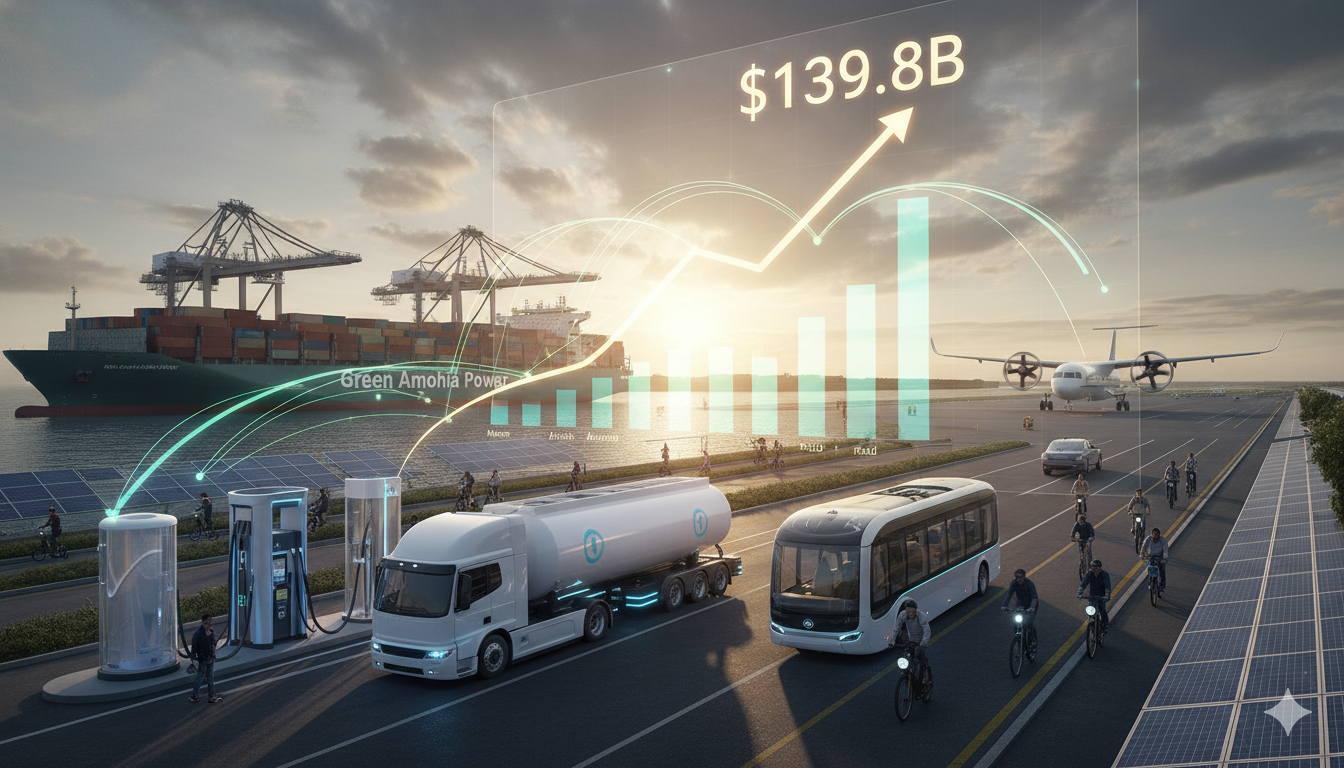
The global low-carbon propulsion market is undergoing a dramatic transformation as governments, industries, and consumers accelerate the shift toward cleaner transportation solutions. According to Dimension Market Research, the market is expected to reach $23.8 billion in 2024 and surge to $139.8 billion by 2033, representing an impressive compound annual growth rate of 21.8%.
This rapid market expansion is fueled by the global urgency to cut carbon dioxide emissions and shrink the greenhouse gas footprint of the transportation sector—one of the largest contributors to climate change. Governments are tightening emissions regulations, industries are committing to net-zero targets, and consumers are increasingly demanding cleaner mobility options. In this environment, low-carbon propulsion technologies have moved from niche alternatives to central pillars of transport policy and industrial strategy.
At the forefront of this transformation are electric propulsion systems, particularly battery electric and plug-in hybrid vehicles, which are reshaping both personal and commercial transport. These are being reinforced by breakthroughs in hydrogen fuel cell technology, the growing use of biofuels and synthetic fuels, and the adoption of cleaner alternatives such as compressed natural gas and advanced hybrid drivetrains. Together, these solutions are driving a fundamental shift in how vehicles are powered, offering a pathway toward a low-emission future while opening up new economic opportunities for innovators and early adopters.
Key Market Trends Shaping the Future
North America Leads with Strong Policy Support
North America is positioned to dominate the market in 2024, capturing nearly 39.3% of total revenue. This leadership stems from a combination of strict emissions regulations, such as U.S. EPA standards and California’s Zero-Emission Vehicle mandate, generous government incentives like EV tax credits and infrastructure subsidies, and continuous improvements in battery technology that are making electric vehicles more affordable and capable of longer ranges. The U.S. market alone is projected to reach $8.3 billion in 2024 and grow at a robust 20.4% CAGR.
Rail Transport Emerges as a Low-Carbon Leader
The rail sector is set to be a major driver of low-carbon mobility in 2024, benefiting from its inherent efficiency in mass transit. Electrification projects and the introduction of hydrogen-powered locomotives are significantly reducing per-passenger emissions, while large-scale government investments in sustainable rail infrastructure—such as the European Green Deal and the U.S. Infrastructure Bill—are pushing the industry toward a greener future.
Passenger EVs Dominate Road Transport
Passenger cars are expected to claim the largest share of road transport revenue in 2024, propelled by surging consumer demand for electric vehicles from leading brands such as Tesla, BYD, and Hyundai. Falling battery costs—expected to drop below $100/kWh by 2030—and the expansion of fast-charging networks are easing range anxiety and making EVs increasingly mainstream.
Breakthroughs in Battery and Charging Technology
Recent technological advances are accelerating the shift toward low-carbon mobility. Solid-state batteries are emerging as a game-changer, offering significantly higher energy density, improved safety, and the potential for dramatically faster charging compared to conventional lithium-ion cells. Parallel to this, ultra-fast charging systems—capable of delivering a full recharge in just 10 to 15 minutes—are transitioning from pilot projects to commercial deployment, reducing downtime for both passenger and commercial vehicles.
Another pivotal innovation is Vehicle-to-Grid (V2G) integration, which allows electric vehicles to act as distributed energy resources, feeding stored power back into the grid during peak demand. This not only enhances grid resilience but also helps balance the intermittency of renewable energy sources such as solar and wind. Together, these breakthroughs are dismantling some of the most persistent barriers to adoption, paving the way for EVs to become an integral part of both transportation and energy ecosystems.
Green Financing Fuels Expansion
The momentum behind low-carbon propulsion is being amplified by sustainable finance initiatives. Green bonds are funding EV infrastructure projects, corporations are committing to ambitious fleet electrification goals—Amazon’s order for 100,000 electric delivery vans being a prime example—and public-private partnerships are accelerating the build-out of hydrogen refueling and biofuel production facilities.
Challenges: Barriers to Mass Adoption
While the momentum for low-carbon propulsion is undeniable, several barriers still hinder mass adoption. High upfront costs for electric and hydrogen vehicles remain a major deterrent, particularly in cost-sensitive and emerging markets where government incentives may be limited. Infrastructure gaps—most notably the lack of charging and hydrogen refueling networks in rural and underserved regions—continue to slow adoption. Even in developed markets, infrastructure growth is struggling to match the pace of vehicle deployment.
In addition, the industry faces supply chain constraints for critical minerals such as lithium, cobalt, and rare earth elements, leading to price volatility and production bottlenecks. Range anxiety, especially in the context of long-haul freight and commercial trucking, persists both as a technical limitation and a consumer perception issue. Overcoming these challenges will require coordinated efforts across policy, technology innovation, and investment in supply chains and infrastructure to ensure the transition is both equitable and scalable.
Competitive Landscape: Innovation and Strategic Partnerships
The market is highly competitive, with global leaders investing heavily in research, development, and infrastructure expansion. Tesla remains dominant in electric vehicles, battery innovation, and autonomous driving, while BYD continues to expand its position as the world’s largest EV manufacturer. Toyota and Hyundai are betting on hydrogen fuel cell technology for future growth, Siemens and Alstom are leading the charge in electrified rail solutions, and Cummins and General Electric are pushing advancements in hybrid and hydrogen-powered engines. Strategic alliances between automakers, energy firms, and tech startups are becoming common, as collaboration proves essential to scaling low-carbon mobility.
Regional Insights: A Global Shift Toward Sustainability
In North America, robust regulatory frameworks, generous government incentives, and high electric vehicle (EV) adoption rates have cemented the region’s position as a market leader. The United States and Canada are accelerating investments in charging infrastructure, advanced battery manufacturing, and clean fuel alternatives, ensuring the momentum for decarbonizing transport continues to build. Europe, meanwhile, is pushing forward with its ambitious “Fit for 55” plan, which mandates 100% zero-emission car sales by 2035. Backed by strict emissions standards and strong public support, the European market is rapidly transitioning toward electrification and sustainable fuel adoption.
Asia-Pacific is emerging as the fastest-growing market, driven by China’s unparalleled dominance in EV production, rapid charging network expansion, and cost-competitive manufacturing. India’s aggressive push into biofuels, coupled with growing interest in EVs, is adding further momentum. In Latin America and Africa, the market is still in its early stages but showing promising signs—particularly in the adoption of biofuels and the deployment of electric buses for urban transit systems. These regions are increasingly attracting investment for sustainable mobility solutions tailored to local infrastructure and economic conditions, signaling the start of broader clean transport adoption.
Future Outlook: A $139.8 Billion Market by 2033
The low-carbon propulsion market is on track for exponential expansion, projected to reach $139.8 billion by 2033. This momentum will be fueled by ever-stricter global emissions regulations, breakthrough advances in battery chemistry, hydrogen storage, and hybrid drivetrains, and a growing consumer shift toward sustainable mobility. These forces are converging to accelerate innovation and adoption across every segment of the transportation sector.
In the near term, compressed natural gas (CNG) and hybrid vehicles will remain strong contenders due to their cost-effectiveness, mature infrastructure, and immediate emissions benefits. By the late 2020s, falling battery costs and expanded charging networks will tip the balance toward battery electric vehicles (BEVs) as the dominant choice for light-duty transport. Looking further ahead, hydrogen fuel cells are expected to make major inroads in heavy-duty applications such as trucking, maritime shipping, and potentially aviation—offering long range, fast refueling, and zero tailpipe emissions for sectors where batteries face limitations.
Conclusion: The Road to Zero-Emission Mobility
The shift to low-carbon propulsion is no longer optional—it is a necessity driven by climate imperatives, technological innovation, and shifting consumer expectations. With the market projected to reach nearly $140 billion by 2033, the race is on for automakers, energy providers, and policymakers to lead the next phase of the mobility revolution.
Electric vehicles are set to dominate passenger transport, but hydrogen and biofuels will remain crucial for achieving comprehensive decarbonization, especially in commercial and heavy transport. Rail and public transit systems offer some of the most immediate gains, while regional leaders like North America and Europe set the pace for global change.
The future of mobility is clean, connected, and sustainable—and the low-carbon propulsion market will be at the heart of this transformation.