
Introduction
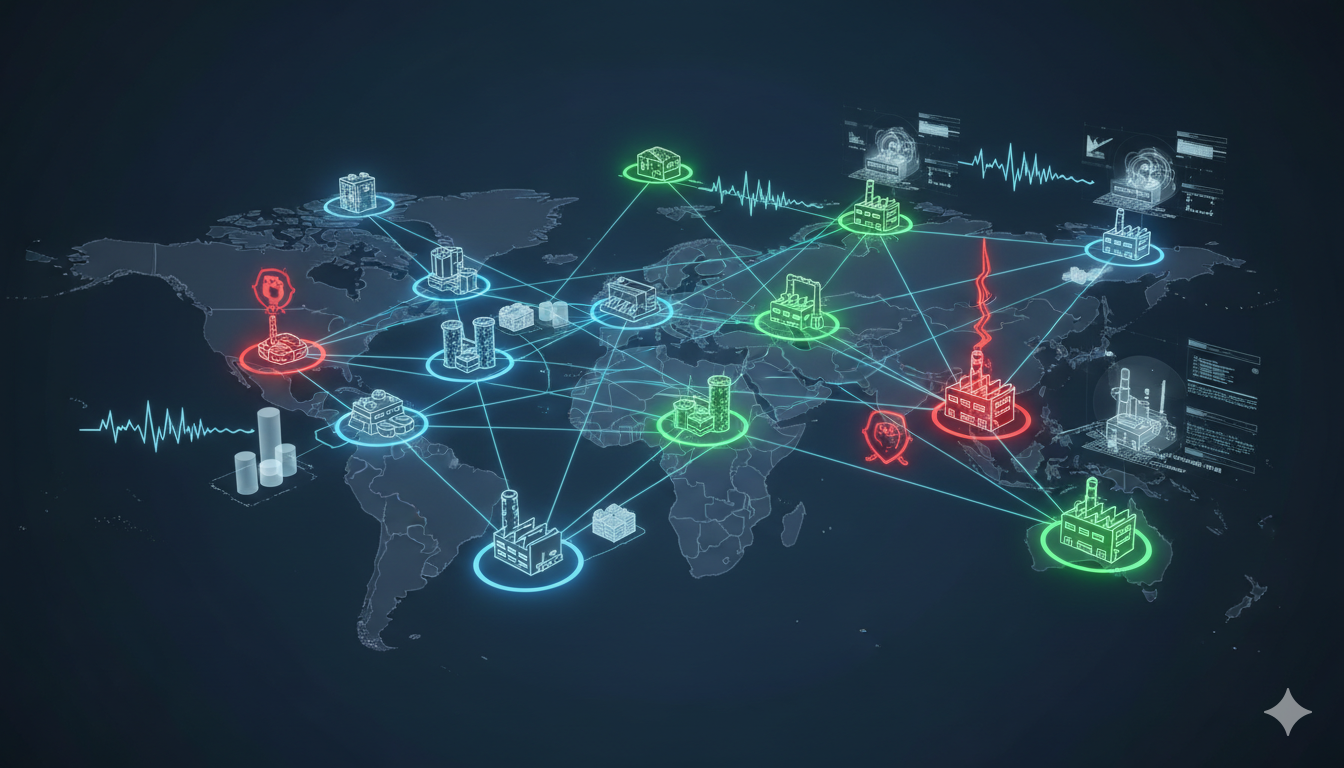
Global supply chains—moving goods, data, and services—are now as critical to defense readiness as battlefield strategy. But their deep interconnections have made them prime targets for cyber adversaries. Past incidents like SolarWinds showed how a single weak link can compromise entire ecosystems, undermining trust and operational integrity.
The Defense Industrial Base (DIB) is not just a collection of companies—it is the backbone of national security. This vast ecosystem of contractors, labs, specialized manufacturers, and logistics providers sustains the design, production, and maintenance of critical defense systems. Yet, this ecosystem is under relentless pressure from cyberattacks and supply chain manipulation. Unlike commercial businesses, where breaches often mean financial loss or reputational damage, supply chain compromises in defense can result in strategic disadvantages, mission failure, or even loss of life.
In 2025, the risks have only grown sharper. Europe’s defense contractors have faced ransomware disrupting precision parts procurement, India’s aerospace sector has seen attempted breaches on satellite communications, and Asia-Pacific semiconductor supply chains have endured code injection attacks delaying chip deliveries. These disruptions illustrate how cyber sabotage is no longer theoretical—it is already reshaping the defense industrial base
Supply chain attacks compromise software or hardware before they ever reach the end user. By targeting vulnerabilities in an organization’s network of suppliers, contractors, and partners, attackers exploit trusted relationships to gain access to otherwise secure systems. This makes supply chain threats uniquely dangerous, as a single weak link can expose not only one company but also its customers, partners, and in some cases, entire industries.
Why Supply Chain Cyberattacks Are Escalating
Industry experts warn that these risks are only growing. Gartner predicts that by 2025, nearly 45% of organizations worldwide will experience attacks on their software supply chains—a significant increase from just 2021. This surge underscores the urgent need for organizations to adopt proactive supply chain risk management strategies, such as zero-trust architectures, continuous vendor monitoring, and secure procurement practices.
The core driver of today’s escalating supply chain cyberattacks is the persistent vulnerability of third-party vendors. Adversaries often bypass hardened internal networks by exploiting weaker links—compromising software updates, hijacking vendor credentials, or injecting tampered hardware into trusted channels. Once embedded, attackers can move laterally across systems with stealth, extracting sensitive data or planting backdoors that persist long after the initial breach.
The complexity and opacity of modern supply chains make these attacks especially challenging to detect and mitigate. With thousands of interconnected vendors and subcontractors involved in producing hardware and software, even one compromised supplier can become an entry point for adversaries. Addressing this challenge requires a layered defense approach, combining technology, policy, and collaboration across industries to reduce systemic vulnerabilities.
What makes these attacks so difficult to contain is the degree of trust placed in suppliers and partners. Defense contractors, semiconductor foundries, logistics providers, and even niche subcontractors often maintain privileged access to core systems. This creates a broad attack surface where one compromised entity can cascade disruption across the entire chain, threatening operational continuity, intellectual property, and in defense contexts, even national security.
In recent years, cyber operations have become more targeted, often aligning with geopolitical objectives. Semiconductor supply chains have been repeatedly tested, as adversaries probe chip designers, foundries, and service providers—knowing that disruptions here can ripple across multiple industries simultaneously. At the same time, transportation and logistics networks have emerged as high-value targets, with attackers exploiting tracking systems, cameras, and local office networks to gain insights into the flow of critical goods and supplies.
The escalation reflects a wider shift from opportunistic cybercrime to strategically motivated cyber warfare. Rather than simply stealing data or demanding ransom, many campaigns now focus on shaping outcomes in conflicts, slowing adversaries’ technological progress, or undermining the credibility of entire supply chains. This blend of espionage, sabotage, and disruption marks a new era in which defending the supply chain has become synonymous with defending national security.
Cyber Threat to the Defense Industrial Base (DIB)
The Defense Industrial Base (DIB)—a complex web of contractors, labs, and manufacturers—is under increasing siege from sophisticated cyber adversaries. Intellectual property theft remains a primary concern, as stolen designs allow competitors and nation-state rivals to replicate advanced weapons systems without investing in costly research and development. This erodes U.S. and allied military advantages and accelerates adversarial capabilities on the battlefield.
Equally dangerous is the risk of sabotage. Malware embedded within defense systems has the potential to disable critical assets during moments of conflict, undermining readiness and trust in essential technologies. Unlike theft, which drains long-term advantage, sabotage poses an immediate operational threat that can decide outcomes in real time.
In October 2020, the National Security Agency (NSA) issued a stark warning that Chinese government-backed hackers were aggressively targeting U.S. computer networks tied to national defense. The advisory characterized Beijing’s cyber activities as a critical national security priority requiring urgent countermeasures. The NSA urged both the Department of Defense’s cyber units and the broader defense industrial base (DIB) to bolster their defenses against Chinese intrusion. According to the warning, these networks frequently encounter a full array of tactics and techniques deployed by Chinese state-sponsored actors seeking to exploit systems holding sensitive intellectual property, economic, political, and military data. The problem, which has long been recognized, was underscored by a recent internal audit that concluded the scale and severity of cyber-enabled theft of military secrets was far greater than previously understood.
Cyber-enabled intellectual property theft and adversary penetration of DIB networks represent one of the most profound existential threats to U.S. national security. The DIB encompasses the Department of Defense, government partners, and private-sector firms worldwide that research, develop, design, produce, and sustain military weapon systems, subsystems, components, and parts. If adversaries compromise this ecosystem, they gain access not only to sensitive information but also to the technological foundation of U.S. military superiority.
Reports have documented China’s systematic capture of foreign technologies, including the theft of U.S. weapons systems, which has significantly eroded the military balance between Washington and Beijing. Alarmingly, many companies in the defense supply chain lack the resources or expertise to adequately defend themselves against sophisticated cyberattacks. At the same time, economic pressures and China’s state-mandated technology transfer requirements have driven many U.S. firms to offshore research and development operations in exchange for access to the Chinese market. This dynamic has created a feedback loop where cost incentives and strategic vulnerabilities intersect, further complicating U.S. efforts to secure the DIB.
The nature of the threat is multifaceted. Intellectual property theft enables adversaries to replicate advanced U.S. defense technologies without bearing the high costs of research and development. Cyber intrusions into the DIB can also provide adversaries with insights into potential vulnerabilities, enabling the development of countermeasures or offensive capabilities that neutralize U.S. military advantages. Worse still, infiltrating the design and manufacturing processes of weapons systems opens the possibility of manipulating or sabotaging their intended functionality, potentially undermining trust in critical defense infrastructure.
This is more than a cybersecurity issue—it is a cross-domain challenge at the intersection of cyberspace and traditional warfare. Adversarial activity in cyberspace reverberates into the conventional domain, threatening to erode U.S. military advantages, weaken deterrence, and provide rival nation-states with strategic leverage in both peacetime competition and potential conflict.
Supply chain compromise further magnifies these risks. Hackers increasingly infiltrate smaller subcontractors to gain access to prime contractors, exploiting weaker defenses to move laterally into sensitive networks. Many mid-tier and specialized suppliers lack the resources for comprehensive cybersecurity, making them attractive targets for persistent threat actors.
The urgency of the threat is further highlighted by industry data. VMware’s Global Incident Response Threat Report revealed that a majority of respondents from defense-related industries had experienced “integrity and destructive attacks.” Over half reported encountering these attacks frequently, while nearly two-thirds indicated they faced them the vast majority of the time. These findings underscore a dangerous shift in adversary tactics: cyber operations are no longer limited to espionage and theft but increasingly focus on disruption and destruction.
As Tom Kellermann, VMware’s Head of Cybersecurity Strategy, explained, the adversary’s goals have evolved. “The adversary now doesn’t just want to break into defense contractor X and steal national secrets,” he warned. “The adversary wants to break into defense contractor X and then use their digital transformation to attack government agencies.” This reflects a growing trend where state-backed actors exploit digital transformation initiatives to compromise broader U.S. government systems through trusted industry partners.
This escalation is not limited to China. According to Kellermann, the “unprecedented level of tension” between the U.S. and Russia is manifesting in cyberspace, with groups such as NOBELIUM—linked to the infamous SolarWinds attack—waging increasingly aggressive campaigns. Kellermann noted that NOBELIUM’s ongoing operations may be “100 times more significant than SolarWinds,” as they aim not merely to infiltrate but to commandeer the very infrastructure underpinning the digital transformation of U.S. government and industry. By hijacking technology ecosystems, these actors seek to weaponize trusted networks against the government itself, amplifying the scale and sophistication of the threat to the Defense Industrial Base.
Global supply chain diversification adds another layer of complexity. In India’s aerospace sector, for example, international firms are expanding partnerships with emerging manufacturers to strengthen resilience and reduce dependency on limited suppliers. While this shift bolsters industrial capacity, it also raises concerns about securing new partnerships as nations rapidly scale defense manufacturing to capture a greater share of the global market. Without consistent and enforceable security standards across the chain, these expanded networks risk becoming conduits for espionage and disruption.
Strengthening Supply Chain Risk Management (SCRM)
Supply chain security is the part of supply chain management that focuses on the risk management of external suppliers, vendors, logistics and transportation. Its goal is to identify, analyze and mitigate the risks inherent in working with other organizations as part of a supply chain. Supply chain security involves both physical security relating to products and cybersecurity for software and services.
The Department of Defense (DoD) defines Supply Chain Risk Management (SCRM) as “a systematic process for managing supply chain risk by identifying susceptibilities, vulnerabilities, and threats… and developing mitigation strategies.” In the defense sector, where disruptions to aircraft avionics, missile guidance systems, or secure communications software can have immediate national security consequences, SCRM is both a security mandate and a mission enabler.
The first line of defense is vendor risk assessment. Defense contractors must demand transparency from suppliers at every tier, requiring certifications such as SOC 2 or ISO 27001, and embedding cybersecurity clauses into contracts. For example, aerospace primes increasingly audit subcontractors producing critical avionics modules to ensure they cannot be compromised by weak cyber hygiene. Continuous monitoring for vendor-related breaches helps identify issues before they cascade into sensitive systems.
Equally vital is adopting Zero Trust principles and least privilege access. In defense supply chains, where thousands of subcontractors may need temporary system access, network segmentation and strict identity controls are critical. Multi-factor authentication (MFA) and role-based access prevent unauthorized entry, while full logging of contractor activities ensures traceability if a breach occurs. This approach limits the lateral spread of adversaries within defense networks.
Threat intelligence sharing strengthens early warning systems across the Defense Industrial Base. Collaborative platforms with agencies like CISA and NIST, as well as classified information-sharing circles, allow rapid dissemination of adversary tactics targeting specific sectors—such as counterfeit semiconductors or backdoored firmware in radar systems. AI-driven anomaly detection further enhances monitoring for unusual vendor behavior or compromised shipments.
A crucial pillar is securing software and hardware procurement. With adversaries known to infiltrate semiconductor fabs and tamper with embedded systems, defense contractors must verify software bills of materials (SBOMs), inspect imported hardware for anomalies, and enforce secure coding practices in mission-critical applications like satellite control systems. By tightening procurement integrity, organizations can prevent supply chain compromises that could undermine weapons platforms or C4ISR networks.
Finally, incident response planning ensures resilience when breaches occur. Defense firms regularly simulate supply chain attacks—such as malware hidden in software updates or sabotage in precision components—to rehearse containment and recovery. Breach notification protocols streamline communication with government stakeholders, while maintaining offline backups of mission software ensures continuity of operations even in the event of compromise.
Taken together, these strategies transform SCRM from a compliance requirement into a layered defense posture, helping the Defense Industrial Base remain resilient against the rapidly evolving cyber and supply chain threats of 2025.
Conclusion: A Strategic Imperative
Supply chain cyber threats have moved far beyond theory; each incident now carries the potential to disrupt global industries, erode military readiness, and strain strategic alliances. For the Defense Industrial Base and its private-sector partners, resilience requires more than compliance checklists—it demands embedding risk-based supply chain risk management frameworks, investing in adaptive detection and response systems, and institutionalizing collaboration across sectors and allied nations. Frameworks such as the DoD’s Cybersecurity Maturity Model Certification (CMMC) provide a foundation, but true security rests on continuous vigilance and accountability at every tier of the supply chain. A “next SolarWinds” event is not a matter of possibility but inevitability. The links left unsecured today will shape the vulnerabilities adversaries exploit tomorrow.