
Introduction: The Rise of Standoff Warfare
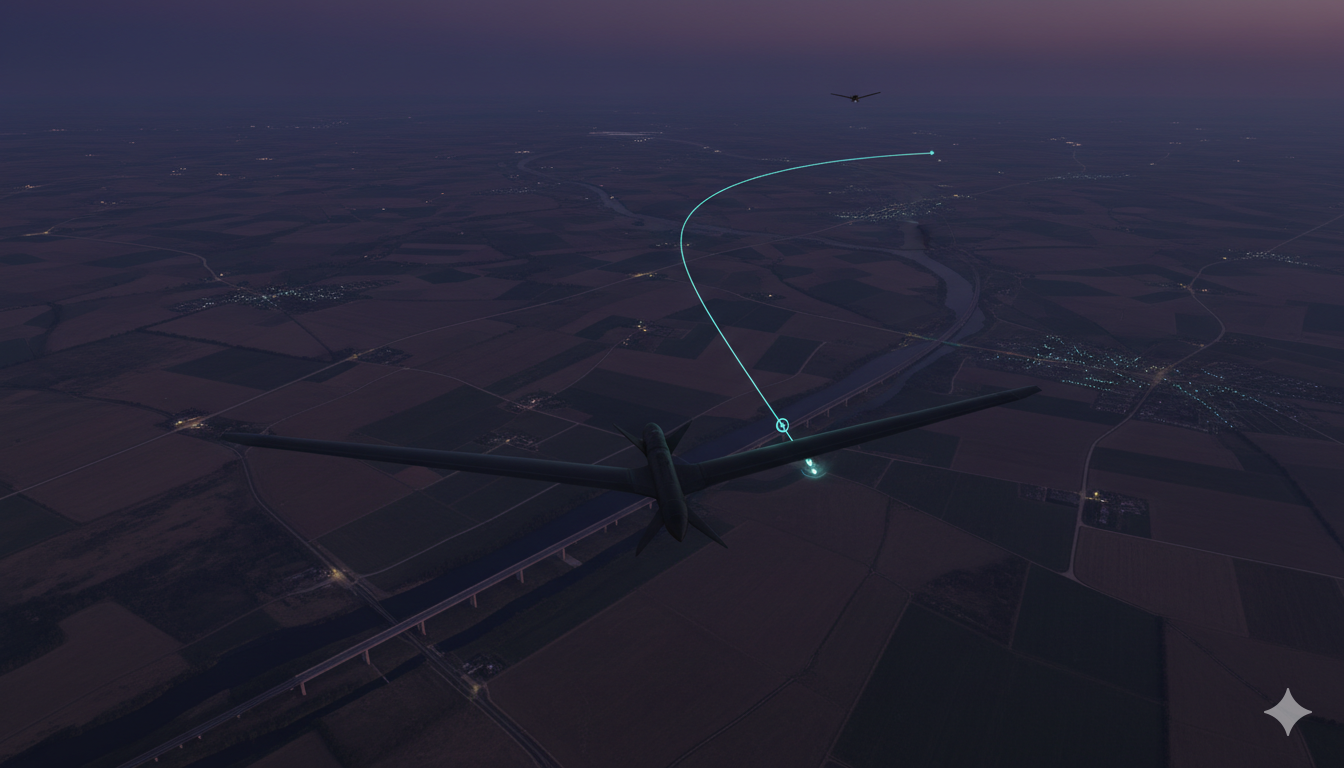
The modern battlefield is undergoing a silent but seismic transformation. The skies above Ukraine, Yemen, and the South China Sea have become proving grounds for a new breed of weapon: long-range glide bombs. These precision-guided munitions, developed by bolting advanced navigation kits onto traditional unguided bombs, enable aircraft to strike targets from distances of over 100 kilometers. This capability allows air forces to engage hardened or mobile targets without breaching enemy air defense zones—a critical advantage in contested regions.
With the global precision-guided munitions market projected to reach $55.31 billion by 2032, the strategic appeal of glide bombs is surging. Their tactical value was made clear during Russia’s 2024 offensive on Avdiivka, where over 3,500 glide bombs systematically dismantled Ukrainian fortifications, reshaping not only terrain but also military doctrine.
Core Technologies: From Iron Bombs to Smart Weapons
Modern glide bombs are not standalone weapons but rather modular systems that repurpose legacy munitions into precision killers. The transformation is enabled through bolt-on guidance kits, typically consisting of GPS/INS units and foldable wings. These additions guide the bomb over long distances with surgical accuracy.
Russia’s UMPK kits, for instance, leverage GLONASS satellite signals to guide Soviet-era FAB-500 and FAB-1500 bombs, offering a low-cost upgrade path. The U.S. equivalent—the JDAM-ER—relies on encrypted GPS and inertial navigation and costs between $20,000 and $40,000 per unit, offering high accuracy for a fraction of the price of cruise missiles.
Some of the most sophisticated variants, such as the GBU-53/B StormBreaker, feature tri-mode seekers that combine infrared, millimeter-wave radar, and semi-active laser homing. These enable engagement of moving targets in zero-visibility conditions, including dust storms and fog.
To extend range, designers have integrated long, foldable wings. India’s Gaurav glide bomb, for instance, features 3.4-meter wingspans that enable standoff ranges of up to 100 kilometers when deployed from high altitudes.
The evolution of these weapons has also sparked a race in counter-jamming technologies. Russian upgrades to the Kometa-M guidance system, expanding from 8 to 12 satellite receivers, allow glide bombs to distinguish real from spoofed signals. Meanwhile, companies like Alta Ares in NATO have introduced AI-based acoustic detection systems that can identify glide bombs by sound in mere seconds, bypassing traditional radar detection.
| System | Range | Guidance | Counter-Jamming |
|---|---|---|---|
| Russian UMPK-PD | 95 km | GLONASS + INS | 12-channel Kometa-M System |
| U.S. JDAM-ER | 72 km | GPS/INS + Laser | Encrypted M-Code GPS |
| Indian Gaurav | 100 km | GAGAN/NavIC + Laser | Anti-radiation Coating |
| French AASM Hammer | 70 km | GPS/INS + Infrared | Frequency-Hopping Guidance |
National Advancements: Strategic Shifts in Key Militaries
Russia: Industrialized Standoff Warfare
Russia has embraced glide bomb technology at scale, retrofitting thousands of aging Soviet bombs with UMPK kits. In 2024 alone, more than 3,500 modified bombs were deployed, many in massive salvos meant to saturate defenses. In operations such as the assault on Avdiivka, this “standoff saturation” strategy allowed Russian aircraft to release over 20 bombs per sortie without entering the kill zone of Ukrainian air defenses.
Though Ukrainian forces initially disrupted Russian accuracy using GPS spoofing, the Kometa-M upgrade restored most of the lost precision, demonstrating Russia’s ability to adapt technologically under combat pressure.
India: Indigenous Glide Power
India’s Defence Research and Development Organisation (DRDO) unveiled a significant advancement in April 2025 with successful trials of the Gaurav Long-Range Glide Bomb (LRGB). Utilizing NavIC (India’s regional navigation satellite system) and GAGAN augmentation, the Gaurav achieved direct hits on targets over 100 kilometers away.
India’s innovation extends beyond range. The Gaurav is slated to integrate with the CATS Warrior drone platform, allowing real-time targeting updates via drone swarms. Manufactured by private-sector partners like Adani Defence and Bharat Forge, the Gaurav reflects India’s push to indigenize its precision strike capabilities and reduce dependency on foreign munitions.
United States: Smart Munitions for Dynamic Warzones
The U.S. has taken glide bomb technology to the networked battlefield. The StormBreaker stands out with in-flight retargeting capabilities via secure datalink, allowing pilots to redirect munitions after launch in response to updated intel or target movement. This makes the system especially valuable in fast-paced, decentralized conflicts.
However, this advanced technology also carries risk. In 2025, a StormBreaker dud recovered in Yemen offered a rare opportunity for adversaries to reverse-engineer its seeker technology, raising concerns about safeguarding military innovation.
NATO: AI-Enabled Defenses
NATO member states are not only developing glide bombs but also focusing on countermeasures. Startups like Alta Ares have developed AI-powered acoustic sensors that detect the sound signatures of incoming glide bombs earlier than radar systems. NATO is also exploring container-launched drone swarms, forming kinetic barriers to destroy glide bombs mid-flight—an innovation with echoes of Iron Dome, but in the air.
Emerging Threats: Proliferation and Asymmetry
The affordability of glide bomb kits creates a worrying asymmetry. A Russian FAB-1500 glide bomb costs roughly $20,000, yet intercepting it with a Patriot missile can exceed $500,000. This imbalance encourages attackers to adopt massed, low-cost standoff strikes—forcing defenders into economically unsustainable responses.
The proliferation extends beyond state actors. Houthi rebels in Yemen, reportedly with Iranian technical aid, have begun modifying unguided munitions into DIY glide bombs, which they have used to strike vessels in the Red Sea. This development signals the arrival of precision weapons in the hands of non-state actors—without the political costs of airstrikes or ballistic missiles.
China’s recent hypersonic glide vehicle (HGV) tests hint at the future convergence of affordability with extreme speed. Combining Mach 5+ velocity with glide bomb maneuverability would compress detection-to-impact windows to under 30 seconds, overwhelming most existing air defenses.
Countermeasure Race: Jamming, AI, and Lasers
The arms race in glide bombs is matched by a rapidly advancing defense ecosystem. Electronic warfare, particularly GPS spoofing, has already proven highly effective—Ukrainian forces reportedly diverted up to 60% of Russian glide bombs during 2023–2024. Russia responded with Kometa-M upgrades, while NATO has shifted focus toward non-kinetic defenses.
Kinetic interceptors are being reimagined for glide bomb scenarios. Germany’s TYTAN initiative proposes deploying up to 200 autonomous FPV drones per launcher, each capable of physically intercepting a bomb. NATO is also evaluating microwave-based weapons capable of neutralizing bomb electronics without needing explosive contact.
AI is emerging as a cornerstone of defense. Systems developed by Alta Ares not only detect incoming bombs but predict their trajectory using neural networks, enabling defenses to pre-target launch aircraft, mobile artillery, or even warehouses storing glide kits.
Future Trajectories: The 2030 Horizon
By 2030, several converging technologies are poised to transform glide bomb warfare. Advances in AI will enable autonomy, allowing bombs to select and prioritize targets mid-flight, even without GPS. Simultaneously, quantum navigation systems, immune to jamming and spoofing, may replace current inertial systems.
Stealth coatings and low-thermal signature designs will make glide bombs even harder to detect, while materials science may yield lighter, more durable wingspans for extended range. Meanwhile, a new battlespace is forming: algorithmic warfare, where AI-controlled glide bomb swarms face AI-driven interceptors in real-time, swarm-on-swarm engagements.
Conclusion: The Democratization of Precision
The rise of long-range glide bombs signals the end of precision monopoly. Once restricted to major powers with advanced cruise missiles, standoff strike capabilities are now accessible to a wider range of states—and even militias. As DRDO Chairman Dr. Samir Kamat aptly remarked, “100 km standoff range is no longer a luxury—it’s a survival requirement.”
To maintain strategic advantage, nations must invest in cost-effective defenses, resilient networks, and responsible controls over military AI. The winners of tomorrow’s wars will be those who master both silicon and steel, shaping a future where precision is not just a capability—but a necessity.
References & Further Reading
- [NATO