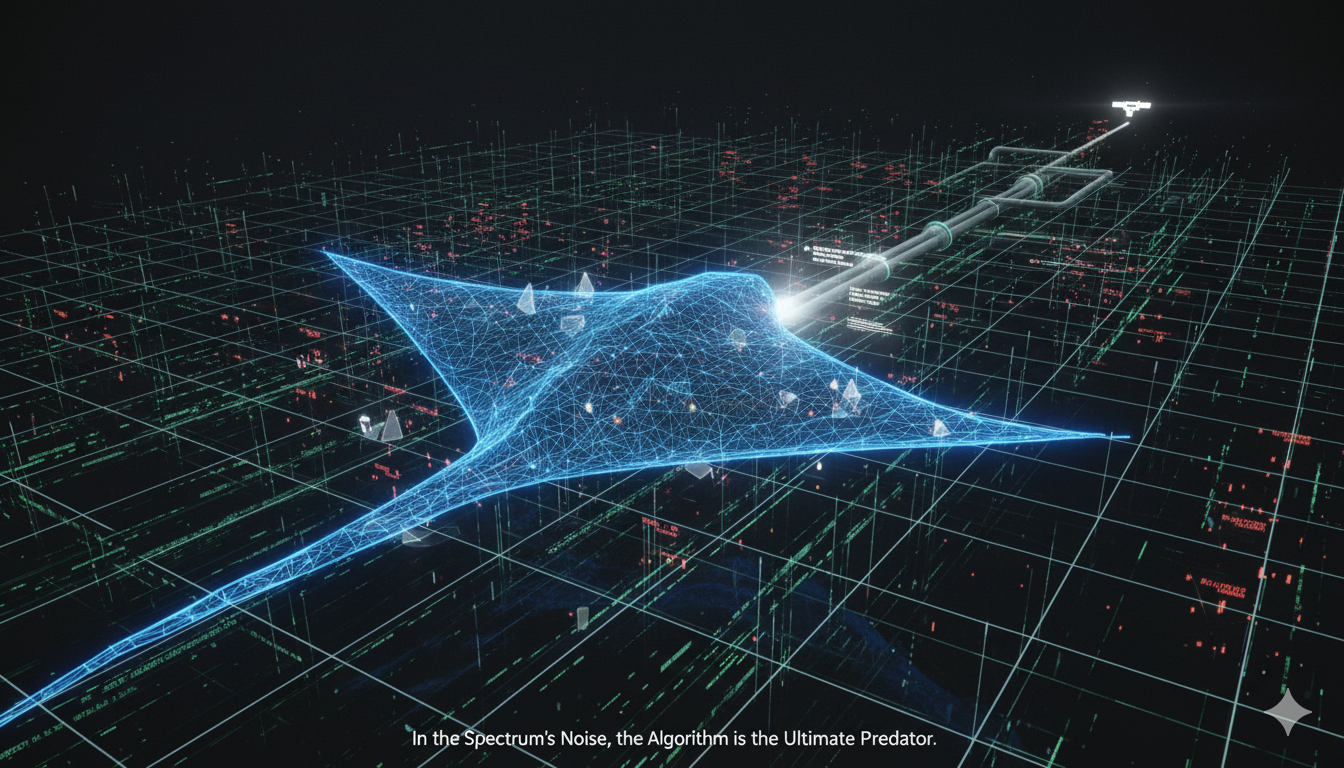

Understanding SIGINT and Its Importance
Signals Intelligence (SIGINT) has long been one of the most decisive instruments in the arsenal of modern warfare. It refers to the interception, collection, and analysis of electronic signals, whether they come from radar systems, communications networks, or other electromagnetic emissions. Unlike imagery or human intelligence, SIGINT provides a real-time window into the intentions, movements, and capabilities of an adversary. By mapping enemy command-and-control structures, monitoring troop movements, and identifying vulnerabilities, SIGINT gives commanders the ability to anticipate rather than react—an advantage that often determines the outcome of battle.
History offers powerful reminders of its importance. During World War II, the Allied breaking of the German Enigma code and the Japanese naval ciphers through SIGINT decisively altered the trajectory of the war, enabling victories from the Atlantic to the Pacific. In the Cold War, SIGINT became a cornerstone of strategic stability, as both superpowers relied on satellite-based interception and electronic surveillance to monitor nuclear capabilities and military buildups. These episodes underscore a critical truth: dominance in the electromagnetic spectrum has consistently translated into dominance on the battlefield.
At the heart of SIGINT lies the science of signal processing, the discipline that transforms raw electromagnetic energy into meaningful intelligence. Modern battlefields are saturated with emissions, many deliberately masked or fleeting. Extracting actionable information requires sophisticated algorithms capable of filtering noise, identifying patterns, and reconstructing signals designed to evade detection. Whether it is detecting elusive radar pulses, exploiting encrypted communications, or isolating low-probability-of-intercept emissions, advanced signal processing is the enabler that elevates SIGINT from passive collection to decisive action. In the age of algorithmic warfare, signal processing has become the true force multiplier—turning overwhelming streams of data into operational advantage.
The Challenge of Modern Electronic Systems
Yet traditional SIGINT systems were built for a different era—one where emitters were predictable, transmissions were lengthy, and signals were relatively simple to isolate. These legacy platforms relied heavily on large antennas, centralized ground stations, and post-mission analysis, which proved effective against conventional radars and communications but are increasingly outpaced today. Modern Multiple-Input, Multiple-Output (MIMO) radars scatter their energy across multiple channels, producing waveforms that resist conventional classification. Low-probability-of-intercept (LPI) emissions deliberately blend into the noise floor, leaving traditional receivers blind at the moment when clarity is most vital.
The threat is compounded by decentralized and resilient networks designed to survive in denied environments. These systems can rapidly reconfigure themselves, shift across frequencies, and exploit spectral gaps, frustrating legacy collection methods that depend on centralized processing and slow intelligence cycles. The result is a widening gap between the sophistication of modern emissions and the ability of older systems to detect, characterize, and act on them in time. Unless SIGINT evolves, commanders risk being overwhelmed by a torrent of elusive, high-speed signals that cannot be turned into usable intelligence quickly enough.
The Five Pillars of Next-Generation SIGINT
In the invisible battlespace of the electromagnetic spectrum, victory is no longer determined by who has the most powerful antenna, but by who can process, understand, and act on signal intelligence the fastest. Adversaries are rapidly deploying advanced systems, from modern MIMO radars and low-probability-of-intercept (LPI) signals to decentralized networks designed to thrive in denied environments. To counter this, a revolution is underway—moving beyond traditional collection methods toward a paradigm defined by agile algorithms, autonomous processing, and integrated analytics. The focus is on developing the capabilities needed to transform overwhelming streams of data into decisive, actionable intelligence.
Technologies for Electronic Intelligence (ELINT): Hunting the Ghost Signals
Modern ELINT faces an entirely new class of adversary signals—ones designed to be elusive, adaptive, and almost spectral “ghosts.” Unlike traditional radars that emitted fixed, repetitive waveforms, today’s systems employ mobility, burst transmissions, and agility to remain hidden. MIMO radars, for instance, spread their energy across multiple transmitting and receiving paths, producing waveforms that are intentionally complex and resistant to conventional classification techniques. To counter this, advanced algorithms must not only detect these fleeting emissions but also characterize their structure in real time, distinguishing them from clutter, interference, or deliberate deception.
Geolocation adds another layer of complexity. Adversary emitters may appear briefly and then disappear or move, leaving only a short detection window. To address this, modern ELINT platforms are turning to distributed sensing across manned aircraft, UAVs, and even space-based systems. By using techniques like time-difference-of-arrival (TDOA) and frequency-difference-of-arrival (FDOA), analysts can triangulate the position of a threat with remarkable speed and accuracy—even if the emitter is only active for seconds. This distributed, multi-node approach transforms fleeting signals into actionable geospatial intelligence before the target vanishes.
Perhaps the most transformative development lies in the application of machine learning. Traditional signal processing struggled against emissions buried deep in noise, especially in contested environments where adversaries employ low-probability-of-intercept (LPI) techniques. Today, AI-driven models are being trained to recognize patterns hidden within noise floors that human operators and legacy receivers would overlook. These systems extend detection ranges, increase sensitivity, and make it possible to unmask signals deliberately engineered to remain invisible. In effect, machine learning allows ELINT systems to “hunt the ghost signals” that define modern electronic warfare, ensuring that no adversary emission is truly beyond reach.
Technologies for Signals Intelligence Analytics: Connecting the Dots
Raw signal data by itself rarely tells a complete story. The true power of SIGINT emerges when it is combined with other intelligence streams—geospatial (GEOINT), cyber, or even open-source information (OSINT). Modern analytics are moving toward seamless data fusion, where electronic emissions are not studied in isolation but contextualized within broader patterns of activity. Artificial intelligence plays a central role here, building behavioral or “pattern-of-life” models by examining communication signatures, network handshakes, and electronic emissions over time. These models can reveal not just where an adversary unit is, but where it is likely to move next and what its operational intent might be.
Equally important is the ability to correlate seemingly unrelated data points. A radar emission intercepted in one theater, when linked with a drone sighting and cross-referenced against a burst of social media activity, can create a verified picture of adversary deployment. Automating such correlations requires algorithms that can operate across multiple intelligence domains and data formats, transforming fragmented insights into a coherent, targetable narrative. In this sense, analytics becomes the bridge between overwhelming amounts of intercepted data and the actionable intelligence that commanders rely on for decision superiority.
Technologies for Autonomous Processing: Shortening the Kill Chain
Traditional intelligence cycles often involved lengthy delays—signals intercepted on the battlefield would be sent back to centralized processing centers, analyzed by specialists, and only then disseminated to commanders. In the high-speed conflicts of today, such latency is untenable. The move toward autonomous processing is designed to collapse this timeline, shifting from human-in-the-loop to human-on-the-loop, where machines carry the burden of analysis and humans oversee the results. By embedding advanced processors directly onto ISR platforms like UAVs, signal detection, classification, and geolocation can occur in real time at the tactical edge.
This capability transforms the kill chain. Instead of waiting hours or days for analysis, a drone can now intercept a signal, identify it as hostile, geolocate the emitter, and distribute targeting data—all before completing its mission. Complementing this, natural language generation tools can translate complex technical parameters into concise, standardized reports instantly digestible by shooters and command nodes. This automation ensures that intelligence is not only fast but also formatted for immediate operational use, giving forces the ability to act within the adversary’s decision cycle
Technologies for Resilient Exploitation: Operating in Denied Environments
Near-peer adversaries will contest every inch of the electromagnetic spectrum. Jamming, deception, and cyber intrusions are no longer the exception but the expectation in modern conflict. Resilience is therefore a defining requirement for next-generation SIGINT systems. In denied, degraded, interrupted, or limited (DDIL) environments, platforms must be able to store and process data locally, transmitting only what is essential in short, secure bursts using hardened waveforms. This ensures that even when cut off from centralized command, SIGINT operators can still deliver critical intelligence to the fight.
Self-healing and adaptive networks are another frontier of resilience. ISR platforms must be able to form ad-hoc mesh networks that reroute data dynamically, ensuring continuity of situational awareness even under heavy electronic attack. These mobile, distributed architectures replace the vulnerability of single points of failure with the robustness of collective intelligence sharing. By doing so, resilient exploitation ensures that SIGINT remains a reliable force multiplier, even in the most contested and degraded battlespaces.
Technologies for Cyber-SIGINT Convergence: Blurring the Boundaries
The traditional boundary between cyber warfare and electronic warfare is dissolving. Today’s adversaries operate across both domains seamlessly, and effective defense requires the same convergence. One emerging approach is collaborative sensing, where SIGINT collection informs cyber operations. For example, the radio-frequency side-channel emissions of a computer or network device can reveal its make, model, and even operational state—insights that can then guide tailored cyber exploitation. Conversely, cyber reconnaissance may reveal frequency bands or protocols of interest that SIGINT systems can then target, creating a closed loop of cross-domain exploitation.
Secure data pipelines are equally essential. Analysts working in cyber and EW traditionally operated in separate compartments, each with their own systems and classifications. Modern cross-domain analytics aim to break down these silos by creating secure, controlled channels through which intelligence can flow between domains. This fusion not only accelerates collaboration but also opens entirely new avenues of attack, where adversary networks can be targeted simultaneously in the digital and electromagnetic spectrum. In this way, cyber-SIGINT convergence transforms isolated disciplines into an integrated weapon system capable of outmaneuvering the most sophisticated opponents.
The Foundational Enabler: Open Systems Architecture (OSA)
All the advanced capabilities of SIGINT—from hunting elusive emitters to autonomous edge processing—depend on the underlying architecture that ties them together. Open Systems Architecture (OSA) has emerged as the strategic enabler for future-proof SIGINT platforms. Unlike traditional “stovepiped” systems, which are expensive to upgrade and often locked to a single vendor, OSA emphasizes modularity, interoperability, and vendor-agnostic design. This means that new sensors, algorithms, and processing modules can be integrated rapidly, without waiting years for wholesale redesigns. The result is faster innovation cycles and the ability to adapt to new threats as they emerge.
For militaries, OSA is more than just a technical convenience—it is an operational necessity. Adversary waveforms evolve continuously, with new radar and communications techniques appearing in every conflict. Closed systems risk obsolescence, while OSA ensures adaptability through plug-and-play upgrades. Moreover, open interfaces make it possible to integrate SIGINT capabilities across a wide variety of platforms, from high-altitude ISR aircraft to unmanned ground vehicles, creating a unified intelligence ecosystem. This distributed, scalable approach reduces costs, enhances resilience, and ensures that SIGINT remains responsive to both tactical and strategic demands.
At a higher level, OSA also fosters coalition interoperability. In joint or allied operations, SIGINT data must flow seamlessly between forces with different equipment and doctrine. Open standards and modular design ensure that U.S. and partner nation systems can share signals data in near real time, aligning collection and analysis across the battlespace. In an era of coalition-centric warfare, OSA is not simply a matter of engineering—it is a strategic enabler of multinational collaboration, providing the flexibility and speed required to keep pace with evolving threats.
Conclusion: The Algorithm as a Weapon
The story of SIGINT is one of constant adaptation. In World War II, the ability to break encrypted signals reshaped entire campaigns, while during the Cold War, electronic surveillance became the backbone of strategic deterrence. In both eras, control of the electromagnetic spectrum determined who held the initiative. Today, the battlespace has shifted once again. Adversaries no longer rely on static emitters or predictable patterns, but on agile, mobile, and fleeting signals designed to evade detection. The response cannot be more antennas or bigger databases—it must be smarter algorithms.
The future of SIGINT dominance will not be measured by the volume of data collected but by the speed and sophistication with which it is processed and exploited. By advancing along five critical axes—ELINT innovation, fused analytics, autonomous processing, resilient exploitation, and cyber-SIGINT convergence—while embracing open systems architecture, defense organizations are building a new kind of advantage: an algorithmic edge. This edge transforms intelligence from a reactive discipline into proactive electromagnetic maneuver, ensuring that commanders are not only informed but empowered to act faster than any adversary.
Just as breaking Enigma or monitoring Cold War signals gave earlier generations the upper hand, mastering algorithm-driven SIGINT will define decision superiority in tomorrow’s conflicts. In the high-stakes, high-speed environment of modern warfare, the algorithm itself has become the weapon.