Artificial intelligence and data-driven systems are reshaping how decisions are made, risks are assessed, and operations are coordinated across defense, security, and strategic industries. Their power lies not in autonomy alone, but in how information is processed, trusted, and acted upon under pressure.
Rather than replacing human judgment, AI increasingly acts as a force multiplier—compressing decision cycles, revealing hidden patterns, and enabling coordination at scales no human organization can manage unaided.
IDST Intelligence Briefings
Our intelligence briefings examine how AI is integrated into real systems and workflows, including:
- AI-enabled intelligence, surveillance, and reconnaissance (ISR)
- Decision-support and command systems
- Predictive analytics and risk modeling
- Autonomous and semi-autonomous operations
- Human-machine teaming and cognitive augmentation
Each briefing places algorithms within institutional, operational, and ethical contexts.
Why This Magazine Exists
AI is often framed either as a silver bullet that guarantees dominance or as an existential threat that escapes human control. This sub-magazine exists to move beyond both extremes.
Its purpose is to analyze how AI actually works in practice—where it delivers advantage, where it fails, and how organizational design, data quality, trust, and governance determine real outcomes.
What We Track
- Military and intelligence AI applications
- Data pipelines, training regimes, and model reliability
- Human-AI interaction and decision authority
- AI safety, robustness, and adversarial risks
- Institutional adoption, regulation, and ethics
Latest Analysis & Intelligence
-

The Future of Brain-Computer Interfaces: Overcoming Challenges and Pioneering Technologies
Brain-Computer Interfaces (BCIs) have emerged as a fascinating field with immense potential to revolutionize human-machine interaction. By directly linking the human brain to external devices, BCIs hold promise for a wide range of applications, from assisting individuals with disabilities to enhancing virtual reality experiences. However, realizing the full potential of BCIs requires addressing significant challenges…
-

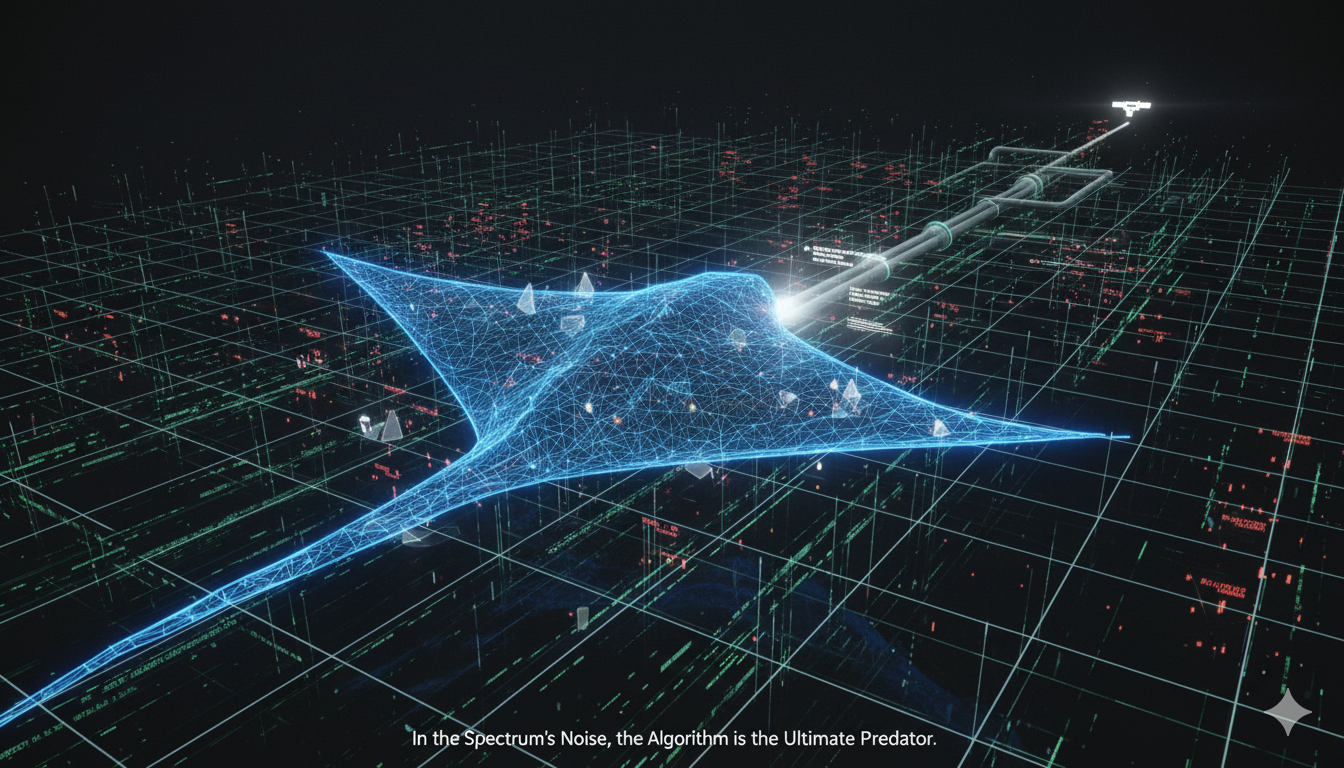
The Algorithmic Edge: Revolutionizing Signal Intelligence for Modern Warfare
Understanding SIGINT and Its Importance Signals Intelligence (SIGINT) has long been one of the most decisive instruments in the arsenal of modern warfare. It refers to the interception, collection, and analysis of electronic signals, whether they come from radar systems, communications networks, or other electromagnetic emissions. Unlike imagery or human intelligence, SIGINT provides a real-time…
-
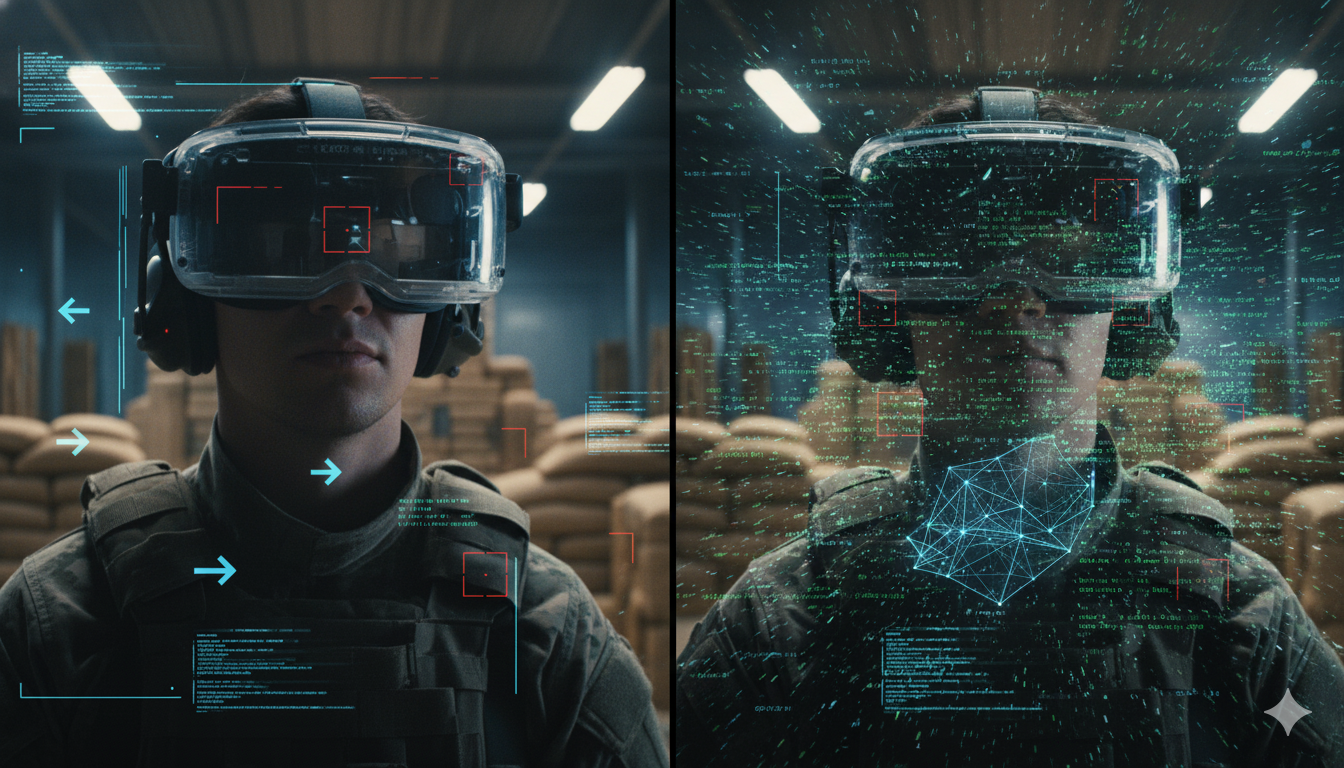
Securing the Mind: How DARPA is Building Hack-Proof Mixed Reality
Mixed reality (MR) has rapidly evolved from a futuristic concept to a transformative force, weaving digital overlays into our physical world with applications ranging from manufacturing and medicine to education and entertainment. Within military contexts, its potential is profound: soldiers navigating urban environments aided by augmented intelligence, or technicians conducting equipment repairs guided by animated…
-
Unlocking the Viral Unknown: How Protein Analysis and AI Are Revealing a Hidden World of Viruses
For decades, the study of viruses has been like searching for stars with a telescope that only recognizes familiar constellations. Researchers could detect viruses that resembled known ones—those with genetic sequences already cataloged—but this left an entire universe of unknown viruses, often referred to as the “viral dark matter,” hidden from view. This blind spot…
-
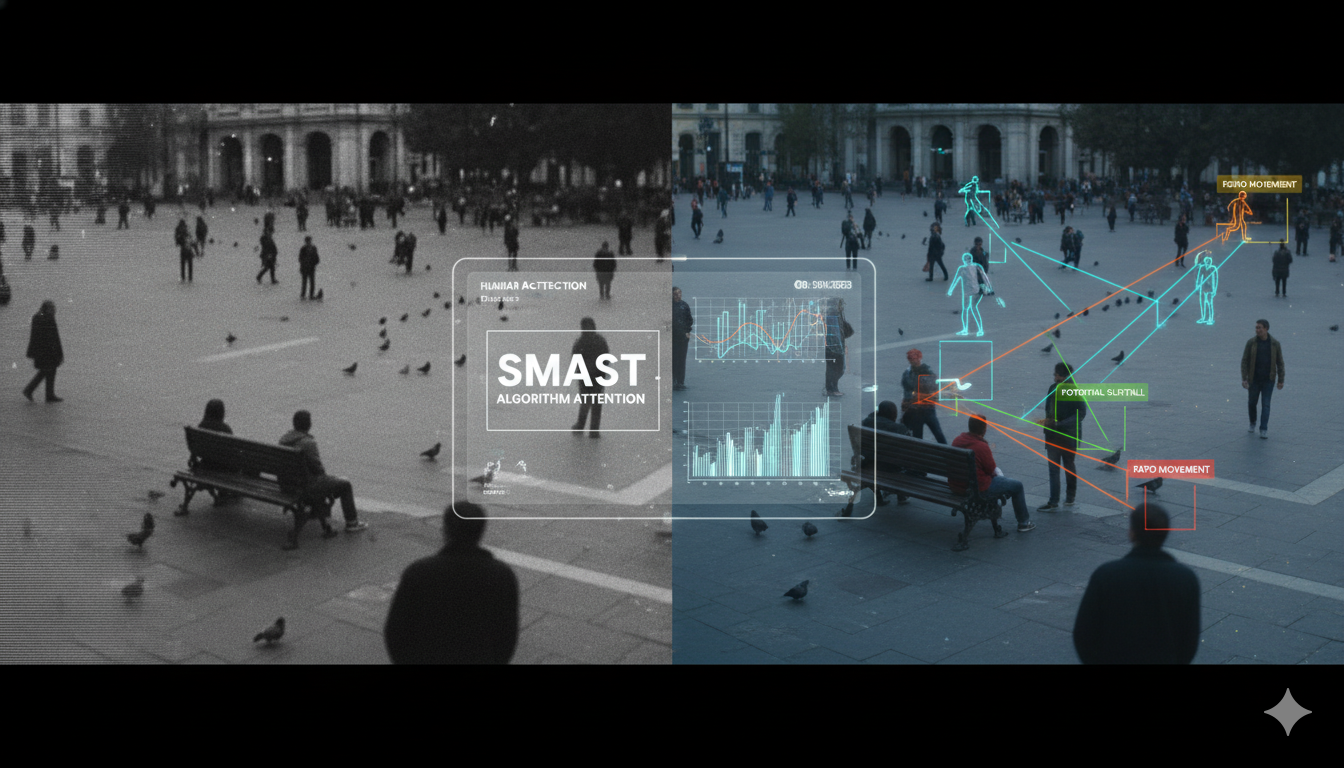
Beyond the Lens: How AI That Understands Human Action is Changing Our World
From Observation to Understanding For decades, surveillance cameras have acted as silent witnesses, capturing vast amounts of video but without any real comprehension of what unfolded before them. They could register shapes, movement, and light, yet the meaning behind those patterns—intent, context, or risk—remained invisible. Human operators were left to sift through overwhelming streams of…
-
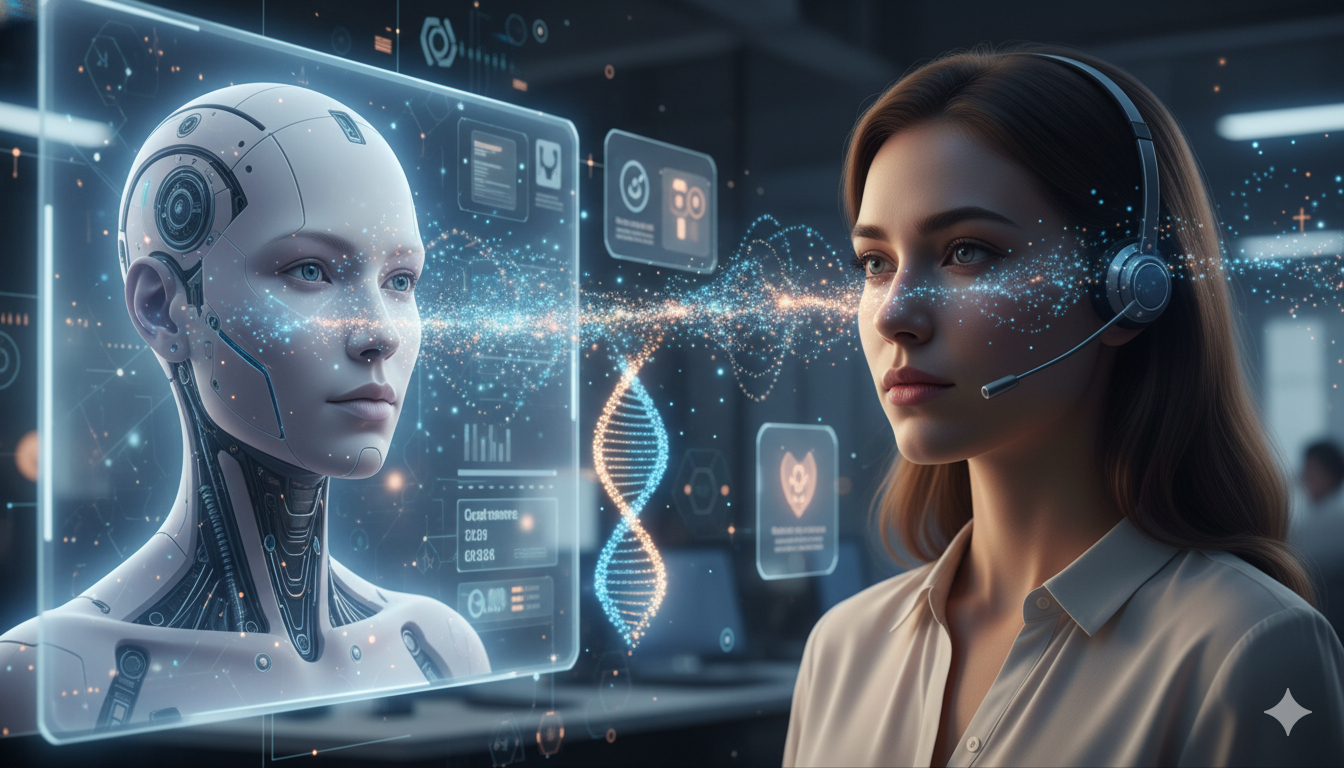
Beyond the Words: How Emotion AI is Humanizing Customer Service
In 2023, call center provider Cogito rolled out an Emotion AI platform to several Fortune 500 companies. The system monitored live customer conversations, detecting vocal stress, hesitation, and frustration in real time. Instead of replacing human agents, it acted as a coach, prompting them to slow down, listen more, or offer reassurance at the right…
-
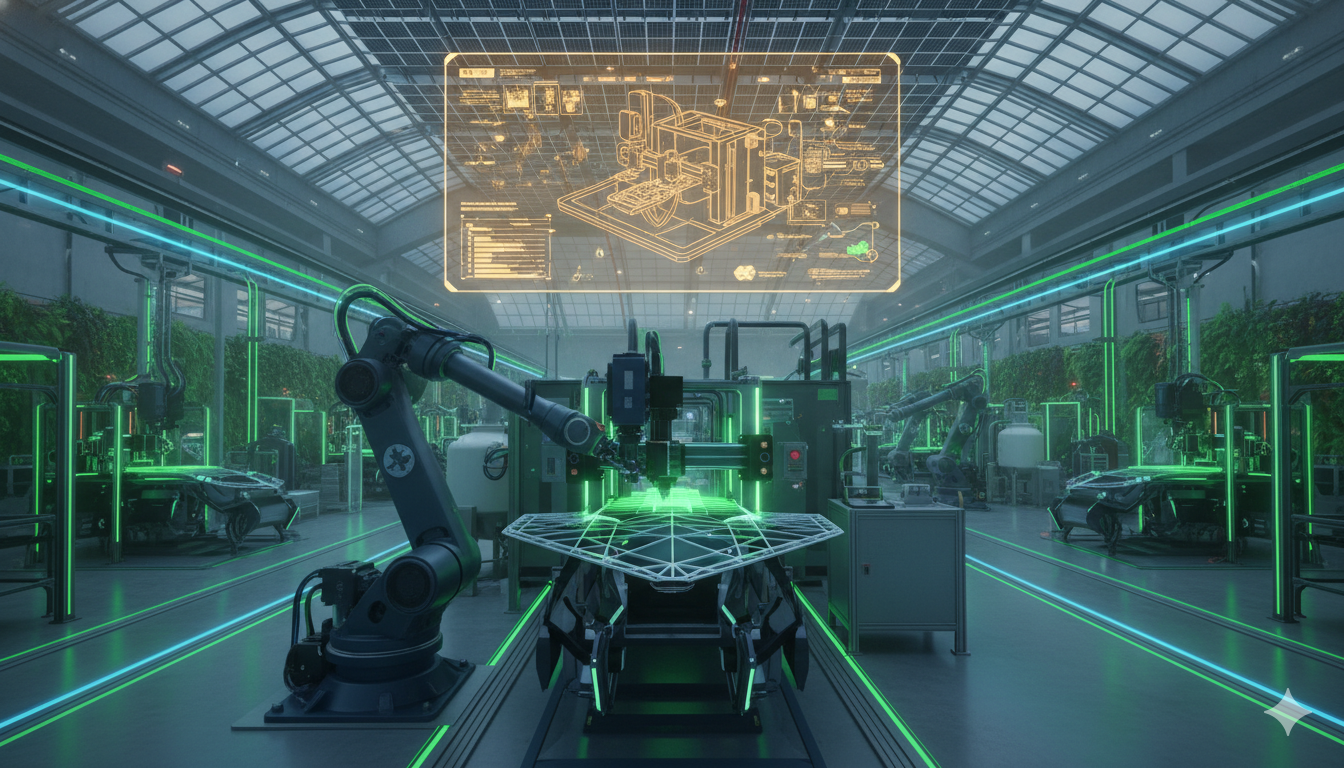
Smart, Sustainable, and Hybrid Manufacturing: The Future of Military and Industrial Production
Introduction: War, Disruption, and the Race to Modernize Production The last two years have seen major wars erupt in Europe and the Middle East, with violence spilling into wider regions and fueling unprecedented demand for defense hardware. From artillery shells to next-generation drones, militaries are racing to replenish stockpiles and equip forces for protracted conflicts.…

Related Domains & Cross-Cutting Themes
Emerging technologies rarely operate in isolation. Their real impact is shaped by integration, governance, and human-system interaction. Cyber security and information warfare, electronic and sensor systems, command and control, autonomous platforms, governance and ethics, and long-term strategic competition
Ethics, governance, and technology control
Industrial scaling and supply-chain constraints
Human–machine teaming and trust
Interoperability across platforms and institutions
Export controls and technological rivalry
Explore the Critical & Emerging Technologies Magazine →
Explore the Industry, Markets & Supply Chains Magazine →
Explore the Space Technology, Defense & Exploration Magazine →