Introduction
Microalgae—microscopic, photosynthetic organisms that thrive in water—have rapidly gained attention as a cornerstone of the bioeconomy. Their remarkable ability to convert sunlight, CO₂, and nutrients into high-value products makes them uniquely positioned to address global challenges in energy, health, food security, and climate change. From powering vehicles to cleaning wastewater and producing nutraceuticals, microalgae embody the promise of a technology that merges ecological responsibility with economic opportunity. As research accelerates and scalable solutions emerge, these tiny organisms may soon play an outsized role in shaping a sustainable future.
Why Microalgae? Unmatched Potential in a Microscopic Package
Microalgae offer a suite of advantages that make them stand out from traditional agricultural or industrial systems. One of their most striking qualities is their rapid growth rate. Some species can double their biomass in less than 24 hours, allowing continuous production at scales that would be impossible with conventional crops. Their productivity extends beyond sheer speed: on a per-hectare basis, microalgae can generate vastly more oil than terrestrial oil crops such as soybean or palm, making them ideal feedstocks for biofuels.
Equally important, microalgae cultivation does not compete with food crops for arable land. They thrive in diverse environments—including deserts, saline water, and wastewater streams—where conventional agriculture is impractical. Their growth also contributes directly to climate action: by capturing CO₂ during photosynthesis, many microalgae systems are carbon-neutral or even carbon-negative, helping mitigate greenhouse gas emissions. In essence, microalgae compress extraordinary productivity, versatility, and sustainability into one microscopic package.
Key Applications of Microalgae Biotechnology
Microalgae have emerged as one of the most versatile platforms in biotechnology, offering solutions that span energy, food, environmental management, and advanced materials. Their adaptability, rapid growth, and biochemical diversity make them powerful agents for addressing global challenges in sustainability.
Bioenergy and Biofuels
Microalgae are at the forefront of renewable energy innovation. Their naturally high lipid content makes them excellent candidates for biodiesel, while engineered strains are being developed for ethanol, biogas, and hydrogen production. Pilot projects in the U.S., Europe, and Asia are already testing algae-to-energy pipelines that promise decentralized, carbon-neutral fuel systems capable of reducing fossil fuel dependence.
Nutraceuticals and Functional Foods
Species like Spirulina and Chlorella have become global superfoods, rich in proteins, omega-3 fatty acids, and antioxidants. These algae are increasingly marketed as supplements and functional food additives, catering to the growing demand for plant-based and sustainable nutrition. Research further highlights their therapeutic potential, from anti-inflammatory properties to cholesterol reduction, positioning algae-based products as both nutritious and health-promoting.
Bioremediation and Wastewater Treatment
Algae naturally thrive in nutrient-rich environments, making them ideal for cleaning wastewater and agricultural runoff. By consuming excess nitrogen and phosphorus, they purify effluents while simultaneously producing biomass for fertilizers or energy. Case studies from Europe and Asia show wastewater treatment plants integrating algae-based systems, transforming waste management into a process that generates both clean water and valuable resources.
Carbon Capture and Utilization (CCU)
Microalgae are proving to be key players in tackling industrial carbon emissions. By channeling flue gases into algae bioreactors, CO₂ is absorbed and converted into biomass through photosynthesis. This carbon-rich biomass can then be processed into fuels, animal feed, or bioplastics. Industrial pilots demonstrate how algae-based CCU not only cuts emissions but also embeds carbon into circular economic pathways.
High-Value Bioproducts
Beyond staple uses, algae are unlocking entirely new markets. Certain species produce pigments like astaxanthin, a high-value antioxidant for cosmetics and health supplements. Others are being engineered to generate pharmaceuticals or serve as bioreactors for rare molecules. Companies are also advancing algae-based bioplastics, offering biodegradable alternatives to petroleum-derived plastics and reinforcing the role of algae as a cornerstone of sustainable materials innovation.
Cutting-Edge Techniques Driving the Field Forward
Progress in microalgae biotechnology is accelerating thanks to innovations across genetics, cultivation, and data-driven optimization. Advances in strain selection and genetic engineering, particularly the use of CRISPR-Cas9, are allowing scientists to fine-tune algal metabolism for specialized applications. By redirecting metabolic pathways, researchers have engineered strains that accumulate higher lipid content for biofuels, produce pharmaceutical-grade compounds, or resist environmental stressors like salinity and temperature fluctuations. A landmark example comes from researchers in Japan who used CRISPR to boost lipid yields in Nannochloropsis, cutting production costs for algae-derived biodiesel.
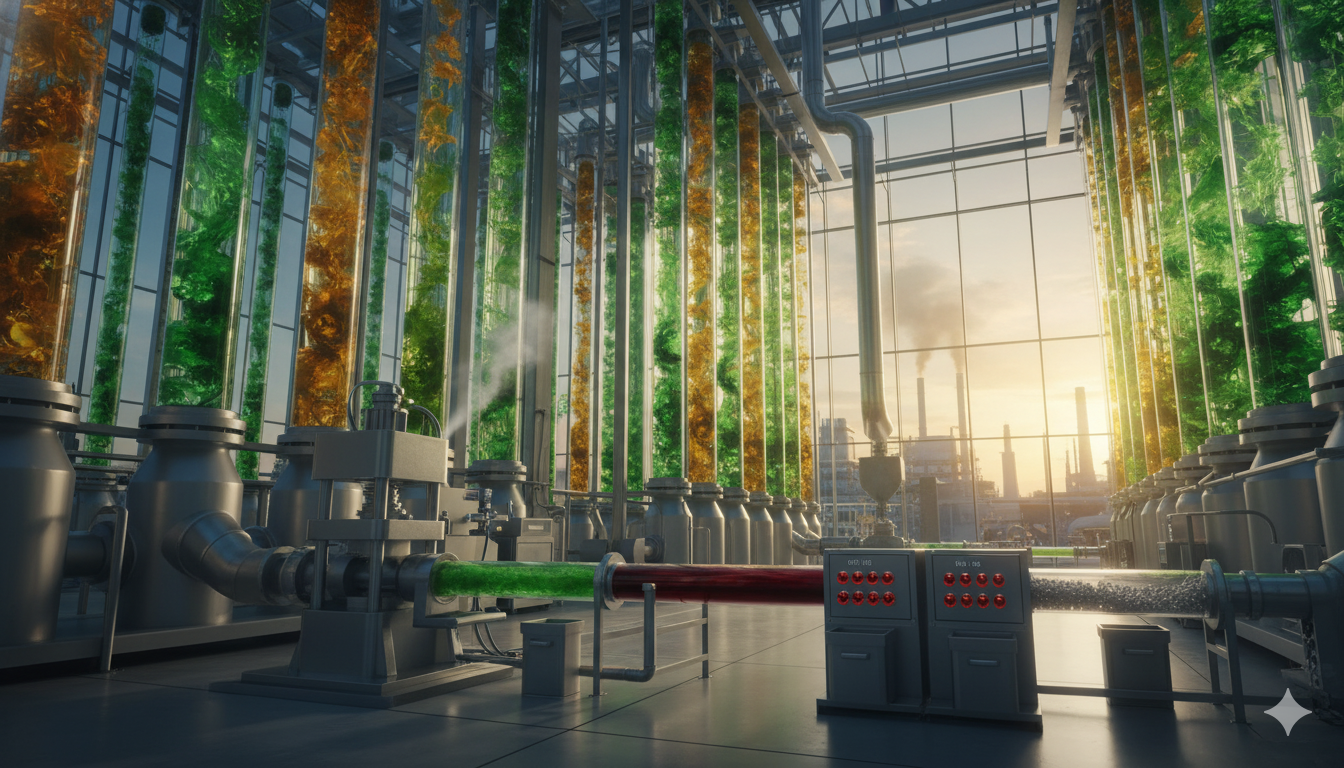
Equally transformative are breakthroughs in cultivation systems. Photobioreactors (PBRs) provide precise control over light, nutrients, and CO₂, making them ideal for producing high-value products such as omega-3 fatty acids and pigments like astaxanthin. Open pond systems, while less controlled, deliver cost-effective scalability for biofuel production and wastewater treatment. Hybrid models—such as those piloted by AlgaEnergy in Spain—blend the control of PBRs with the affordability of open ponds, striking a balance between efficiency and scalability. These innovations are enabling commercial ventures to transition from small-scale trials to industrial-scale deployment.
The bottleneck of downstream processing is also being addressed with novel harvesting and extraction technologies. Energy-efficient flocculation and membrane filtration are reducing the cost and energy footprint of biomass recovery. Meanwhile, supercritical CO₂ extraction enables high-purity separation of proteins, lipids, and pigments without toxic solvents, opening doors for pharmaceutical and nutraceutical markets. For example, Solazyme (now TerraVia) pioneered algae-based oils through tailored extraction processes, creating a pathway for food and cosmetic applications.
Artificial intelligence and automation are adding another layer of sophistication. Machine learning models are being deployed to predict growth dynamics, detect stress in cultures, and adjust inputs in real time to maximize yields. Companies such as Algama in France are leveraging AI-driven platforms to accelerate strain optimization and cultivation strategies. These tools are transforming algae cultivation from a labor-intensive process into a smart, adaptive industry capable of operating at commercial scale.
Together, these advances are reshaping microalgae biotechnology into a precision-driven, highly scalable sector. With the integration of engineered strains, optimized cultivation, advanced processing, and intelligent monitoring, the field is rapidly moving from lab-scale innovation to industrial reality—paving the way for algae to become a cornerstone of sustainable bioeconomies worldwide.
Challenges and Solutions
Despite the promise, commercialization of algae-based systems faces significant obstacles. Chief among them are production costs, which remain higher than fossil fuel alternatives or conventional crops. However, continuous improvements in cultivation technologies, strain engineering, and harvesting efficiency are steadily reducing expenses. Energy-intensive processing also raises sustainability concerns, but integrating renewable energy sources into biorefineries offers a path forward.
Scalability remains a key question. While lab-scale and pilot projects have delivered impressive results, large-scale deployment requires overcoming logistical and economic challenges. Encouragingly, demonstration facilities around the world are showing that integrated systems—where energy, food, and environmental benefits overlap—are technically feasible and increasingly commercially attractive.
Global Initiatives and Market Outlook
The global market for microalgae products is experiencing rapid expansion, with projections suggesting it will surpass $1.5 billion by 2030. This growth is being propelled by converging global priorities—demand for plant-based proteins to support food security, the need for sustainable alternatives to petrochemical-derived materials, and the race to develop scalable, low-carbon energy solutions. Microalgae, with their unique capacity to produce lipids, proteins, and high-value compounds, are increasingly seen as a linchpin for industries seeking to balance profitability with sustainability.
Governments worldwide are accelerating this trajectory through strategic investments and policy support. The European Union has launched consortia such as Horizon Europe projects to scale algae-based foods and materials, while the U.S. Department of Energy continues to lead algae-to-biofuel demonstrations as part of its long-term clean energy roadmap. In Asia-Pacific, China has prioritized algae in its 14th Five-Year Plan, supporting large-scale biorefinery pilots, while Australia is leveraging its strong aquaculture sector to integrate algae into food and feed supply chains.
Private sector momentum mirrors these public efforts. Startups are pioneering innovations in algae-based textiles, nutraceuticals, and bioplastics, while multinationals in energy, food, and consumer goods are embedding algae into their sustainability strategies. Companies like Corbion, DSM, and ExxonMobil are investing in scalable algae platforms, signaling confidence in algae’s long-term role in global supply chains. Together, these initiatives are transforming microalgae biotechnology from a niche innovation into a mainstream driver of the bioeconomy.
The Future: Integrated Biorefineries
The long-term vision for microalgae lies in fully integrated biorefineries—next-generation facilities designed to replicate the efficiency of petroleum refineries while rooted in sustainability. These systems convert CO₂ and nutrient-rich waste streams into a cascade of valuable outputs, ranging from fuels and fertilizers to animal feed, pigments, and pharmaceuticals. By prioritizing higher-value compounds (nutraceuticals, cosmetics, and pharmaceuticals) before channeling residual biomass into lower-value outputs like biofuels, integrated biorefineries demonstrate the circular economy in action. They maximize resource utilization, minimize waste, and transform what was once an environmental liability into a portfolio of economic opportunities.
Real-world prototypes are beginning to validate this model. In Portugal, the BIOFAT project—funded by the European Commission—successfully demonstrated a pilot-scale microalgae biorefinery that coupled wastewater treatment with the production of biofuels and nutraceuticals. Similarly, India’s CSIR-CFTRI institute has pioneered processes to convert algal biomass into both animal feed and functional food ingredients, integrating local agricultural waste as input. These projects highlight how multi-output strategies improve economic viability compared to single-product ventures, which often struggle with profitability.
Another promising case comes from Japan’s algae-based jet fuel initiative, where companies like Euglena Co. are developing vertically integrated systems that use food waste as a feedstock to cultivate microalgae. The harvested biomass is fractionated to produce everything from protein supplements to aviation biofuels, aligning with national sustainability goals. Meanwhile, in the United States, Algenol Biotech has showcased a CO₂-to-ethanol platform, demonstrating how industrial emissions can be captured and valorized into renewable fuels and co-products at scale.
Despite these advances, scaling integrated biorefineries remains a formidable challenge. Issues such as high capital costs, fluctuating product markets, and the complexity of managing multi-stream outputs can slow deployment. However, many analysts argue that as carbon pricing, green incentives, and demand for sustainable materials increase, the economics of integrated systems will become more favorable. Advances in automation, modular design, and synthetic biology are also expected to lower barriers, enabling flexible, plug-and-play biorefineries that adapt to regional resources and markets.
In this future, microalgae are not just an alternative feedstock but the foundation of a new industrial paradigm—one where waste becomes input, carbon becomes a currency, and sustainability drives profitability. Integrated biorefineries thus stand as the ultimate expression of algae’s potential: transforming environmental challenges into engines of innovation, resilience, and economic growth.
Conclusion: Small Organisms, Big Impact
Microalgae biotechnology represents a rare convergence of ecological necessity and economic innovation. These microorganisms have the potential to revolutionize how we produce energy, food, and materials while tackling some of the most pressing environmental challenges of our time. With advances in genetics, cultivation, and automation unlocking new efficiencies, microalgae are poised to become a cornerstone of the sustainable bioeconomy.
Whether transforming CO₂ emissions into valuable products, producing nutrient-rich superfoods, or offering renewable alternatives to plastics and fuels, microalgae prove that sometimes the smallest organisms hold the biggest solutions. The green revolution of the future may not be rooted in fields, but in ponds, photobioreactors, and the unseen power of microscopic life.