Biological technologies are moving from laboratories into strategic systems that affect health security, food resilience, human performance, and national preparedness. Advances in synthetic biology, bioengineering, and genetic technologies are creating capabilities that blur the line between civilian innovation and strategic risk.
IDST Intelligence Briefings
Synthetic biology, bio-manufacturing, biosecurity, genetic engineering, medical countermeasures, and dual-use biological research.
Why This Magazine Exists
Biological systems are inherently complex, opaque, and dual-use. This sub-magazine exists to move beyond hype and fear, offering structured intelligence on how biological technologies are developed, governed, and potentially misused.
What We Track
- Synthetic biology platforms and biofoundries
- Dual-use research and biosecurity governance
- Military and civilian biomedical innovation
- Pandemic preparedness and biological resilience
- Human enhancement and performance optimization
Latest Analysis & Intelligence
-

Quantum Leap in Healthcare: How Quantum Tech is Rewriting the Rules of Medicine
For decades, the promise of quantum technologies—with their superposition states and entanglement—felt like a distant dream, confined to physics laboratories and theoretical debates. Today, that future is rapidly becoming tangible, particularly in a field where its impact will be most profoundly felt: healthcare. Quantum technologies are poised to revolutionize medicine, moving from speculative theory to…
-

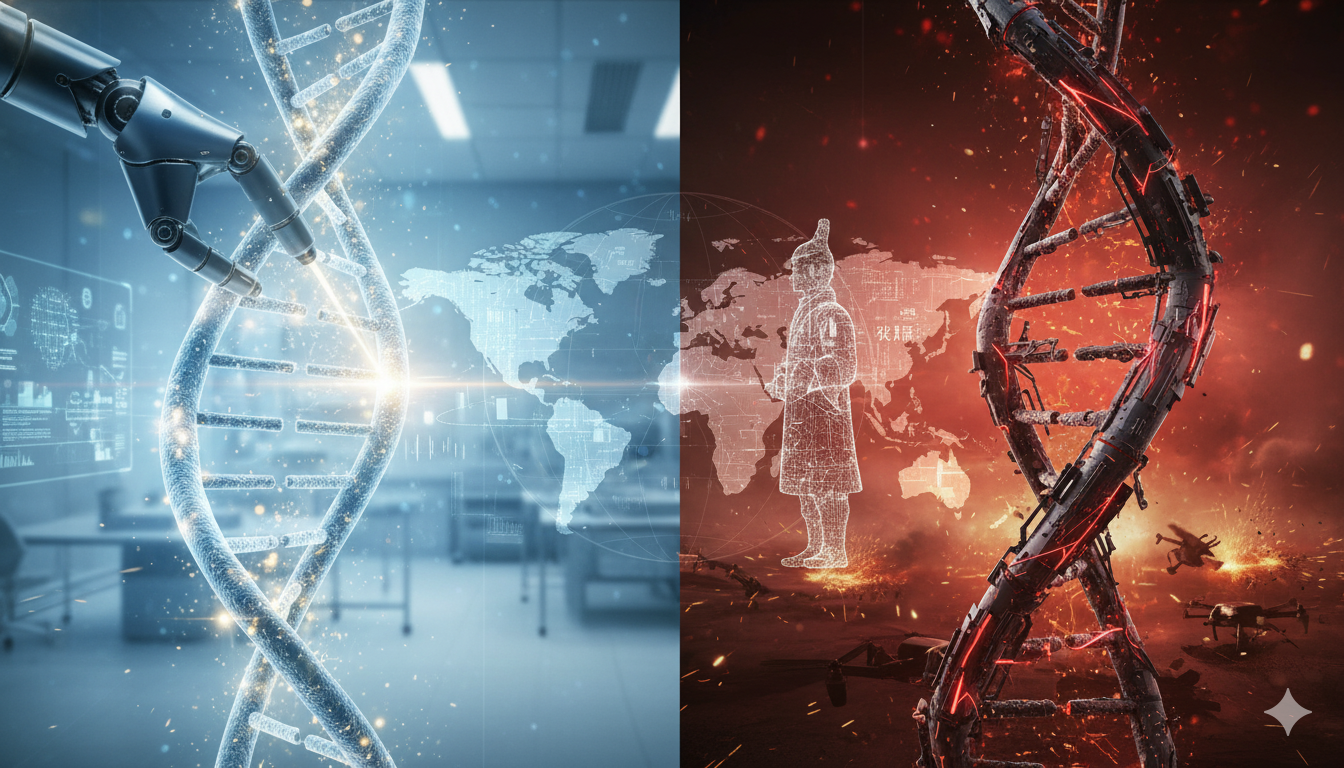
The New Biotech Arms Race: How AI, CRISPR, and Great Power Competition Are Redefining National Security
Introduction: The Dual-Edged Sword of Biotechnology Biotechnology—the harnessing of cellular and molecular processes for technological innovation—has entered a new and disruptive era. From CRISPR gene editing to AI-driven drug discovery, breakthroughs in synthetic biology, genomics, and bioinformatics are reshaping medicine, agriculture, and industry. These advances hold tremendous promise: curing genetic diseases, boosting food security, and…
-
Microalgae Biotechnology: The Next Frontier in Sustainable Innovation
Introduction Microalgae—microscopic, photosynthetic organisms that thrive in water—have rapidly gained attention as a cornerstone of the bioeconomy. Their remarkable ability to convert sunlight, CO₂, and nutrients into high-value products makes them uniquely positioned to address global challenges in energy, health, food security, and climate change. From powering vehicles to cleaning wastewater and producing nutraceuticals, microalgae…
-
The Future of Brain-Computer Interfaces: Overcoming Challenges and Pioneering Technologies
Brain-Computer Interfaces (BCIs) have emerged as a fascinating field with immense potential to revolutionize human-machine interaction. By directly linking the human brain to external devices, BCIs hold promise for a wide range of applications, from assisting individuals with disabilities to enhancing virtual reality experiences. However, realizing the full potential of BCIs requires addressing significant challenges…
-
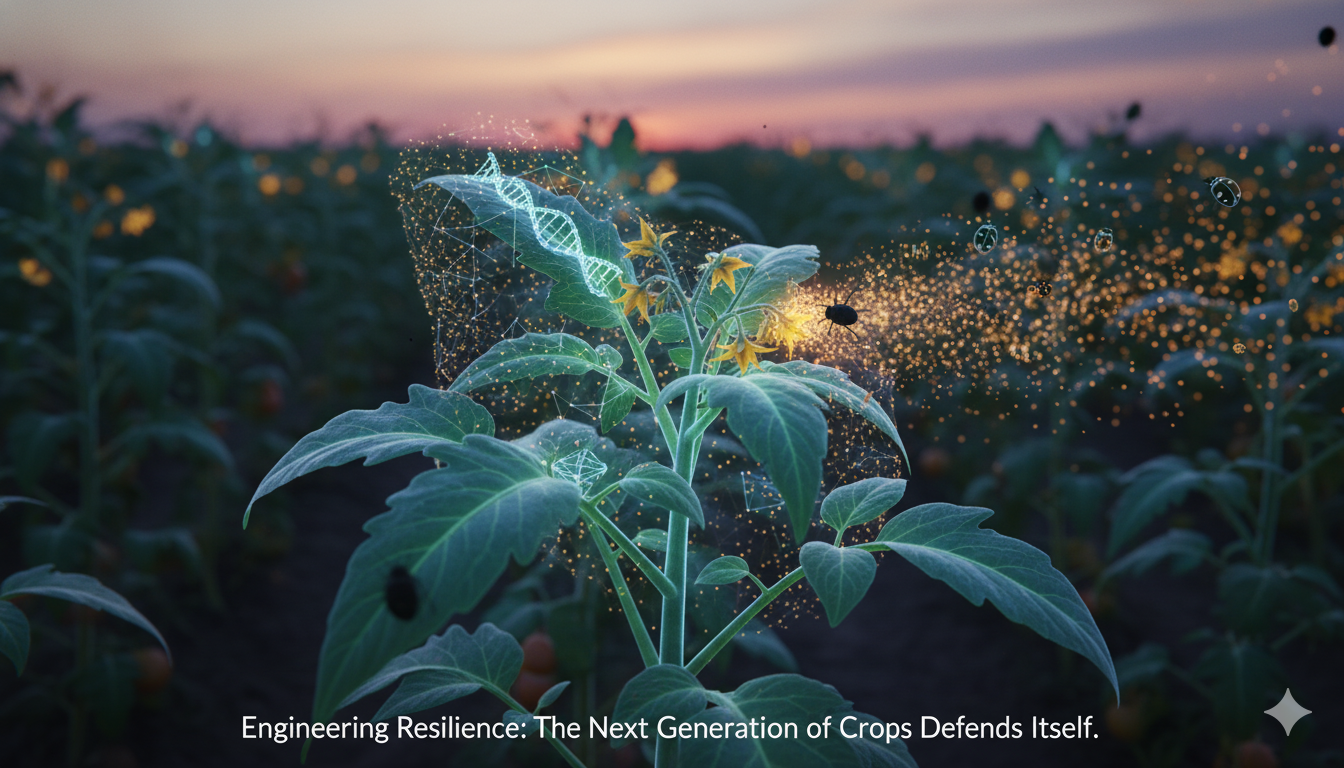
Engineering Nature’s Defenses: How CRISPR, RNAi, and Synthetic Biology Are Revolutionizing Sustainable Agriculture
The Global Food Security Challenge As the global population races toward 10 billion by 2050, agriculture is under unprecedented strain. Farmers are tasked with boosting yields while simultaneously cutting back on practices that degrade the environment. Among the most formidable threats are pests and pathogens, which destroy up to 40% of global crop production each…
-
Quantum Photonics: The Next Revolution in Healthcare
In the rapidly evolving landscape of medical technology, a new frontier is emerging—one that harnesses the strange and powerful laws of quantum mechanics to transform how we detect, diagnose, and treat disease. Quantum photonics, which uses light particles (photons) engineered with quantum properties, promises to unlock unprecedented precision in medical imaging, accelerate drug discovery, and…
-
Electrospray Thrusters: Powering the Next Generation of Small Satellites
As the space industry shifts toward smaller, more agile satellites, traditional propulsion systems often fall short of meeting the demands of precision, efficiency, and scalability. A breakthrough technology is emerging to fill this gap: electrospray thrusters. Compact yet powerful, these devices are redefining what’s possible in satellite propulsion, offering unprecedented levels of efficiency and…




Related Domains & Cross-Cutting Themes
Human systems, global health security, ethics and regulation, supply-chain resilience, and science governance.
Ethics, governance, and technology control
Industrial scaling and supply-chain constraints
Human–machine teaming and trust
Interoperability across platforms and institutions
Export controls and technological rivalry
Explore the Critical & Emerging Technologies Magazine →
Explore the Industry, Markets & Supply Chains Magazine →
Explore the Space Technology, Defense & Exploration Magazine →