Category Critical & Emerging Technologies

Automated AI based soft kill countermeasures including electronic attack and cyber weapons will protect Warships from future missile threats

BAE Siren Naval Countermeasure Outfit DLH

Naval Warships now faces wide spectrum of threats from hypersonic missiles, ballistic and cruise missiles, cavitating torpedoes, rail guns, lasers and UAVs. Anti-Ship Missiles are guided missiles most of them of the sea skimming variety, and many use a combination…...

IDST Monthly Access Membership Required

You must be a IDST Monthly Access member to access this content.

Join Now

Already a member? Log in here

Air Force to spend $950 million on Autonomous technologies Research to enable its Anti-access and area denial (A2/AD) missions

autonomyroadmap

The Air Force is looking to increase the use of autonomous technology and has released a Broad Agency Announcement for industry participation, according to a July 7 agency notice. The objective of Science and Technology for Autonomous Teammates (STAT) program…...

IDST Monthly Access Membership Required

You must be a IDST Monthly Access member to access this content.

Join Now

Already a member? Log in here

Brain-computer interfaces are employed for neuroprosthetics, and now in military and defense to control robotic soldiers or fly planes & UAVs with thoughts.

bcitech

New era has arrived when people  use only their thoughts to control not only themselves, but the world around them. Every action our body performs begins with a thought, and with every thought comes an electrical signal. The electrical signals can…...

IDST Monthly Access Membership Required

You must be a IDST Monthly Access member to access this content.

Join Now

Already a member? Log in here

DARPA’s Dispersed Computing (DCOMP) aims to dynamically boosts computing power for real-time battlefield understanding

Dispersed COLOR 04 2

In military applications, particularly those oriented toward real-time battlefield understanding, synthesis of actionable information from diverse data sources in near real-time becomes an important requirement. In the current art, users with significant computing requirements have typically depended on access to…...

IDST Monthly Access Membership Required

You must be a IDST Monthly Access member to access this content.

Join Now

Already a member? Log in here

DARPA NESD developing high bandwidth implantable neural interfaces for controlling machines with brain and mind control of soldiers

NESDtargets

Neural interfaces currently approved for human use squeeze a tremendous amount of information through just 100 channels, with each channel aggregating signals from tens of thousands of neurons at a time. The result is noisy and imprecise.  DARPA announced NESD in…...

IDST Monthly Access Membership Required

You must be a IDST Monthly Access member to access this content.

Join Now

Already a member? Log in here

DARPA’s 1000X efficient graph analytics processor enables real-time identification of cyber threats, and vastly improved situational awareness

DARPA HIVE 2 c1e3841b05a09ee1

Today large amounts of data is collected from numerous sources, such as social media, sensor feeds (e.g. cameras), and scientific data. There are over 1 billion websites on the world wide web today and the Annual global IP traffic will…...

IDST Monthly Access Membership Required

You must be a IDST Monthly Access member to access this content.

Join Now

Already a member? Log in here

DARPA’s N-ZERO extends the lifetime of IoT devices and remote sensors from months to years

c2be3493ce42ee658842d93c6d54529d

Today U.S. soldiers are being killed because the Defense Department cannot deploy all the sensors it would like to. DoD could  deploy sensors every few yards to detect  buried  improvised explosive device (IED). As it is, every sensor deployed today has…...

IDST Monthly Access Membership Required

You must be a IDST Monthly Access member to access this content.

Join Now

Already a member? Log in here

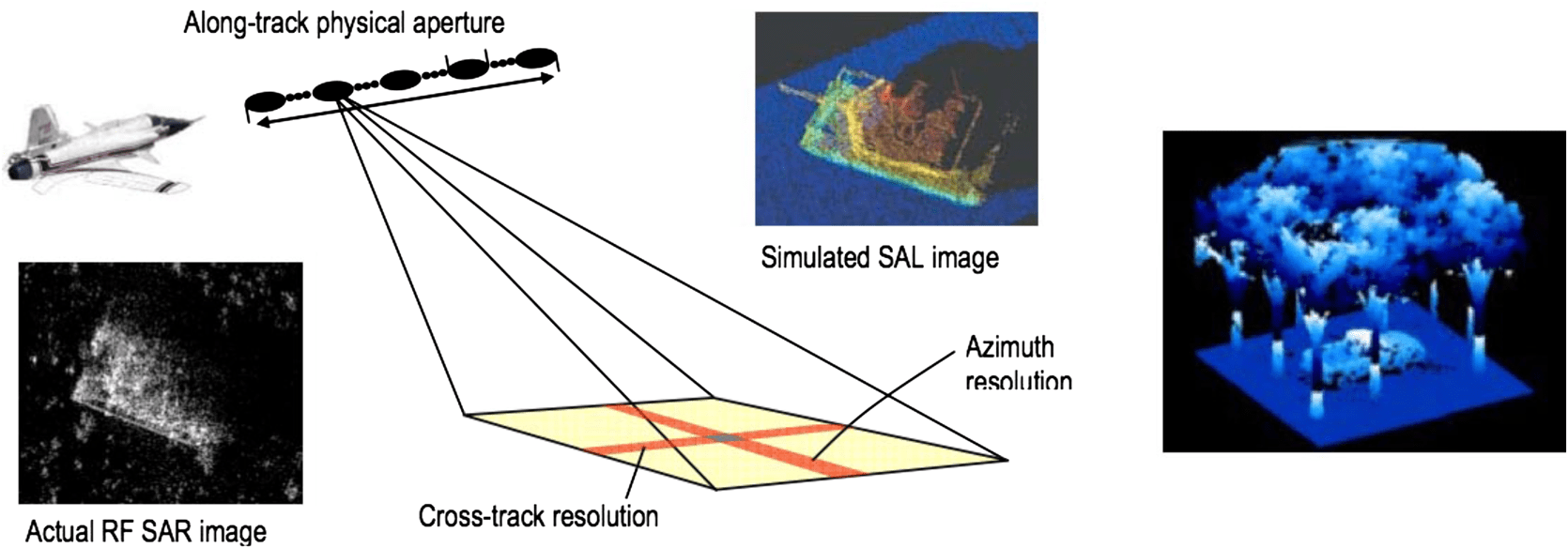
New polarizer technologies can aid in detecting military targets from high altitude air and space platforms

00044 psisdg9072 90721D page 8 1

Many types of sensors have been proposed for detection of small targets such as tanks and trucks including passive infrared imaging sensors and active Radars. Passive sensing systems, for many types of targets, especially airborne ones, use target motion as…...

IDST Monthly Access Membership Required

You must be a IDST Monthly Access member to access this content.

Join Now

Already a member? Log in here

DARPA’s Fast Lightweight Autonomy (FLA) program is advancing autonomy to aid military operations in dense urban areas or heavily wooded forests

flv 1

“The goal of Fast Lightweight Autonomy (FLA)  is to develop advanced algorithms to allow unmanned air or ground vehicles to operate without the guidance of a human tele-operator, GPS, or any datalinks going to or coming from the vehicle,” said…...

IDST Monthly Access Membership Required

You must be a IDST Monthly Access member to access this content.

Join Now

Already a member? Log in here

DARPA TNT through activation of peripheral nerves speeds up learning by 40% , enable soldiers analyzing intelligence and cryptography techniques

Targeted neuroplasticity training 400

In March 2016, DARPA launched the Targeted Neuroplasticity Training (TNT) program, that seeks to advance the pace and effectiveness of a specific kind of learning—cognitive skills training—through the precise activation of peripheral nerves that can in turn promote and strengthen…...

IDST Monthly Access Membership Required

You must be a IDST Monthly Access member to access this content.

Join Now

Already a member? Log in here