
Strategy, Policy & Governance examines how states, institutions, and power centers define objectives, design policies, and govern complex security and technology ecosystems. This magazine focuses on the strategic decision-making layer—where doctrine, policy, regulation, and long-term planning translate national intent into coordinated action across military, technological, economic, and societal domains.
IDST Intelligence Briefings
Why This Magazine Exists
Strategy, Policy & Governance examines how states, institutions, and power centers define objectives, design policies, and govern complex security and technology ecosystems. This magazine focuses on the strategic decision-making layer—where doctrine, policy, regulation, and long-term planning translate national intent into coordinated action across military, technological, economic, and societal domains.
What We Track
This magazine examines the strategic, policy, and governance dimensions that shape national security, defense modernization, technological competition, and institutional resilience. It analyzes how governments, militaries, industries, and international organizations formulate strategy, manage risk, govern emerging technologies, and adapt to an increasingly complex security environment.
Coverage spans defense policy and doctrine, strategic planning, civil–military relations, technology governance, regulatory frameworks, innovation ecosystems, resilience building, and long-term preparedness—providing the context needed to understand not only how security challenges emerge, but how nations organize to address them.
Latest Analysis & Intelligence
-
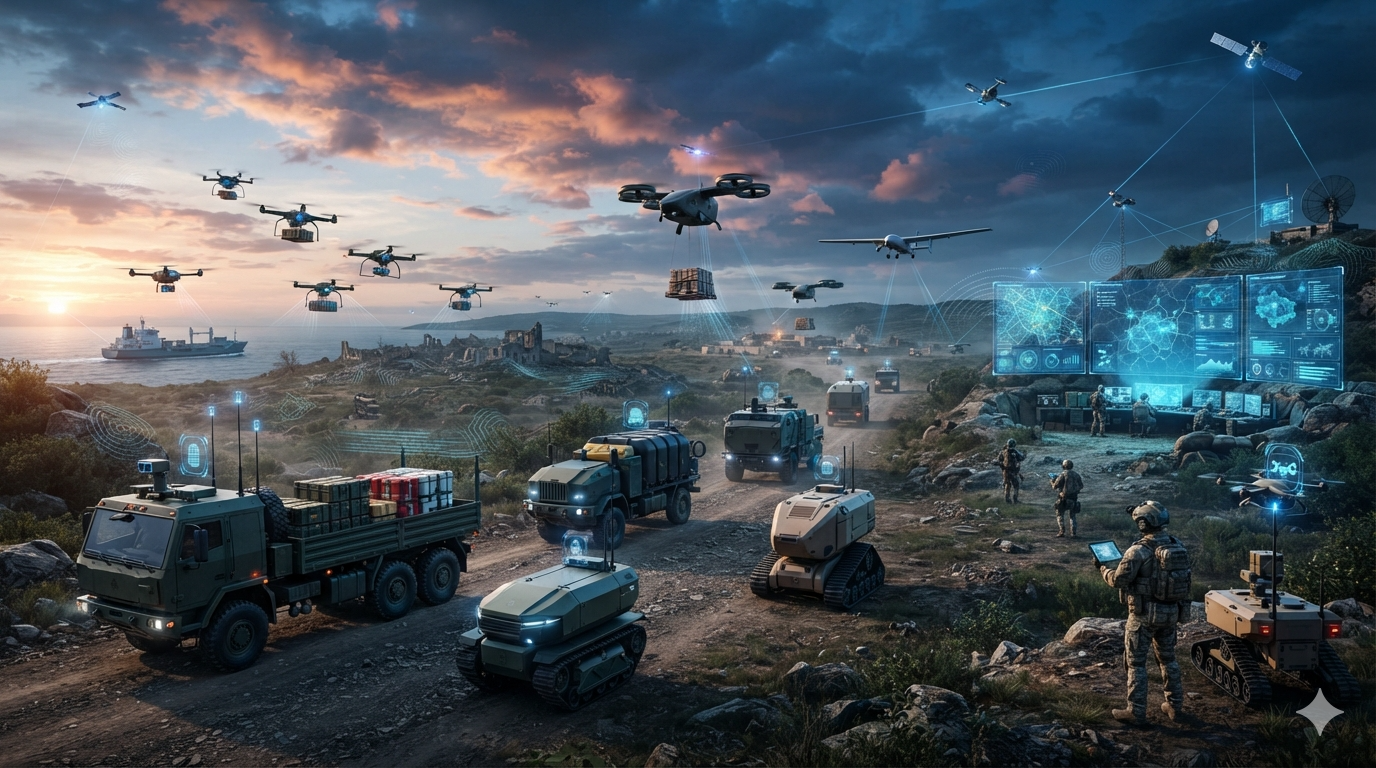
Securing Military AI: DARPA SABER and the Race to Build Trusted Battlefield Artificial Intelligence
Introduction: Strategic Context Artificial intelligence has rapidly evolved from a decision-support capability into a core element of modern military power. Across contemporary battlefields, AI now enables autonomous drones, unmanned ground vehicles, precision targeting, electronic warfare, intelligence analysis, logistics optimization, missile defense, and multi-domain command-and-control. The conflicts in Ukraine, the Middle East, and the Indo-Pacific have…
-
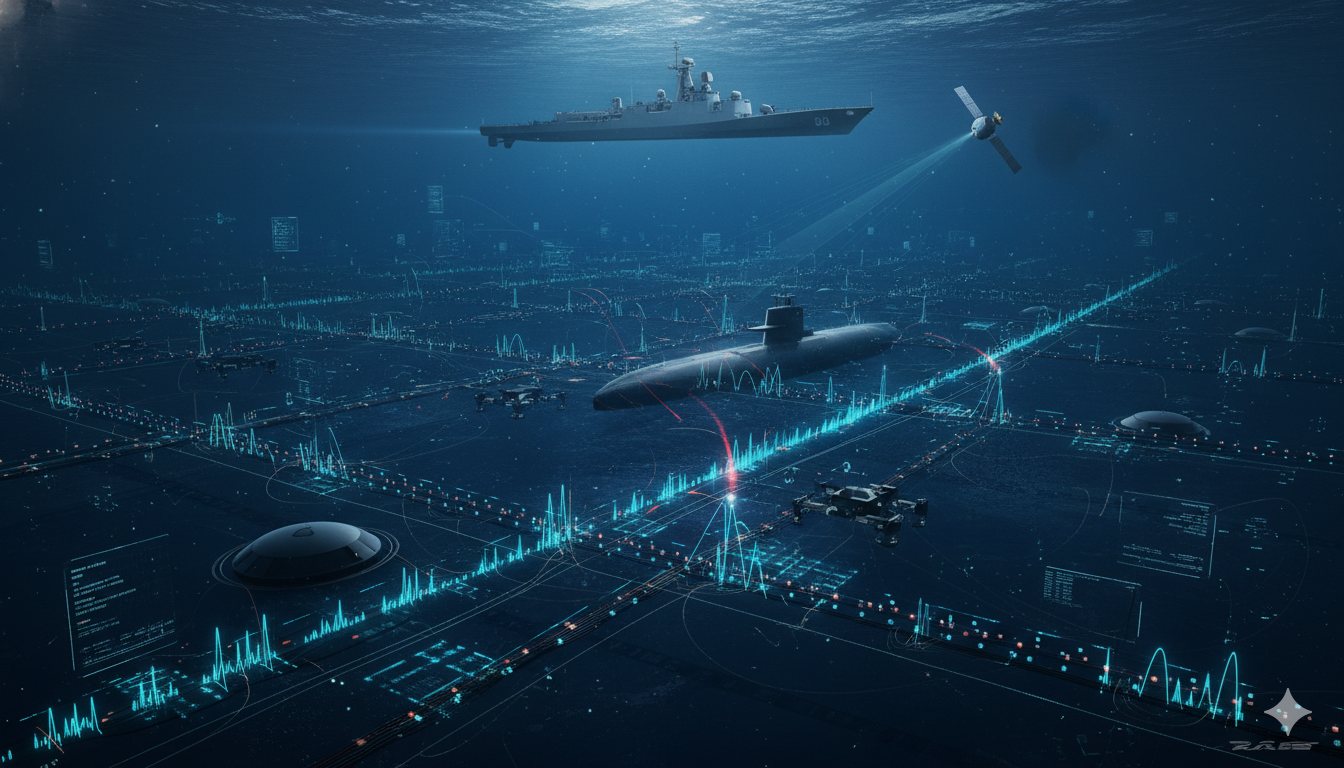
China’s Quantum Leap in Submarine Detection: How Quantum Sensing Is Reshaping Undersea Warfare and the Future of Naval Power
Introduction: The Quantum Revolution Beneath the Waves The contest for naval supremacy is entering a new technological era where the decisive advantage may no longer belong solely to quieter submarines or more capable sonar systems, but to nations that can exploit quantum physics to reveal what has long remained hidden beneath the ocean surface. As…
-

Humanoid Military Robots: The Race to Build the AI Soldier of the Future
Introduction: The Dawn of Embodied Warfare Artificial intelligence is rapidly evolving beyond software into the physical world, creating what many experts describe as the next revolution in military technology: embodied AI. For decades, militaries have relied on unmanned aerial vehicles, autonomous underwater vehicles, and ground robots designed for specialized missions. The next generation of defense…
-

Visual Navigation to Autonomous Air Refueling: Revolutionizing Aerial Refueling for Contested Airspace
Introduction: Autonomous Refueling Becomes a Strategic Necessity Air-to-air refueling has long been one of the defining capabilities of modern air power, enabling strategic bombers, fighter aircraft, intelligence platforms, airborne early warning aircraft, and long-range unmanned systems to operate across global distances without dependence on forward operating bases. For decades, this capability has provided the United…
-
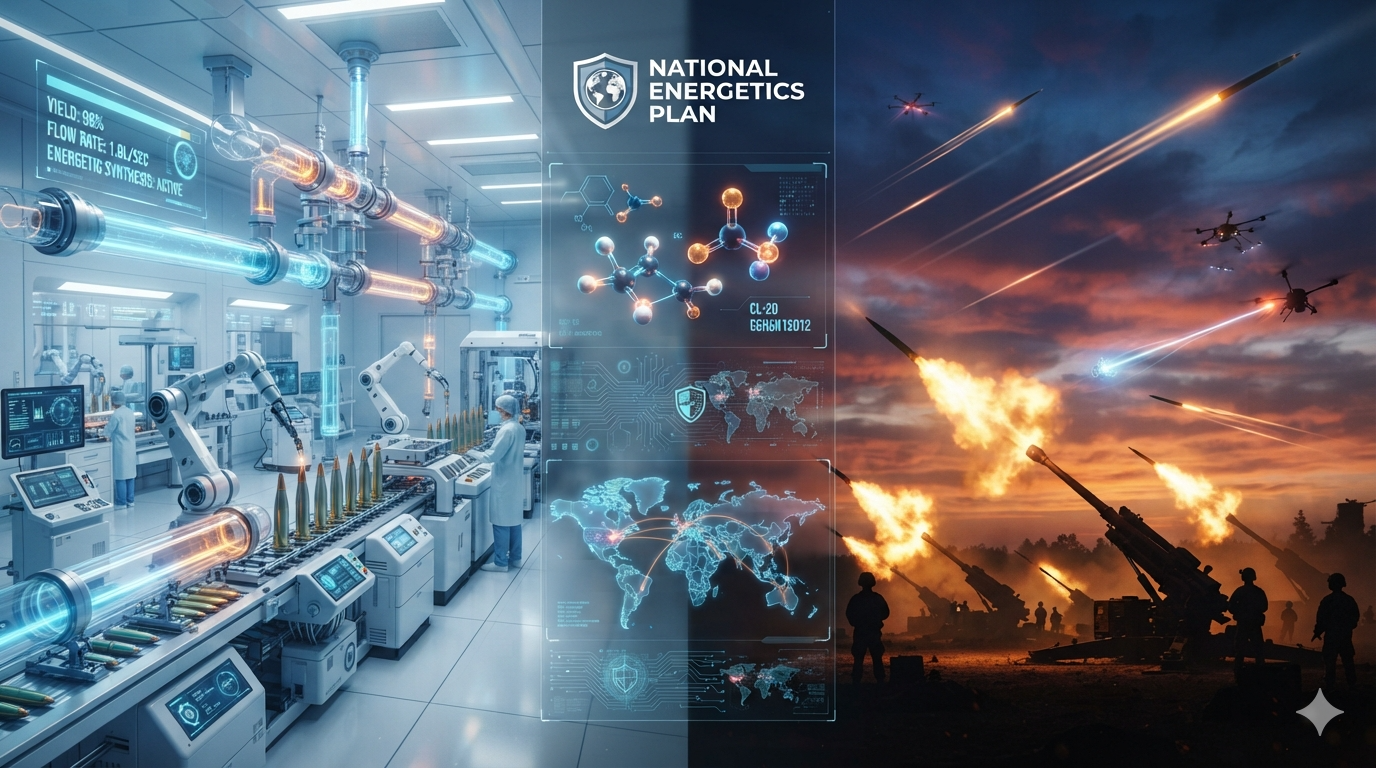
The New Energetics Revolution: How Advanced Propellants, Smart Manufacturing, and Industrial Innovation Are Reshaping Military Power
Introduction: The Strategic Importance of Energetics in Great Power Competition Behind every missile launch, artillery strike, hypersonic weapon, rocket motor, and precision-guided munition lies a critical but often overlooked technology domain—energetics. Explosives, propellants, pyrotechnics, and advanced energetic materials determine not only the range, speed, and lethality of modern weapons but also the ability of nations…
-

The Green Revolution 2.0: How Biotechnology Is Engineering a Sustainable Future for Climate, Industry, and Global Security
Introduction: Biotechnology Becomes a Strategic Technology for the Planet Biotechnology is undergoing its most profound transformation since the emergence of recombinant DNA technology nearly five decades ago. What began as a revolution in medicine has evolved into a foundational technology capable of reshaping global manufacturing, agriculture, energy systems, environmental restoration, and national security. Today, biology…
-

The Quantum Operating System Revolution: How QNodeOS Is Building the Software Foundation for the Quantum Internet
Introduction: Quantum Networking Enters the Software Era For decades, progress in quantum computing has been dominated by advances in hardware—superconducting processors, trapped ions, neutral atoms, photonic qubits, and diamond-based quantum systems. Yet despite rapid improvements in quantum hardware, one critical limitation has prevented the emergence of practical quantum networks: every experimental platform has required its…
STRATEGIC SUB-MAGAZINES
The Strategy, Policy & Governance magazine connects multiple strategic sub-domains that examine power, risk, and coordination from different angles.
Geopolitics, Strategy & Technological Rivalries
Focuses on interstate competition, alliances, power balances, and long-term rivalry dynamics shaped by technology and economics.
Explore the Geopolitics, Strategy & Technological Rivalries Sub-Magazine →
Global Risks & Future Threats
Examines systemic risks, emerging threat vectors, gray-zone challenges, and future conflict drivers beyond conventional war.
Explore the Global Risks & Future Threats Sub-Magazine →
Technology & Systems Management
Analyzes how complex defense and security systems are governed, integrated, regulated, and sustained across institutions..
Explore the Technology & Systems Management Sub-Magazine →
Related Domains & Cross-Cutting Themes
Strategy, Policy & Governance does not operate in isolation. Coverage within this magazine frequently intersects with Defense & Military Systems, Critical & Emerging Technologies, Industry, Markets & Supply Chains, Space Technology, Defense & Exploration Readers interested in deeper technical, industrial, or geopolitical dimensions are encouraged to explore related magazines across the IDST intelligence network.
Explore the Defense and Military Systems Magazine →
Explore the Critical & Emerging Technologies Magazine →
Explore the Industry, Markets & Supply Chains Magazine →
Explore the Space Technology, Defense & Exploration Magazine →