
Critical and emerging technologies are reshaping the foundations of military power, economic competitiveness, and strategic stability. Unlike traditional platforms, these technologies mature unevenly, diffuse rapidly across civilian and military domains, and generate advantage long before they are fully weaponized.
This magazine examines technologies that change how power is created, scaled, and sustained—focusing not on speculative futures, but on capabilities that are actively shaping decision-making, deterrence, and conflict dynamics today.
IDST Intelligence Briefings
Our briefings examine how human performance, training systems, and force design interact with technology under operational stress
Why This Magazine Exists
Emerging technologies are often discussed in isolation or through hype-driven narratives. In reality, their strategic impact depends on engineering maturity, institutional adoption, industrial scaling, and governance frameworks.
This magazine exists to explain which technologies actually matter, how quickly they can be deployed, and under what constraints they meaningfully alter security, military capability, and geopolitical competition.
What We Track
- Artificial intelligence and machine learning for defense and security
- Advanced sensors, computing, and data architectures
- Quantum technologies and cryptographic disruption
- Advanced materials, energy systems, and propulsion
- Biotechnology and human–technology interfaces
- Dual-use technologies crossing civilian and military domains
Latest Analysis & Intelligence
-

Beyond Solid and Liquid: How Phase Change Materials are Reshaping Technology
Imagine a material that can absorb excess heat without increasing in temperature, release stored warmth on demand, and store vast amounts of energy in a compact space—all simply by changing its physical state. This is not science fiction; it is the reality of Phase Change Materials (PCMs), substances that are rapidly moving from laboratory curiosity…
-

Quantum-Shielded Networks: The Future of IoT Security in a Connected World
Introduction: The IoT Security Paradox In September 2024, the cybersecurity world was shaken when thousands of pagers and walkie-talkies used by Hezbollah operatives were remotely detonated in a sophisticated cyber-physical attack. Beyond the immediate tactical implications, the incident served as a stark reminder of the fragility inherent in our increasingly connected world. With projections estimating…
-

Water as a Strategic Factor: Harnessing Technology to Predict and Manage Global Water Risks
Water is no longer just an environmental concern; it has emerged as a critical strategic resource whose availability and predictability shape outcomes across military, humanitarian, urban, and industrial domains. Accelerating climate change is intensifying floods, prolonging droughts, and destabilizing ecosystems across large parts of the world. As environmental volatility increases, the ability to monitor and…
-
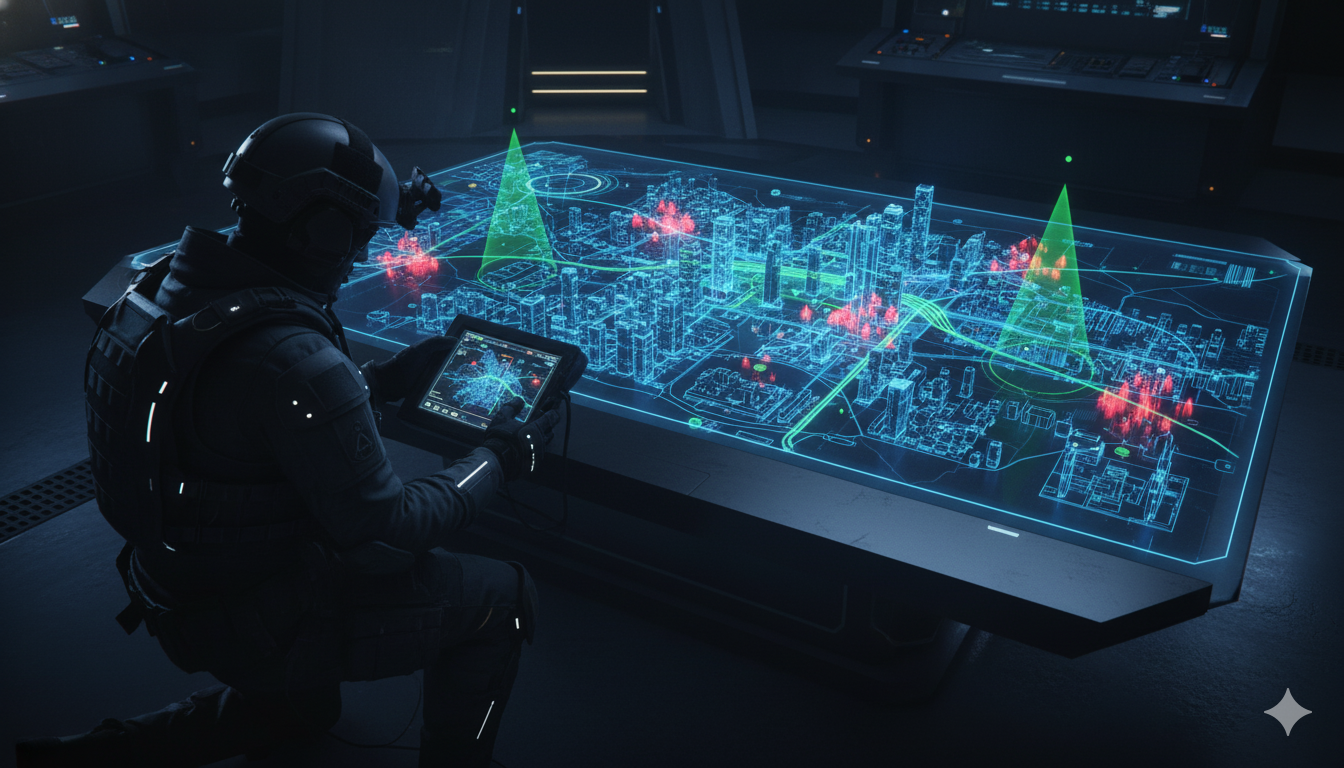
Mapping the Invisible Battlefield: How Spectrum Analysis is Revolutionizing Modern Warfare
Mapping the Invisible Battlefield: How Spectrum Analysis is Revolutionizing Modern Warfare In contemporary warfare, the battlefield extends far beyond land, sea, air, and space. Increasingly, a decisive domain of conflict exists within the electromagnetic spectrum—the invisible environment that carries communications, radar signals, navigation systems, and electronic warfare capabilities. Modern militaries now recognize that controlling and…
-

Digital Fortresses: How DARPA’s CPM Program is Reinventing Cybersecurity Through Automatic Compartmentalization
In the relentless cat-and-mouse contest between cyber attackers and defenders, a fundamental asymmetry has long shaped the battlefield. An attacker needs to discover only a single vulnerability to gain entry into a system, while defenders must secure every possible entry point. This imbalance has produced a steady stream of major cyber incidents that have disrupted…
-

The Sky is the Limit: How Emerging Technologies Are Powering Urban Air Mobility
Urban Air Mobility is rapidly transforming from an ambitious concept into a viable transportation ecosystem, powered by breakthroughs in electric propulsion, autonomy, advanced materials, and digital airspace management. Introduction Imagine summoning a quiet, pilotless air taxi as easily as booking a ride through a mobile app—lifting vertically from a nearby rooftop and gliding above congested…
-
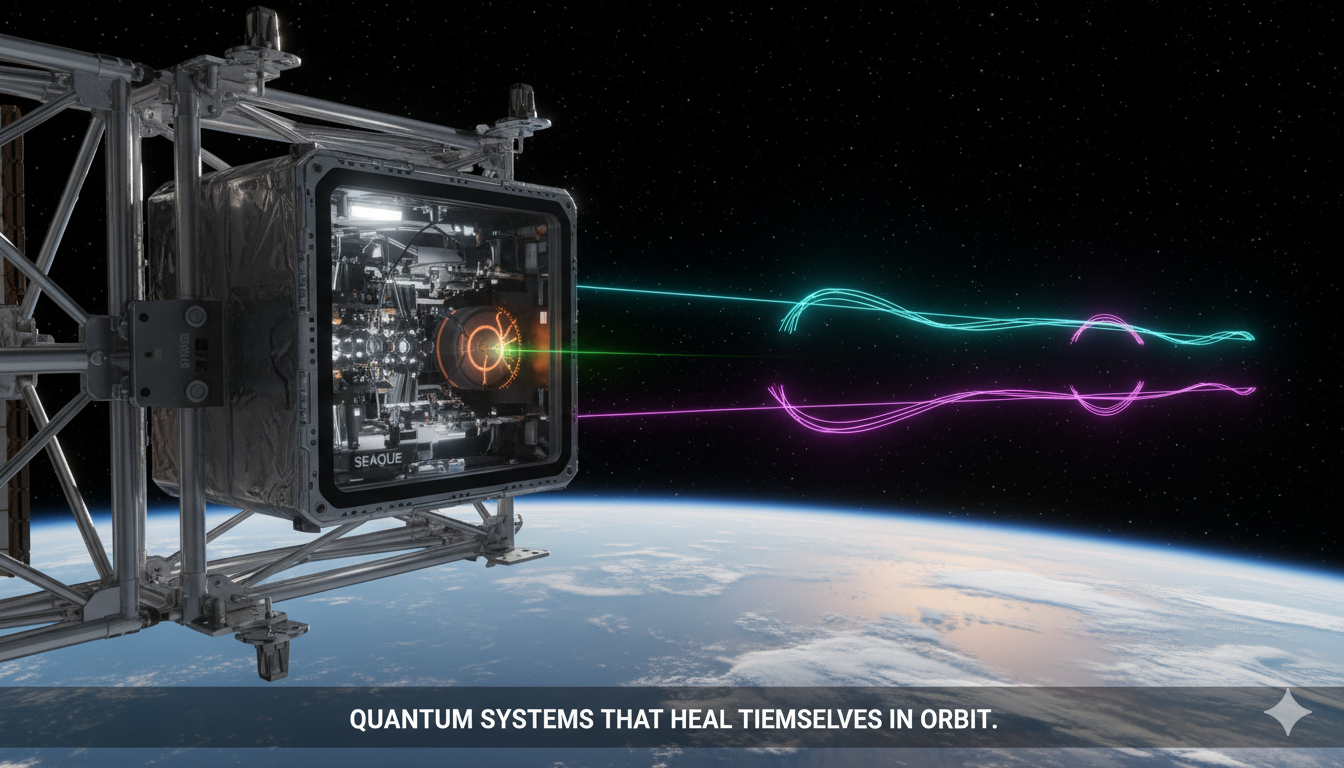
SEAQUE: NASA’s Self-Healing Quantum Experiment and the Future of Resilient Space Communications
How autonomous quantum technology in orbit is shaping the next generation of secure communication networks and adaptive space infrastructure. In the radiation-intense environment of space, maintaining the integrity of sensitive electronic systems has always been one of the most persistent engineering challenges. Quantum technologies face an even greater hurdle: their operation depends on extremely fragile…
STRATEGIC SUB-MAGAZINES
Modern military power emerges from the interaction of platforms, people, doctrine, and integration across domains. The Defense & Military Systems magazine is structured into focused sub-magazines that examine how combat capability is built, sustained, and employed across air, land, sea, weapons, and human systems.
Artificial Intelligence, Data & Intelligent Systems
Focuses on the platforms, technologies, and doctrines that define control of the air and near-space domains. This sub-magazine examines combat aviation, unmanned air systems, aerospace surveillance, and emerging flight technologies shaping future air superiority.
Explore the Artificial Intelligence, Data & Intelligent Systems Sub-Magazine →
Biotechnology, Bioengineering & Synthetic Life Systems
Examines how modern armies fight, maneuver, and survive in increasingly contested land environments. This sub-magazine focuses on armored platforms, artillery, battlefield networking, and the transformation of ground combat through automation and data.
Explore the Biotechnology, Bioengineering & Synthetic Life Systems Sub-Magazine →
Communications, Networks & Information Infrastructure
Analyzes the technologies and doctrines shaping sea control, power projection, and undersea dominance. This sub-magazine covers surface fleets, submarines, maritime surveillance, and naval systems operating across blue-water and littoral theaters.
Explore the Communications, Networks & Information Infrastructure Sub-Magazine →
Electronics, Sensors & Electronic Warfare Systems
Focuses on the strike capabilities that deliver military effects across domains. This sub-magazine examines missiles, precision weapons, directed energy, and emerging strike technologies that shape deterrence and combat outcomes.
Explore the Electronics, Sensors & Electronic Warfare Systems Sub-Magazine →
Advanced Materials & Structural Technologies
Explores the evolving role of the individual warfighter within increasingly networked and automated battlespaces. This sub-magazine focuses on human performance, survivability, and the integration of soldiers into complex combat systems.
Explore the Advanced Materials & Structural Technologies Sub-Magazine →
Mechanical Systems, Robotics & Physical Engineering
Focuses on the strike capabilities that deliver military effects across domains. This sub-magazine examines missiles, precision weapons, directed energy, and emerging strike technologies that shape deterrence and combat outcomes.
Explore the Mechanical Systems, Robotics & Physical Engineerings Sub-Magazine →
Nanotechnology & Engineered Matter
Explores the evolving role of the individual warfighter within increasingly networked and automated battlespaces. This sub-magazine focuses on human performance, survivability, and the integration of soldiers into complex combat systems.
Explore the Nanotechnology & Engineered Matters Sub-Magazine →
Photonics, Optics & Directed Energy Systems
Focuses on the strike capabilities that deliver military effects across domains. This sub-magazine examines missiles, precision weapons, directed energy, and emerging strike technologies that shape deterrence and combat outcomes.
Explore the Photonics, Optics & Directed Energy Systemss Sub-Magazine →
Quantum Science & Strategic Quantum Technologies
Explores the evolving role of the individual warfighter within increasingly networked and automated battlespaces. This sub-magazine focuses on human performance, survivability, and the integration of soldiers into complex combat systems.
Explore the Quantum Science & Strategic Quantum Technologies Sub-Magazine →
Related Domains & Cross-Cutting Themes
Emerging technologies rarely operate in isolation. Their real impact is shaped by integration, governance, and human-system interaction.
Ethics, governance, and technology control
Industrial scaling and supply-chain constraints
Human–machine teaming and trust
Interoperability across platforms and institutions
Export controls and technological rivalry
Explore the Critical & Emerging Technologies Magazine →
Explore the Industry, Markets & Supply Chains Magazine →
Explore the Space Technology, Defense & Exploration Magazine →