
Modern power depends not only on weapons and information, but on the systems that keep forces moving, supplied, connected, and operational over time.
Autonomous platforms, energy systems, and infrastructure networks increasingly define operational tempo, geographic reach, and strategic resilience. This magazine analyzes the technologies and architectures that sustain operations across land, sea, air, space, and contested environments—where reliability, efficiency, and autonomy matter as much as raw performance.
IDST Intelligence Briefings
Focus: autonomy, propulsion, power systems, logistics tech, infrastructure resilience
Why This Magazine Exists
Logistics, energy, infrastructure, and autonomous support systems are often overlooked compared to frontline platforms, yet they determine whether military and industrial operations can be sustained at scale. This sub-magazine examines the technologies, architectures, and innovations that enhance operational endurance, resilience, mobility, and self-sufficiency in increasingly contested and resource-constrained environments.
What We Track
- Unmanned and autonomous platforms across domains
- Energy generation, storage, and propulsion systems
- Logistics automation and sustainment technologies
- Critical infrastructure resilience and protection
- Dual-use civilian–military systems
STRATEGIC SUB-MAGAZINES
Modern military power emerges from the interaction of platforms, people, doctrine, and integration across domains. The Defense & Military Systems magazine is structured into focused sub-magazines that examine how combat capability is built, sustained, and employed across air, land, sea, weapons, and human systems.
Unmanned & Autonomous Systems
Focuses on the platforms, technologies, and doctrines that define control of the air and near-space domains. This sub-magazine examines combat aviation, unmanned air systems, aerospace surveillance, and emerging flight technologies shaping future air superiority.
Explore the Unmanned & Autonomous Systems Sub-Magazine →
Thermal, Propulsion & Energy Systems
Examines how modern armies fight, maneuver, and survive in increasingly contested land environments. This sub-magazine focuses on armored platforms, artillery, battlefield networking, and the transformation of ground combat through automation and data.
Explore the Thermal, Propulsion & Energy Systems Sub-Magazine →
Latest Analysis & Intelligence
-
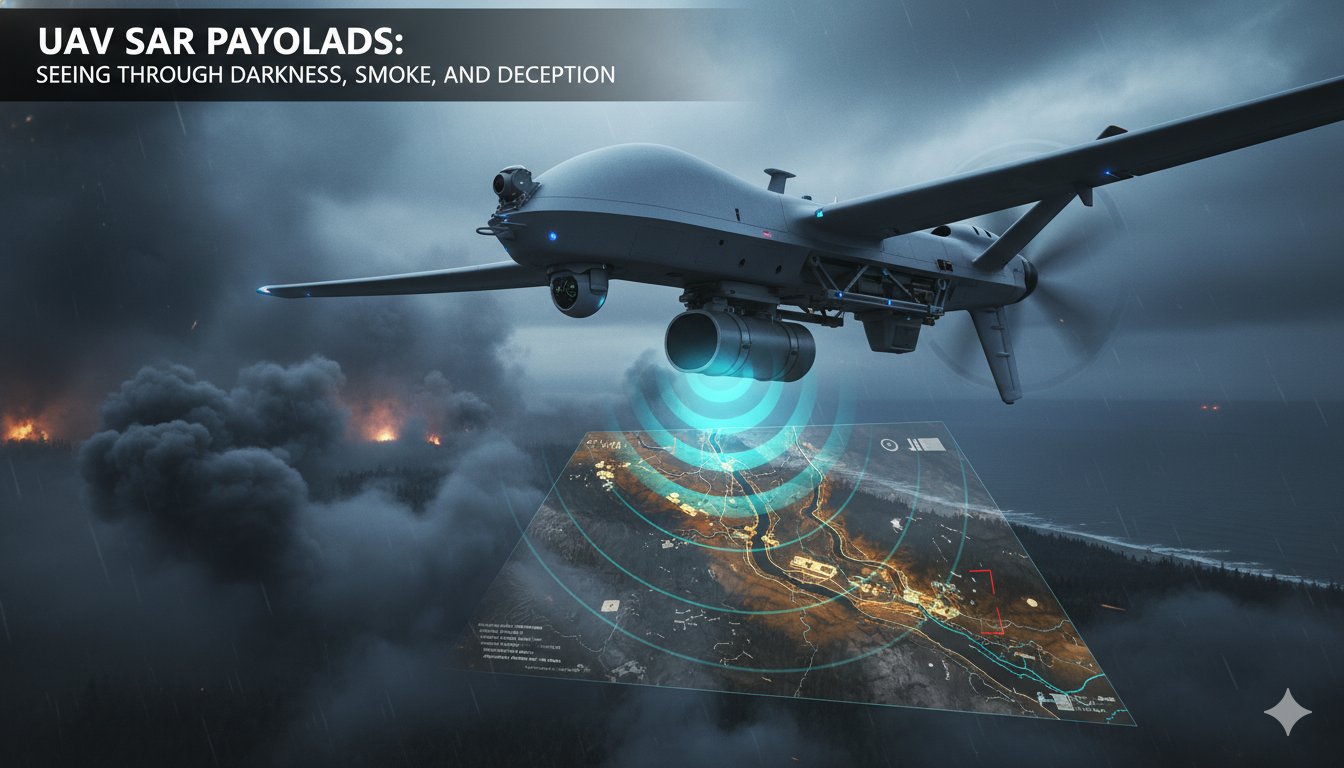
UAV SAR Payloads: Seeing Through Darkness, Smoke, and Deception
Introduction The global UAV payload market is accelerating toward nearly $24 billion by 2030, but among all payload categories, Synthetic Aperture Radar (SAR) is emerging as one of the most strategically important growth segments. Once limited to large and expensive MALE and HALE unmanned aircraft used for strategic intelligence missions, radar miniaturization, improved processors, lighter…
-

The Fifth Industrial Revolution: Where Humans and Intelligent Machines Co-Create the Future
For more than a decade, global technological discourse has been dominated by the concept of the Fourth Industrial Revolution—an era defined by digital connectivity, cloud computing, artificial intelligence, and the fusion of technologies blurring the boundaries between the physical, digital, and biological worlds. Yet as the 2020s progress, a new paradigm is emerging from the…
-
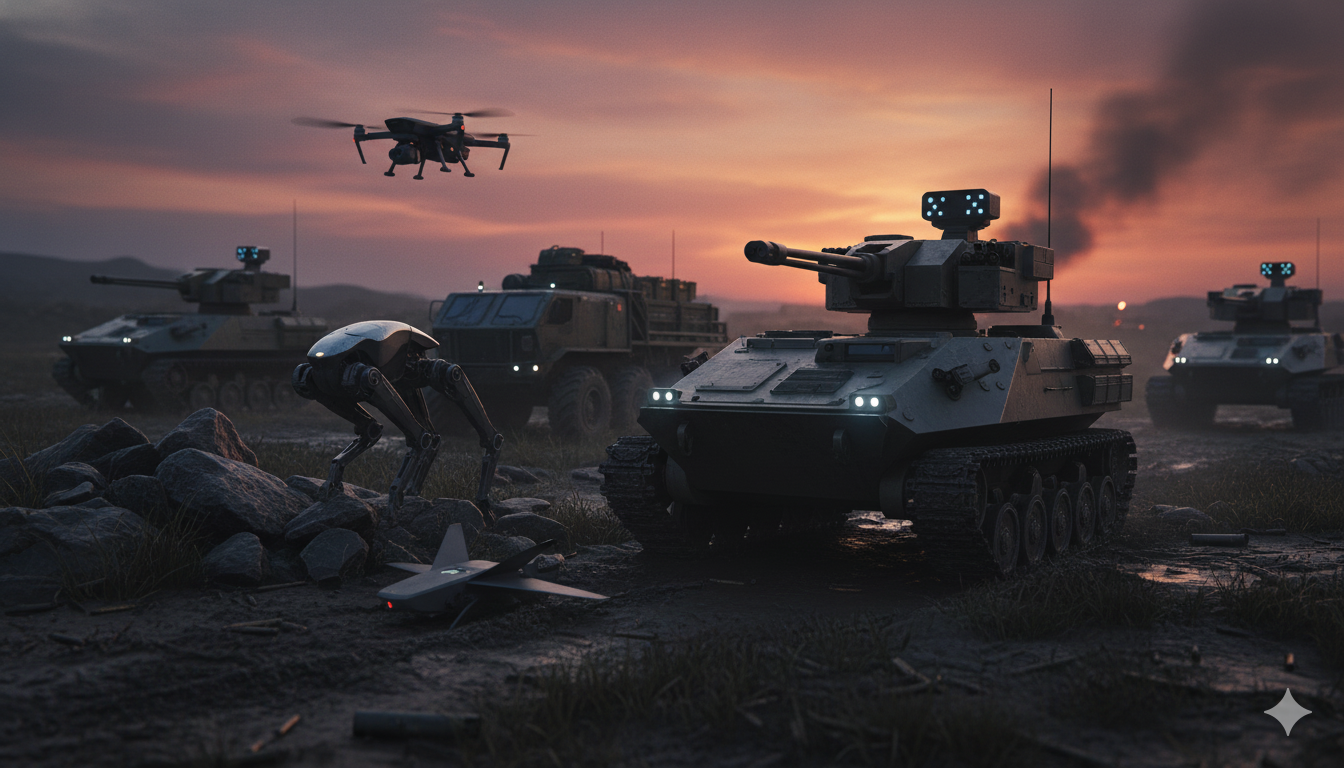
Unmanned Ground Vehicles: The Robotic Spearhead of Modern Warfare
Introduction: The Third Dimension of Unmanned Warfare For much of the past two decades, the global conversation around military robotics has focused primarily on aerial drones. The persistent presence of unmanned aerial vehicles over modern battlefields—from counterterrorism operations to high-intensity wars—has captured both strategic attention and public imagination. Yet beneath the skies where UAVs dominate…
-

The Next Frontier in Vision: How Breakthroughs in SWIR Sensors Are Democratizing Infrared Technology
Introduction (Updated for 2025–2026) Short-Wave Infrared (SWIR) imaging is transitioning from a niche, high-cost military capability into a rapidly expanding, cross-sector sensing technology with implications for defense, autonomy, industry, and consumer electronics. What was once confined to specialized ISR payloads and laboratory-grade instruments is now being reshaped by advances in semiconductor materials, wafer-level integration, quantum…
-
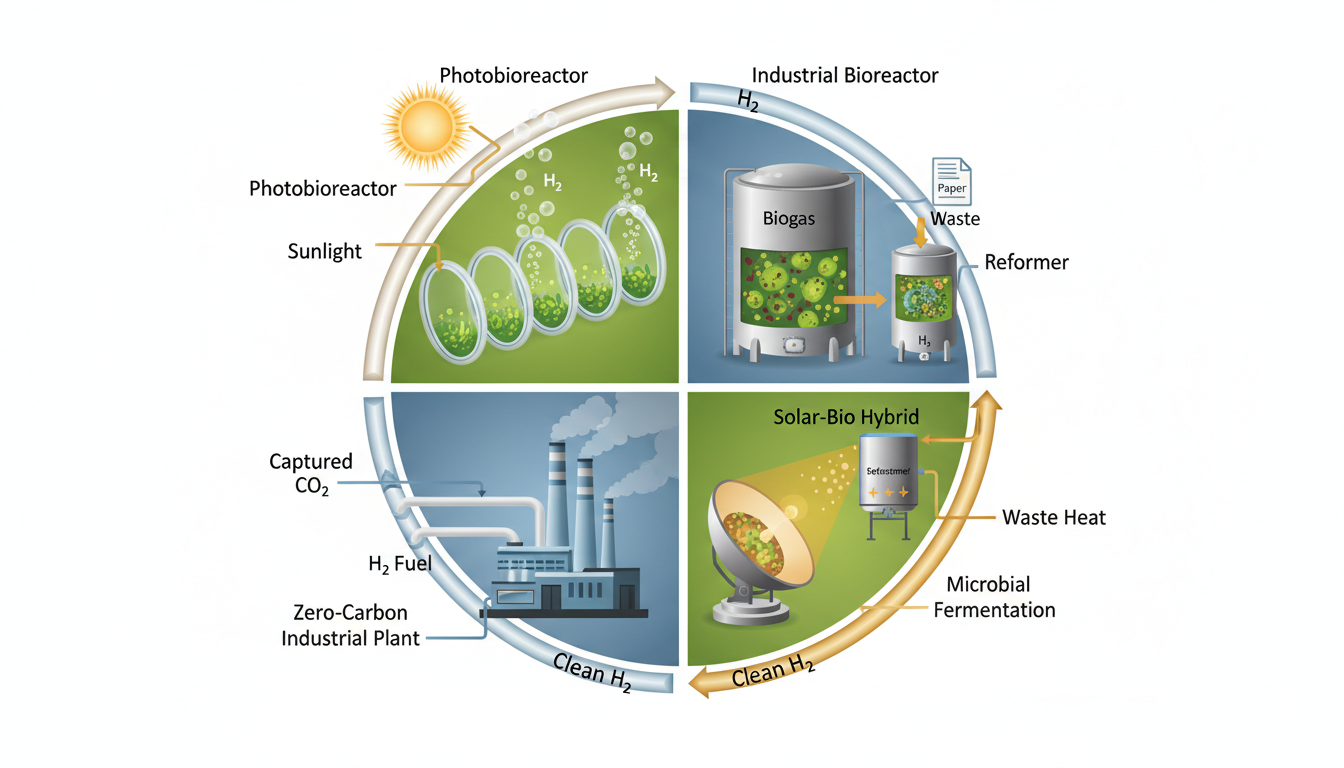
From Algae to Nanoreactors: The New Wave of Biological Hydrogen Production
Introduction: Hydrogen at the Center of the Clean Energy Transition As the global energy system accelerates its transition toward low-carbon alternatives, hydrogen has emerged as one of the most promising fuels for deep decarbonization. Hydrogen is particularly important in sectors that remain difficult to electrify, including steel production, heavy transport, maritime shipping, and chemical manufacturing.…
-

The Living Machine: How Biohybrid Technologies Are Merging Cells with Electronics
Introduction: When Biology Meets the Machine Age For most of human history, biological systems and machines evolved along separate technological paths. Living organisms were adaptive, self-repairing, and capable of sensing subtle environmental signals through complex biochemical pathways. Machines, by contrast, were engineered for precision, speed, and repeatability, processing information through electrical circuits and digital logic.…
-

Harvesting the Ocean’s Breath: Biofuel Cells, Persistent Power, and the Strategic Remapping of the Undersea Domain
Introduction: Powering Persistence in the Undersea Battlespace Beneath the surface of a warming and increasingly contested ocean lies one of the most consequential blind spots in global security and environmental governance. The undersea domain underwrites critical dimensions of modern power—strategic deterrence, subsea data cables, offshore energy systems, and the climate-regulating processes that shape planetary stability.…
Related Domains & Cross-Cutting Themes
Industrial capacity and supply chains
Cyber-physical security
Climate, geography, and environmental stress
Human-machine coordination
System survivability under disruption
Explore the Critical & Emerging Technologies Magazine →
Explore the Industry, Markets & Supply Chains Magazine →
Explore the Space Technology, Defense & Exploration Magazine →