
Science and engineering are the invisible foundations of every modern capability. Long before systems are fielded, strategies debated, or industries scaled, progress is shaped by laboratory research, engineering constraints, and experimental validation.
The Science, Engineering & Applied Research magazine exists to examine this pre-deployment layer of capability—where ideas are tested against physical reality, where feasibility is proven or rejected, and where tomorrow’s technologies are quietly shaped.
This magazine focuses on how knowledge becomes capability, not through speculation, but through disciplined research, engineering trade-offs, and applied experimentation.
Intelligence Briefings
This magazine explores the scientific and engineering foundations that determine how technologies evolve from theoretical concepts into operational capabilities. It examines the physical principles, research breakthroughs, engineering disciplines, and validation processes that underpin innovation across defense, security, industry, and emerging technology domains.
Coverage spans applied physics, chemistry, materials science, advanced engineering, laboratory experimentation, measurement and testing frameworks, prototyping, and technology maturation pathways. By tracing the journey from fundamental research to deployable systems, this magazine provides the technical context needed to understand what is scientifically possible, what remains constrained, and where future breakthroughs are likely to emerge.
Why This Magazine Exists
Scientific progress and technological innovation are often discussed in terms of future promises, disruptive potential, and strategic impact. Yet the most important question is frequently overlooked: can these capabilities actually be achieved within the limits imposed by science, engineering, economics, and real-world implementation?
This magazine exists to bridge that gap by grounding technology discussions in scientific principles, engineering realities, and evidence-based assessment. It examines the constraints, trade-offs, development pathways, and validation processes that determine whether emerging concepts become transformative capabilities, remain niche solutions, or fail altogether. By providing a rigorous understanding of research and engineering fundamentals, this magazine complements the strategic, intelligence, and systems-focused perspectives across IDST, enabling readers to distinguish genuine breakthroughs from speculation and assess technological futures with greater confidence.
What We Track
- Fundamental and applied research relevant to defense and security
- Engineering design constraints and performance trade-offs
- Experimental platforms and prototype validation
- Technology readiness progression (TRL evolution)
- Cross-disciplinary research convergence
- Scientific breakthroughs with long-term strategic relevance
Latest Analysis & Intelligence
-

The Quantum Operating System Revolution: How QNodeOS Is Building the Software Foundation for the Quantum Internet
Introduction: Quantum Networking Enters the Software Era For decades, progress in quantum computing has been dominated by advances in hardware—superconducting processors, trapped ions, neutral atoms, photonic qubits, and diamond-based quantum systems. Yet despite rapid improvements in quantum hardware, one critical limitation has prevented the emergence of practical quantum networks: every experimental platform has required its…
-

Deploying Advanced AI at the Tactical Edge: Overcoming the Challenges of Real-Time Intelligence for Defense, Autonomous Systems, and National Security
Introduction: The New Battlespace for Artificial Intelligence Artificial intelligence is rapidly transforming modern military operations, industrial automation, and autonomous systems, but its greatest impact is emerging far from cloud data centers. The future battlespace increasingly depends on AI operating directly at the tactical edge—aboard unmanned aircraft, autonomous ground vehicles, naval platforms, satellites, wearable soldier systems,…
-

The Global Race for Space-Based Quantum Sensors: Revolutionizing Earth Intelligence, Space Exploration, and Strategic Security
Introduction: Quantum Sensors Become the Next Strategic Space Race The global competition for technological leadership in space is entering a new phase. After decades dominated by launch vehicles, satellite constellations, and communications infrastructure, attention is rapidly shifting toward space-based quantum sensing—a technology capable of measuring gravity, magnetic fields, acceleration, and time with accuracies previously thought…
-

DARPA’s LASSO Program: Building the Space Force’s Cislunar Intelligence Network for the New Lunar Economy
Introduction: Cislunar Space Emerges as the Next Strategic High Ground The strategic competition that once centered on Low Earth Orbit (LEO) and Geostationary Earth Orbit (GEO) is rapidly expanding into cislunar space—the vast region extending from Earth orbit to the Moon. Driven by NASA’s Artemis program, China’s International Lunar Research Station (ILRS), commercial lunar ventures,…
-

Smart Materials & Multifunctional Composites: Engineering Intelligent Systems for the AI, Aerospace, Robotics and Defense Revolution
Introduction: Intelligent Materials Become Strategic Technologies Materials are no longer passive building blocks—they are becoming intelligent systems capable of sensing, adapting, communicating, storing energy, repairing damage, and interacting with their environment. As artificial intelligence, autonomous platforms, electric mobility, advanced robotics, and next-generation defense systems rapidly evolve, smart materials are emerging as one of the most…
-
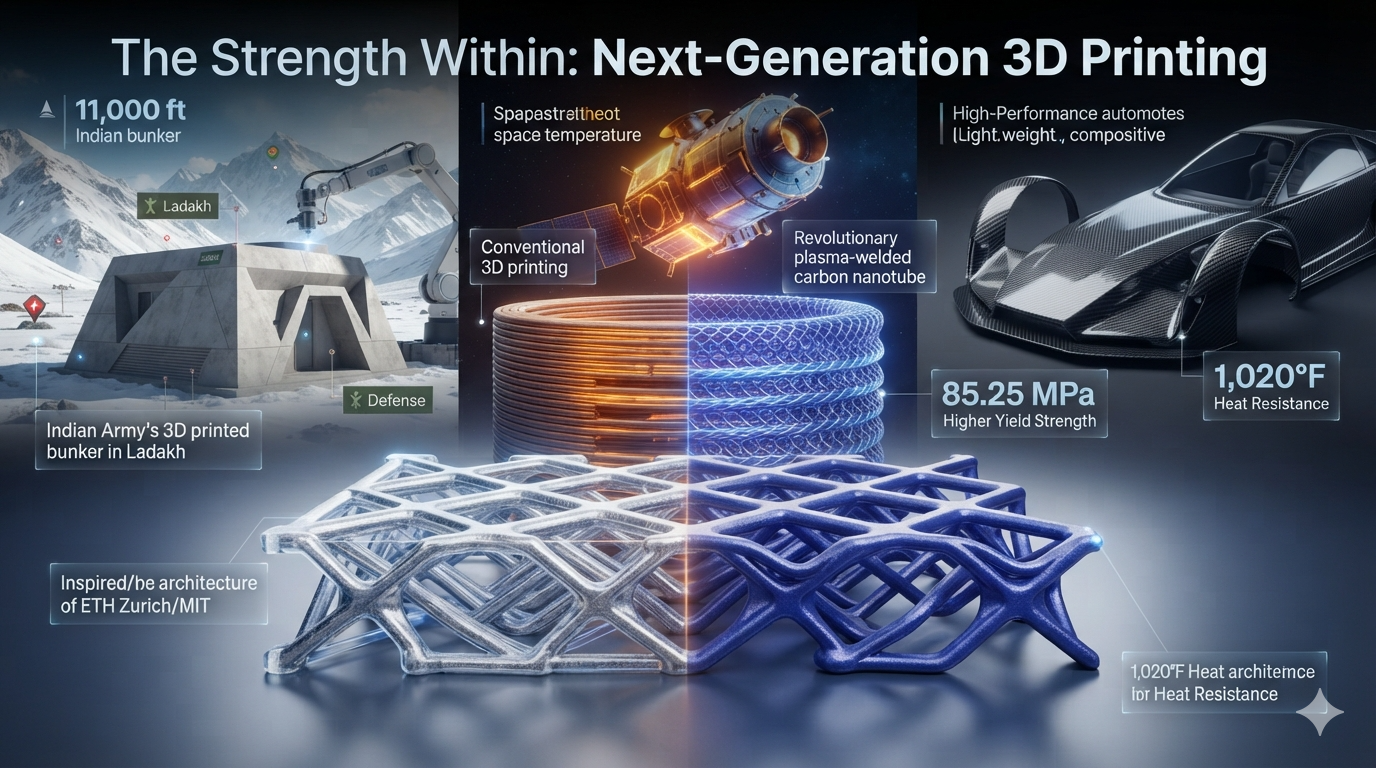
Advanced Materials Revolution in Additive Manufacturing: Engineering High-Performance 3D Printed Components for Defense, Aerospace and Industry
The Materials Race Reshaping Advanced Manufacturing The global additive manufacturing revolution has entered a decisive new phase. While the first generation of 3D printing transformed product development through rapid prototyping and design flexibility, the next generation is being driven by an even more important factor—the emergence of advanced printable materials capable of delivering mechanical, thermal,…
-
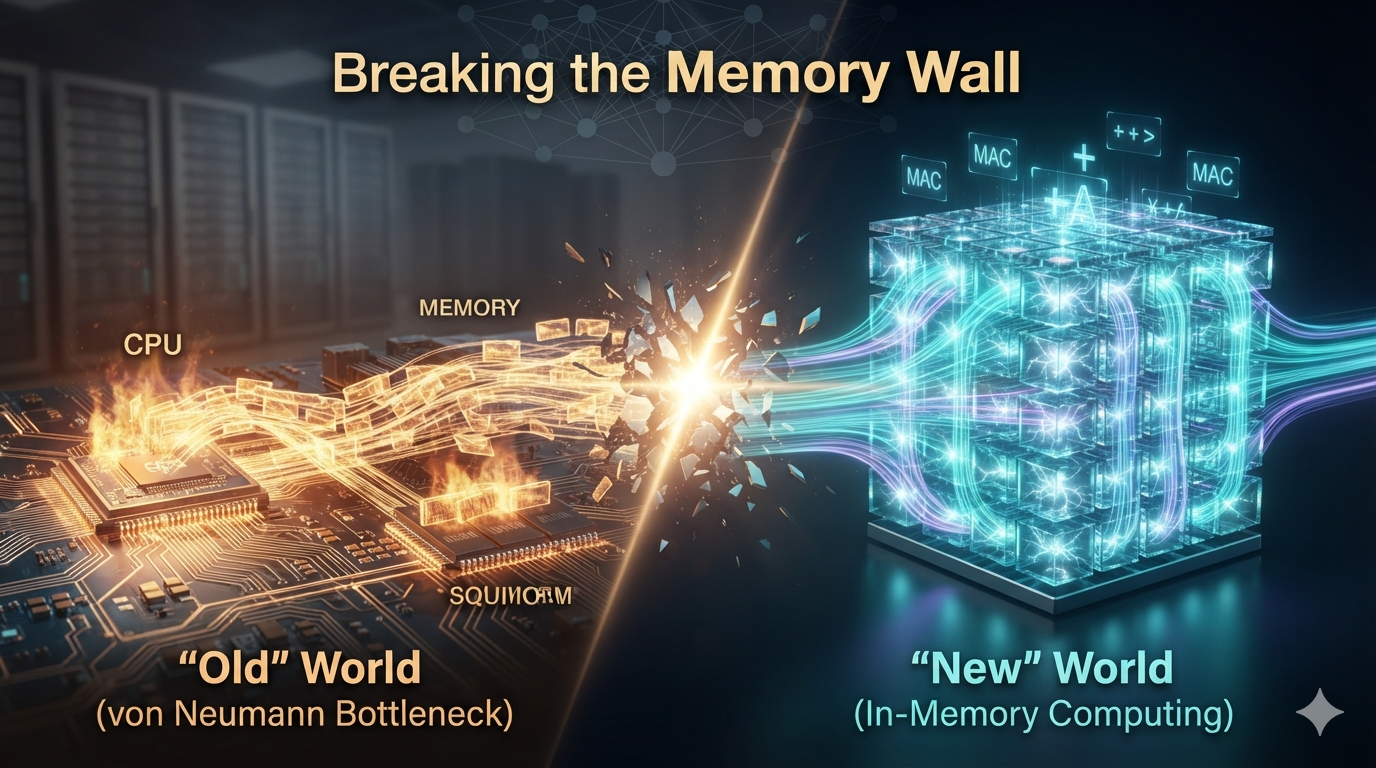
Breaking the Memory Wall: How In-Memory Computing is Reshaping AI, Military Superiority, and the Global Semiconductor Race
Strategic Context: Why In-Memory Computing Has Become a National Priority Artificial intelligence is fundamentally transforming military operations, industrial competitiveness, scientific research, and the global digital economy. Yet the greatest obstacle to AI advancement is no longer processor performance—it is memory. Modern AI systems spend far more time and energy moving enormous volumes of data between…