Category Material

Safe destruction and recycling of ballistic and non-ballistic materials

When body armor and bulletproof vests reach the end of their service life, law enforcement and military organizations must dispose of ballistic materials in accordance with National Institute of Justice (NIJ) regulations. The National Institute of Justice (NIJ) has provided…...
IDST Monthly Access Membership Required

You must be a IDST Monthly Access member to access this content.

Join Now

Already a member? Log in here

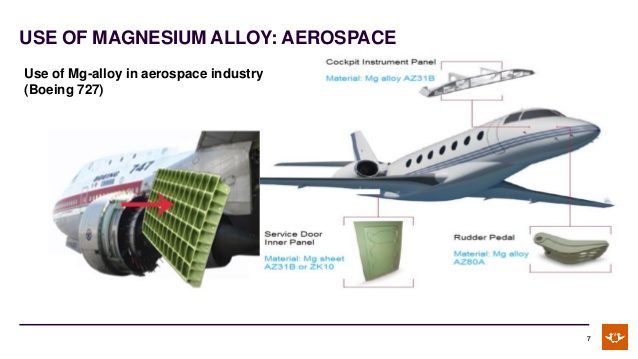
Magnesium Alloys in Military Applications

Magnesium Alloys

Magnesium alloys are mixtures of magnesium (the lightest structural metal) with other metals called an alloy. Magnesium alloys are well-known for being the lightest structural alloys. They are made of magnesium, the lightest structural metal, mixed with other metal elements…...

IDST Monthly Access Membership Required

You must be a IDST Monthly Access member to access this content.

Join Now

Already a member? Log in here

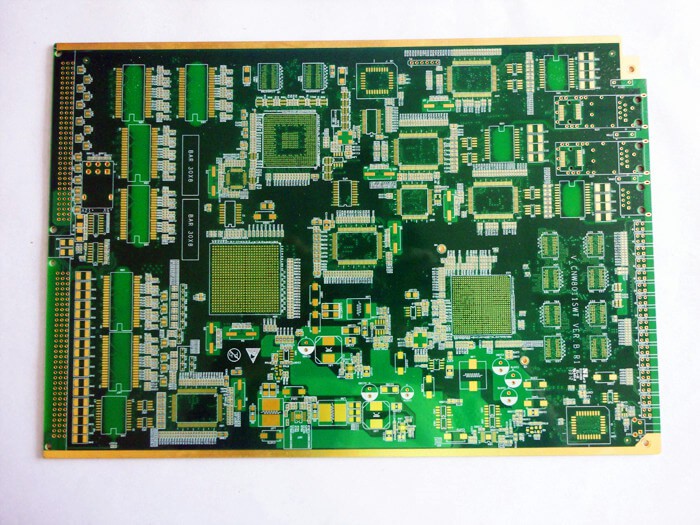
PCB Design consideration for aerospace and military applications

PCB for Military Industry

Printed circuit boards (PCBs) are the foundational building block of most modern electronic devices on which all of the other electronic components are assembled onto. A circuit card is a thin, flat piece of dielectric material that has conductive paths…...

IDST Monthly Access Membership Required

You must be a IDST Monthly Access member to access this content.

Join Now

Already a member? Log in here

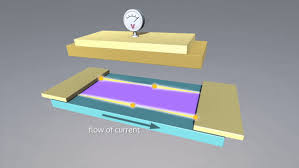
Combination of Topological and magnetic materials for Beyond CMOS low power electronics

Topologicaltransistor

In 1965 R&D Director at Fairchild (and later Intel co-founder) Gordon Moore predicted continued systemic declines in cost and increase in performance of integrated circuits in his paper “Cramming more components onto integrated circuits.”Moore’s Law which stated that the number…...

IDST Monthly Access Membership Required

You must be a IDST Monthly Access member to access this content.

Join Now

Already a member? Log in here

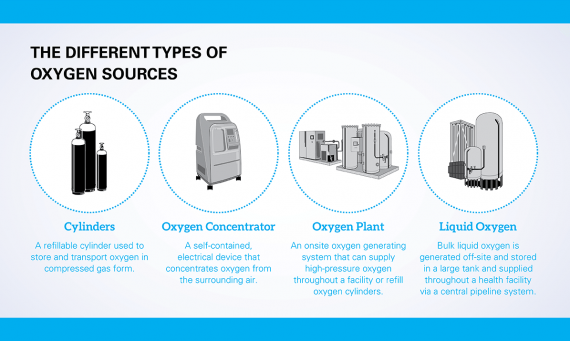
Medical Oxygen is a life-saving essential medicine, require new oxygen-generation-systems

oxygen graphic 1

Apart from its industrial usage, oxygen is used for various medical purposes – from general medicine administration to medical assistance and emergency procedures. Oxygen is a critical element for human life existence, and The timely availability of medical oxygen is…...

IDST Monthly Access Membership Required

You must be a IDST Monthly Access member to access this content.

Join Now

Already a member? Log in here

Material technologies for harsh space environment in Moon, and Mars missions

materialsspacecraft 1 scaled

There is global  space race among countries  to build Moon bases, harness it’s mineral resources and helium-3, fuel for future nuclear fusion power plants. Space agencies in US, China, Japan, Europe, Russia, Iran , Canada and a few private companies…...

IDST Monthly Access Membership Required

You must be a IDST Monthly Access member to access this content.

Join Now

Already a member? Log in here

Photonic and Optical Coatings vital for military operations

Optical coatings are widely used in applications including architecture, consumer electronics, solar panels, automotive, medical, telecommunication, and military & defense.   Optical or photonic coatings are generally used to increase the reflection, transmission, or polarization properties of a component, e.g.,…...

IDST Monthly Access Membership Required

You must be a IDST Monthly Access member to access this content.

Join Now

Already a member? Log in here

Missile Structures and Materials

In military terminology,  a missile is a guided airborne ranged weapon capable of self-propelled flight usually by a jet engine or rocket motor. Missiles have five system components: targeting, guidance system, flight system, engine, and warhead. Missiles come in types…...

IDST Monthly Access Membership Required

You must be a IDST Monthly Access member to access this content.

Join Now

Already a member? Log in here

DARPA RCM building Resilience into Chemical Manufacturing from supply chain disruptions.

The United States relies on chemical manufacturing to provide products ranging from everyday consumer goods (plastics, fabrics, adhesives, paints) to cutting edge technologies (medicines, electronic materials), industrial goods (dyes, pesticides) and military supplies (fuels, explosives). While many high-volume, petroleum-derived chemical…...

IDST Monthly Access Membership Required

You must be a IDST Monthly Access member to access this content.

Join Now

Already a member? Log in here