

In 1965 R&D Director at Fairchild (and later Intel co-founder) Gordon Moore predicted continued systemic declines in cost and increase in performance of integrated circuits in his paper “Cramming more components onto integrated circuits.”Moore’s Law which stated that the number of transistors on a chip will double approximately every two years has been the driver of semiconductor industry in boosting the complexity, computational performance and energy efficiency while reducing cost. It has led to substantial improvements in economic productivity and overall quality of life through proliferation of computers, communication, and other industrial and consumer electronics. Microelectronics and solid state components have also been the backbone of the military systems and were main contributors in advancement of radar, communication and electronic warfare systems.
Each time a transistor switches, a tiny amount of energy is burnt, and with trillions of transistors switching billions of times per second, this energy adds up. For many years, the energy demands of an exponentially growing number of computations was kept in check by ever-more efficient, and ever-more compact CMOS (silicon based) microchips — an effect related to the famous ‘Moore’s Law’.
However as dimensions approach nanometer ranges, CMOS transistors are difficult to operate because of rising power dissipation of chips and the fall in power gain of smaller transistors, soaring fabrication plant costs and finally, quantum effects in silicon will bring about an end to the ongoing Moore’s Law. Today, the standard length of transistors are 10 nanometers, and with the latest research, top companies have produced 5 nm or 7 nm chips. Intel’s chips in production measure 10 nm while TSMC is producing 5nm already.
Transistors smaller than 7 nm experience quantum tunnelling through their logic gates. The switching energy is approaching the thermal noise spectral density. In addition to noise, leakage currents and interconnects with high capacitances will form a problem.
The energy burnt in computation accounts for 8% of global electricity use and ICT energy use is doubling every decade . ICT contributes as much to climate change as the aviation industry. Moore’s Law, which has kept ICT energy in check for 50 years, will end in the next decade. Additionally, the cost of designing and manufacturing smaller chips is astronomical. According to IBS estimates, while it would cost $400 million for 5 nm chips, 3 nm would cost $650 million.
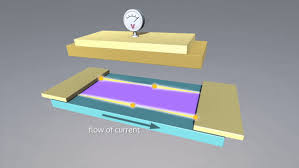
A new study represents a significant advance in topological transistors and beyond-CMOS electronics. First time that the topological state in a topological insulator has been switched on and off using an electric field. Researchers proved this is possible at room temperature, which is necessary for any viable replacement to CMOS technology in everyday applications.
A new Monash review focuses on recent research in topological insulators and magnetic materials heterostructures. The intriguing interplay of magnetism and topology in such heterostructures can give rise to new phenomena such as quantum anomalous Hall insulators, axion insulators, and skyrmions. All of these are promising building blocks for low-power electronics in the future.