
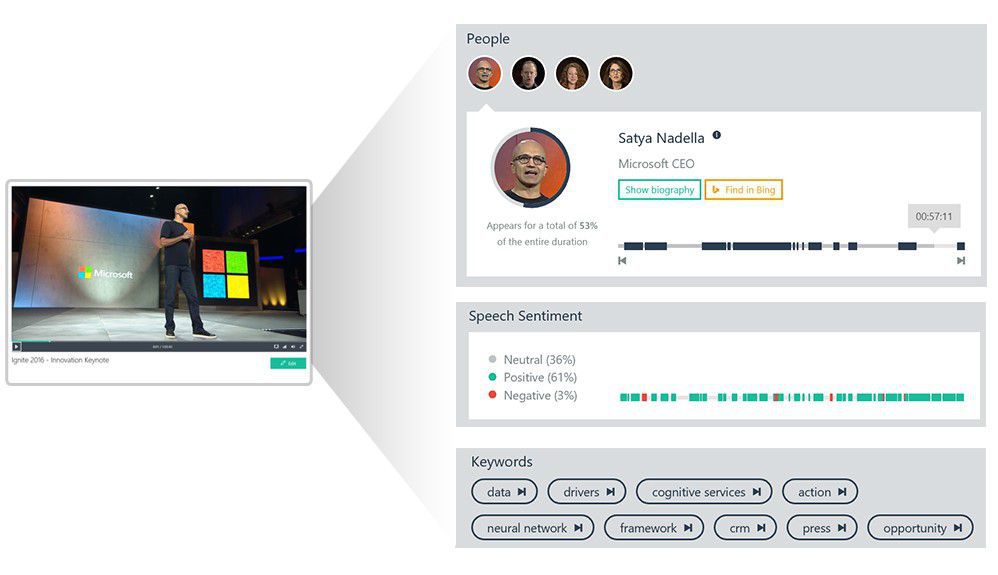

Police agencies are using facial and object recognition technology for counterterrorism operations. Video footage played a key role in finding the culprits responsible for the November 2015 Paris attacks, with a CCTV video at Brussels airport used to pin down one suspect. But, the sheer volume of video content produced makes identifying, assembling and delivering actionable intelligence — from multiple sources and across thousands of hours of footage — a habitually long, laborious process. DoD collects loads of data from satellites, drones and Internet-of-things devices. But it needs help making sense of the intelligence and analyzing it quickly enough so it can be used in combat operations.
Now defense and intelligence agencies are leveraging artificial intelligence (AI) and machine learning to automatically identify video objects of interest. They need powerful artificial intelligence software tools that the tech industry is advancing at a past pace. The U.S. military has already spent $7.4 billion on AI to streamline and speed up video analysis in the conflict against ISIS.
The most promising AI effort the Pentagon has going now is Project Maven which started in July 2017 . Military analysts are using Google-developed AI algorithms to mine live video feeds from drones. The DoD is now developing an AI-driven algorithm to work in conjunction with its drone footage to spot, tag and bookmark potential threat targets. With machine learning techniques, software is taught to find particular objects or individuals at speeds that would be impossible for any human analyst. This AI technology can differentiate between people, objects and buildings, much like Google’s driverless cars. Undersecretary of Defense for Intelligence Joseph Kernan said Project Maven only started a year ago and so far has been “extraordinarily” useful in overseas operations.
Thousands of DoD intelligence analysts are currently employed to examine this video data, but it can take an entire team 24 hours to interpret only a fraction of one drone’s sensor data — a substantial roadblock to quickly catching terrorist suspects and preventing further attacks. The DoD is now developing an AI-driven algorithm to work in conjunction with its drone footage to spot, tag and bookmark potential threat targets. This AI technology can differentiate between people, objects and buildings, much like Google’s driverless cars.
In his latest Forbes article – titled Defense, Intelligence And The Role of Video In Counterterrorism – Linius CEO, Chris Richardson, explores the changing role of video in intelligence operations. Richardson argues that, while video is undoubtedly playing an increasingly important role in informing security and law enforcement agencies – at home and abroad, cumbersome analysis techniques and mushrooming video volumes are barriers to timely action.
Richardson goes on to say that manual footage interpretation and compilation processes, currently required to enable analysts and decision-makers to derive meaningful insights, meant that “reacting to events, rather than preventing them, is often the only possible course of action.”
AI and machine learning might have come a long way in assisting analysts and identifying pertinent aspects of video footage. But how do you then enable those different video segments to be quickly compiled into a single, watchable stream that authorities can understand and act on? And what about context? How can you compare selected footage against other video sources to glean additional insights and meaning? Until now, the answer has largely been time-consuming, human-intensive processes.