
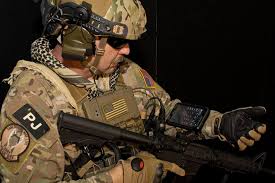

As militaries are expected to operate in diverse environments – from Arctic to urban landscapes – developing materials, technologies and capabilities that enable soldiers to survive and thrive has become ever more important. The most critical component to success on the battlefield is the warfighter, therefore around the world, armies are recognizing the importance of maximizing the effectiveness of Soldiers physically, perceptually, and cognitively. Some of the missions the soldiers perform can take weeks, away from in difficult terrain like deserts and mountains which requires maintaining an incredibly high level of physical fitness.
Mission success depends on force readiness, and a major component of readiness is health. Early detection of illness and injury often yields a better prognosis. For example, if left undetected, infectious diseases can spread quickly through a population, endangering Warfighters and their missions, as well as the general population. Earlier diagnoses of injury (e.g., traumatic brain injury) can prevent inappropriate return-to-duty of Warfighters who may put themselves and others at risk.
Currently, understanding and assessing the readiness of the warfighter involves medical intervention with the help of advanced equipment, such as electrocardiographs (EKGs) and other specialized medical devices, that are too expensive and cumbersome to employ continuously or without supervision in non-controlled environments. On the other hand, currently 92 percent of adults in the United States own a cell phone, which could be used as the basis for continuous, passive health, and readiness assessment.
Embedded sensors in mobile devices (e.g., personal smartphones and smartwatches), such as accelerometer, GPS sensor, and Bluetooth sensor, have been applied to monitor human behaviors and track daily activities. The resulted data from these embedded sensors can be used to infer human health status, monitor mental health states, and deliver medical interventions.
Mobile technologies like wearables can be used for biometric monitoring, such as measuring soldiers’ health through nutrition, exercise and sleep, and improved battlefield readiness. Mobile technologies are being employed for improved healthcare of the warfighters right from when injury occurs in the field where medics perform online consultation with the field hospitals, to in hospital care where clinicians receive lab and radiology results as soon as they are available or even after discharge through home monitoring systems that transmit blood pressure and vital signs to a local physician for review.
Underpinned by advances in high-speed and high-bandwidth 5G networks, mobile will continue to enable incredible real-time analytics and data collection and new capabilities that will ensure soldiers can achieve peak health and performance on the battlefield, writes Chris Balcik is vice president for federal sales, Samsung.