

The United States and Britain in 2018 accused Russia of launching cyber attacks on computer routers, firewalls and other networking equipment used by government agencies, businesses and critical infrastructure operators around the globe. Network infrastructure consists of interconnected devices designed to transport communications needed for data, applications, services, and multi-media. Routers and firewalls are the focus of this alert; however, many other devices exist in the network, such as switches, load-balancers, intrusion detection systems, etc.
Unlike hosts that receive significant administrative security attention and for which security tools such as anti-malware exist, network devices are often working in the background with little oversight—until network connectivity is broken or diminished. Malicious cyber actors take advantage of this fact and often target network devices. Once on the device, they can remain there undetected for long periods. After an incident, where administrators and security professionals perform forensic analysis and recover control, a malicious cyber actor with persistent access on network devices can reattack the recently cleaned hosts. For this reason, administrators need to ensure proper configuration and control of network devices.
On April 19, 2018, an industry partner notified NCCIC and the FBI of malicious cyber activity that aligns with the techniques, tactics, and procedures (TTPs) and network indicators listed in this Alert. Specifically, the industry partner reported the actors redirected DNS queries to their own infrastructure by creating GRE tunnels and obtained sensitive information, which include the configuration files of networked devices.
Since 2015, the U.S. Government received information from multiple sources—including private and public sector cybersecurity research organizations and allies—that cyber actors are exploiting large numbers of enterprise-class and SOHO/residential routers and switches worldwide. The U.S. Government assesses that cyber actors supported by the Russian government carried out this worldwide campaign. These operations enable espionage and intellectual property theft that supports the Russian Federation’s national security and economic goals.
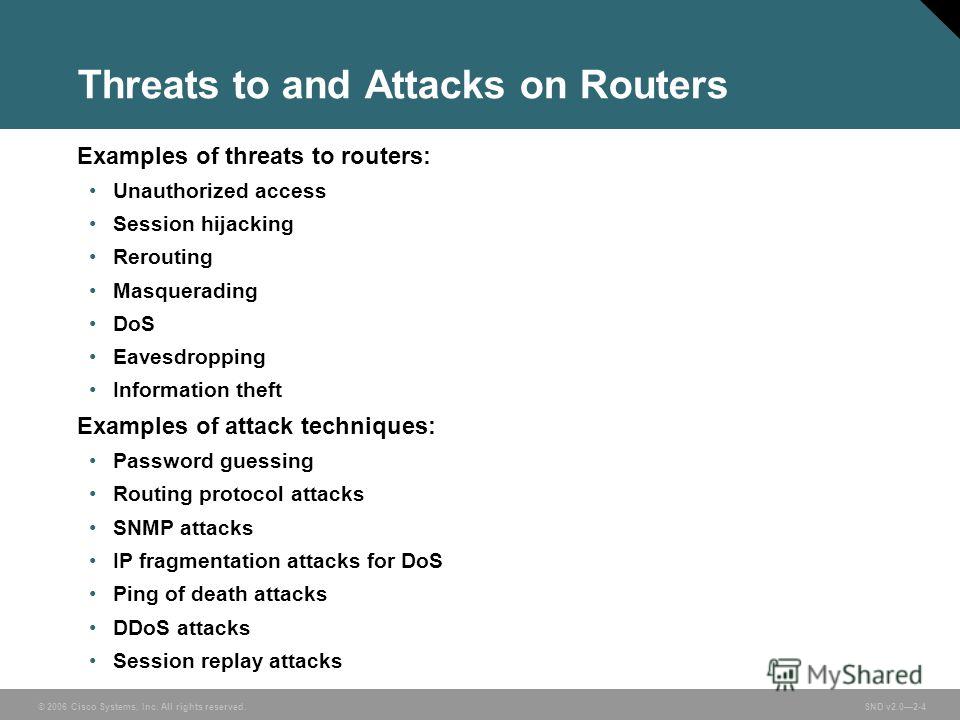
If the network infrastructure is compromised, malicious hackers or adversaries can gain full control of the network infrastructure enabling further compromise of other types of devices and data and allowing traffic to be redirected, changed, or denied. Possibilities of manipulation include denial-of-service, data theft, or unauthorized changes to the data. Intruders with infrastructure privilege and access can impede productivity and severely hinder reestablishing network connectivity. Even if other compromised devices are detected, tracking back to a compromised infrastructure device is often difficult. Malicious actors with persistent access to network devices can reattack and move laterally after they have been ejected from previously exploited hosts
The current state of U.S. network devices—coupled with a Russian government campaign to exploit these devices—threatens the safety, security, and economic well-being of the United States.