

Atmospheric pollution is a growing problem, particularly in urban areas and in less developed countries. With half the world has no access to clean fuels or technologies (e.g. stoves, lamps), the very air we breathe is growing dangerously polluted. More than 8 million people around the world die each year as a result of breathing polluted air that contains particles from fossil fuels, a new study has found.
According to the World Health Organization, one out of every nine deaths can be attributed to diseases caused by air pollution. Organic pollutants, such as nitrogen oxides and volatile compounds, are the main cause of this, and they are mostly emitted by vehicle exhausts and industry.
The health effects of air pollution are serious – one third of deaths from stroke, lung cancer and heart disease are due to air pollution. Microscopic pollutants in the air can slip past our body’s defences, penetrating deep into our respiratory and circulatory system, damaging our lungs, heart and brain. This is having an equivalent effect to that of smoking tobacco, and much higher than, say, the effects of eating too much salt.
Because environmental problems pose risks to the health, safety, and security of troops, they can influence combat operations. In most contingencies over the past two decades, U.S. forces have remained in the theater for much longer than anticipated, getting deeply involved in such non-combat activities as stabilization, reconstruction, and nation-building.
Environmental issues become even more important during such protracted engagements, not only because of the effect they have on day-to-day operations at base camps, but also because of the significant role they can play in achieving U.S. national objectives. Indeed, the longer the mission and more extended the post-conflict operations, the more important the environmental issues tend to become, and the more they can affect mission outcomes and operation costs. However, because they compete with other warfighting concerns for attention, investment, and manpower, environmental considerations rarely receive high priority in contingency operations.
U.S. Forces Korea has changed its policy to allow soldiers to wear black filtering masks while in uniform as protection against poor air quality in South Korea. Army regulations had barred soldiers from wearing the masks, which cover noses and mouths, in uniform unless they had a certified medical condition that merited an exception. By contrast, the Air Force permitted masks when pollution hit a certain level.
The new policy, posted in April 2019 , says all servicemembers may wear approved masks while outdoors in uniform when the air-quality index is reported as orange or higher, referring to a color scheme showing pollution levels.
The change comes as people in South Korea have endured record levels of fine dust that have smothered the country and prompted rising worries in the military community as soldiers spend a lot of time training and working outdoors.
Further with the gradual urbanization of the world’s population, future battles will inevitably be fought within city limits geometrically compounding the planner’s problem and the force commander’s options. In addition to the threat from the opposing force, the field commander will face structural damage, local industrial hazards, and loss of mobility and degradation of communication links.
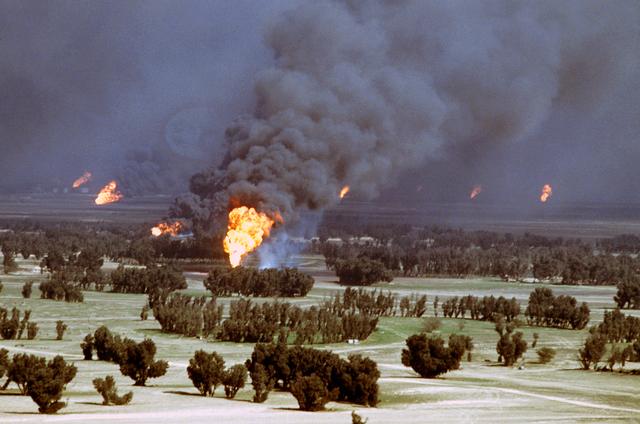
This air pollution will also have long term environmental effects Further the pollution caused by war activity, during development and testing of hardware, weapon systems and procedures, also during war operations and subsequent reconstruction, which need serious consideration to avoid gradual deterioration of the environment and in particular the quality and temperature of the air.