
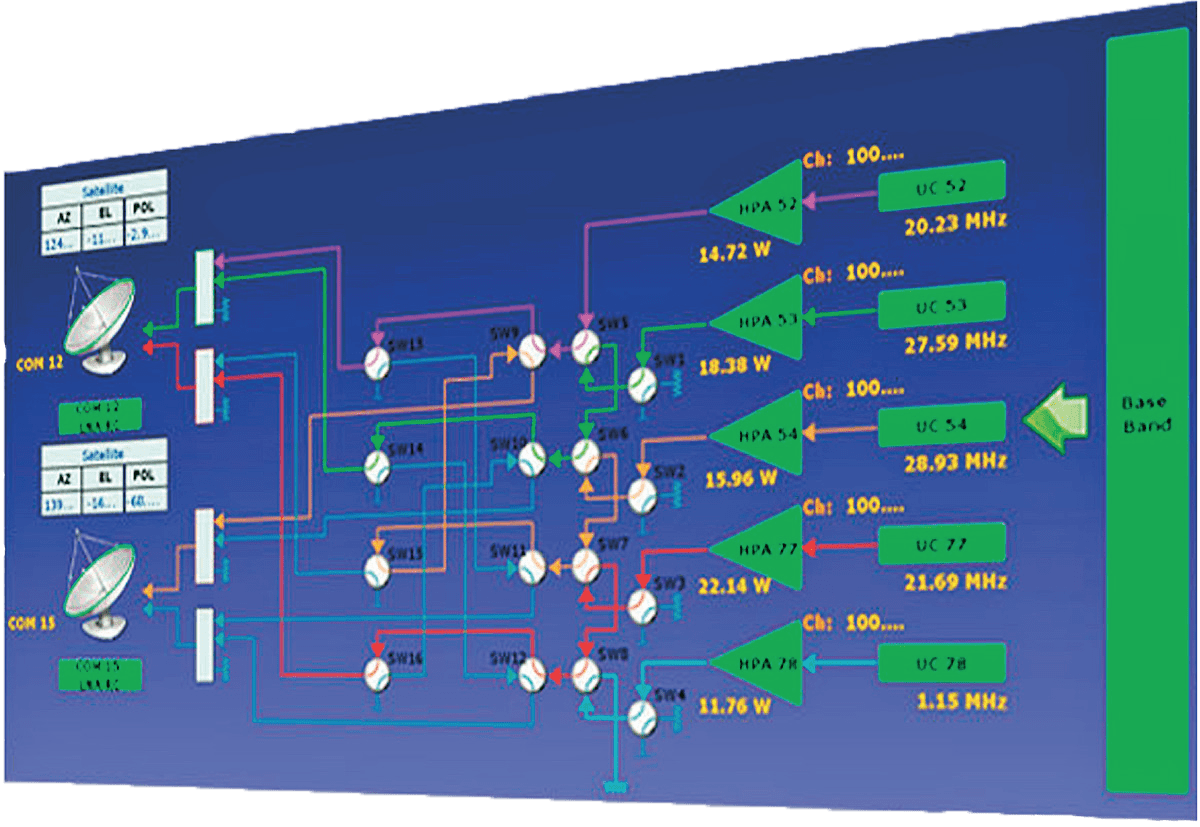

Satellite communications represent a cost effective and reliable means of transporting voice, video and data to and from remote locations. The satellite industry is one of those industries where network management plays a key role. Therefore, the requirements for network management solutions for the satellite market are usually very stringent. For example, Very Small Aperture Terminal (VSAT) networks must be flexible, scalable, versatile, easy to implement and operate in various conditions for specific requirements according to established industry standards.
For more information on Satellite Communication Systems and technologies, Please visit
As a business, VSAT networks must also generate revenues, so a network management system should not only function optimally to meet customer requirements, it must also yield profit. In the time of the COVID-19 pandemic, when most activities are being conducted remotely, the effective and efficient management of satellite networks is more crucial than ever.
A network operations center (NOC), also known as a “network management center”, is one or more locations from which network monitoring and control, or network management, is exercised over a computer, telecommunication or satellite network. Satellite network environments process large amounts of voice and video data, in addition to intelligence, surveillance, and reconnaissance information. Example organizations that manage this form of NOC include Artel, a service provider of commercial satellite bandwidth to the United States Department of Defense, located in Herndon, Virginia.
NOCs are frequently laid out with several rows of desks, all facing a video wall, which typically shows details of highly significant alarms, ongoing incidents and general network performance; a corner of the wall is sometimes used for showing a news or weather TV channel, as this can keep the NOC technicians aware of current events which may affect the network or systems they are responsible for.
A NOC engineer has several duties in order to ensure the smooth running of the network. They deal with things such as DDoS attacks, power outages, network failures, and routing black holes. There are of course the basic roles, such as remote hands, support, the configuration of hardware (such as firewalls and routers, purchased by a client). NOC engineers also have to ensure the core network is stable. This can be done by configuring hardware in a way that makes the network more secure, but still has optimal performance. NOC engineers are also responsible for monitoring activity, such as network usage, temperatures etc. They would also have to install equipment, such as KVMs, rack installation, IP-PDU setup, running cabling. The majority of NOC engineers are also on call and have a five or six day rotation, working different shifts.
However, as the adoption of satellite-based communication networks continues to grow, so do the management challenges. For example, the convergence of voice, video and data transmission via satellite is driving increased demands on the network to deliver uninterrupted availability, reliability and security. And, as more mission critical applications become dependent on the network, tolerance for network problems approaches zero.
Convergence is ongoing, and as enormous amounts of voice, video and data traffic flow throughout hybrid networks, the NMS has to react quickly and grow with each new addition to the network at hand. Responsiveness, adaptability and agility matter when it comes to NMS. With more 802.11 wireless links in the mix in particular, the complexity of the networking environment as a whole is increasing.
“The satellite network operator has to have his eye on advances in network management for any communications network,” says Mark Krikorian, chief operating officer at Atlanta- based ILC Corp.–formerly Industrial Logic.