


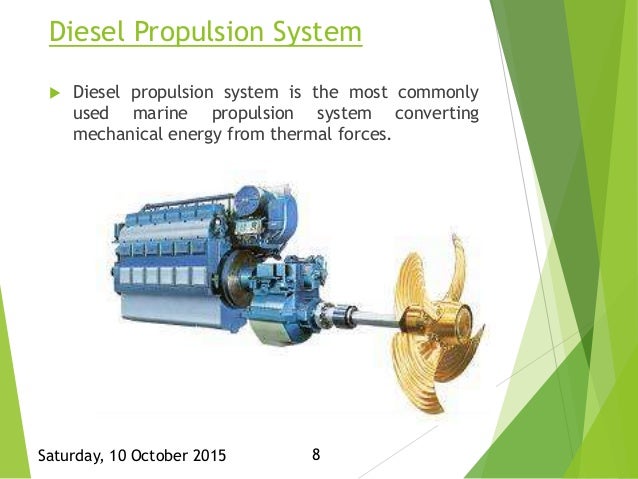
Marine propulsion is the mechanism or system used to generate thrust to move a a naval vessel across water. At present, 90% of the sea-going naval ship are diesel-powered.
There are numerous benefits to electric motor propulsion including that it’s quieter, more efficient at lower speeds and less smelly. It’s also expected to lower overall costs of ownership by reducing or eliminating the needs for oil and transmission fluid changes, filter and impeller replacements and starter problems. There’s less to winterize too. Additionally, unlike diesel or gas engines, electric motors provide full torque instantly so boats get up on plane faster. Aftermarket conversions (which currently make up the lion’s share of the market) can use existing drive shafts and components so there is a cost-savings when re-powering.
A hybrid marine propulsion system is any combination of a combustion engine and an electric motor. Electricity can be produced by one or a combination of the following: a combustion engine generator, a wind generator, a towed water generator or solar panels. A purely electric solution with solar panels is enviable due to its zero carbon footprint and low operating costs and various takes on these systems have been gaining traction on alternative energy vessels. Advances in both energy storage and solar panel technology have reduced costs and physical footprint making solar power propulsion systems more feasible for use on boats.
Hybrid and pure electric propulsion systems have proliferated within the automotive industry, hybrid or electric boats are beginning to gain steam. Still, the marine world is a relatively small niche market that tends to follow rather than lead other industries in terms of innovation. Currently only less than 2 percent of boats today are integrating electric or hybrid propulsion. This slow adaption is partly due to the unique issues of boating. Boats have a different frequency and variance of use than cars and the market has many segments (ferries, sailboats, small high speed planers, large distance cruising yachts, etc.) where boats are used differently, making it hard to build one solution to fit all applications. However, a few companies are trying to change all that.
The marine hybrid propulsion is a combination of a battery-powered propulsion system along with alternate fuel such as diesel and liquefied natural gas (LNG) utilized during propulsion of the naval vessels. A hybrid vehicle can achieve propulsion using a fuelled power source for e.g. a diesel engine or through a stored energy source, which is a battery bank and electric motor. Hybrid propulsion systems can be differentiated between configurations, where the diesel engines and the E-motors work in parallel on the propeller. The main applications of marine hybrid propulsion market are in offshore vessels and navy applications. Offshore patrol ships are good examples of ships that are equipped with the hybrid propulsion system. Patrol ships can be operated at low speeds by the electric motor and at a high power demand by the main engine. Moreover, Anchor Handling Tug Supply vessels are good examples of offshore ships with highly flexible power demand and per consequence, different operation modes, and sailing speeds.
The electric propulsion system consists of a prime mover which may be of two types: Diesel driven or Turbine or steam driven both generate mechanical energy and drive generators. The propeller shaft of the ship is connected to large motors, which can be D.C or A.C driven and are known as propulsion motors. Power for propulsion motor is supplied by the ship’s generator and prime mover assembly. Both the systems produce less pollution as compared to conventional marine propulsion system, which involves burning of heavy oil.
Marine hybrid propulsion systems are designed to use two independent drive systems for propulsion: a diesel engine and an electric motor, where electric power is generally stored in batteries or a super capacitor. The system utilizes the unused capacity of the main diesel engine to generate electricity and store it in batteries for later use.
Marine hybrid propulsion systems are gradually emerging as one of the most preferred clean propulsion systems globally and are being used in several vessel categories. One of the major advantages of using hybrid propulsion systems is their clean and efficient mechanism, which significantly lowers emissions as compared to conventional propulsion systems. Features such as silent maneuvering, emission-free operations, and lower degrees of fuel consumption have prompted vessel and towage operators to invest in this technology.