
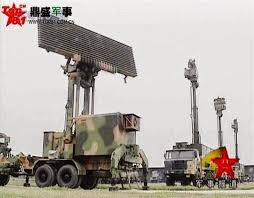

Stealth technology has proven to be one of the effective approaches to enhance the survivability of Aircrafts. Aircraft/helicopter designers are making them stealthier by reducing their signatures; viz. visual, aural, infrared (IR), and RADAR cross section. Advancements in stealth technologies, as demonstrated by the very low RCS of stealth aircraft such as F-117, B-2 and F-22, make such targets extremely difficult to detect.
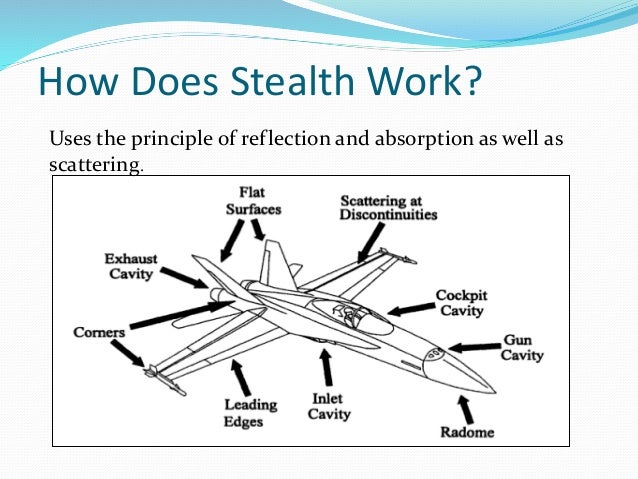
The emergence of stealth however, has made the operational environment of Air defence networks far more challenging and complex over the past decade. Low radar signature for a target means that it is detected and tracked at a shorter distance from radar. As demonstrated in recent wars these threats are not effectively dealt by currently deployed radar networks.
The multistatic radar system has two or more transmitting or receiving antennas with all antennas separated by large distances when compared to the antenna sizes, and working together in a coordinated and integrated way. Stealth targets whose shape is designed to scatter energy in directions away from the monostatic radar may be detected by multistatic radars. One or more receiver antennae will be in such a position to receive the scattered echo and enhancement of RCS of the target due to geometrical effects.

Multistatic radars through advanced signal processing and integration of data from multiple receivers can lead to increase in radar sensitivity, coverage, target detection, target classification and tracking capabilities. This technology is also much more robust to target shadowing and multi-path signal fading. Such radar systems exhibit increased survivability, due to the redundancy of the receivers and their passive operation. If one receiver is eliminated, the system may continue to operate, even with degraded performance.
The counter stealth capabilities of multistatic radars can be further enhanced through low frequency Radars. Stealth techniques have been designed with the aim to reduce radar energy backscatter is effective in microwave frequencies mainly in the X and Ku bands, however is less effective at Longer wavelengths. When the wavelength of the incident electromagnetic (EM) wave is comparable to the physical dimension of the object, it results in enhancement of RCS and in large amplitude oscillations in the RCS. This is due to the resonance effect between the direct reflection from the target and scattered waves which “creep” around it. For these reasons, low frequency band (VHF/UHF) radars exhibit serious anti-stealth capabilities.
However, because of their low resolution and accuracy, meter wave radars ( low frequency radars) can only send warnings about incoming threats. “The problem with HF-band radars is that they have a very long pulse width and a very low pulse repetition frequency [PRF]. That means HF are very poor at accurately determining range, altitude and precise direction. Indeed the radar resolution cells could be several miles wide,” said Dave Majumdar of National Interest . He added that the radar can only cue other sensors to search the airspace or direct fighters toward a roughly defined search area. And even if microwave radars compensate for the shortcomings of the meter wave radars, they are unable to entirely overcome these shortcomings. Wei Dongxu, a Beijing-based military analyst, told the Global Times that older meter wave radars could only see roughly an object’s general direction, not its exact location.
With the US Air Force boasting stealthy fighters like Lockheed Martin’s F-22 Raptors and the F-35 Lightning II, China has claimed to have developed a meter wave anti-stealth radar that can detect advanced stealth. Moreover, the radar is capable of guiding missiles towards stealthy fighter jets.“Meter wave radar can be deployed on vehicles, on land and warships, creating a dense web that gives hostile stealth aircraft nowhere to hide,” Chinese military experts told the Global Times, a tabloid under the auspices of the Chinese Communist Party.
Chinese military has claimed that it is able to detect U.S. Air Force’s Lockheed Martin F-22 Raptor stealth fighter jets. Several fighters from East China Sea Fleet patrolled around the Air Defense Identification Zone (ADIZ) over the East China Sea after receiving orders that unidentified tracking occurred near the ADIZ on the morning of Feb. 10, according to a report on PLA Daily on Feb. 11, 2016. Chinese military expert Yin Zhuo told Asia Today that if the unidentified objects appearing near ADIZ over the East China Sea turned out to be F-22 from the U.S., it would be a good opportunity for China’s military to practice its ability to find, identify and intercept stealth fighters.
China has developed metre band multi static system. Wu claimed to have designed the world’s first practical meter wave sparse array synthetic impulse and aperture radar. Wu said that his radar has multiple transmitting and receiving antennas tens of meters high, scattered in a range of tens to hundreds of meters. They can continuously cover the sky as the radar receives echoes from all directions. Wei said that this significantly enhances the radar’s ability to track an aerial target, pinpointing the stealth aircraft’s exact coordinates by synthesizing parameters and data gathered by the radar under the support of advanced algorithms. Since the radar can now see stealth aircraft clearly and track them continuously and accurately, it could become capable of guiding long-range anti-aircraft missiles and landing precision strikes on them, Wei said.
China’s meter wave anti-stealth radar not only detects advanced stealth aircraft, but also guides missiles to destroy them, a senior Chinese radar designer said at a recent interview. Meter wave radar can be deployed on vehicles, on land and warships, creating a dense web that gives hostile stealth aircraft nowhere to hide, Chinese military experts told the Global Times in May 2019.
Although other countries like Russia are also developing meter wave radars, Wu seems confident that China’s are the best. “As for now, I do not see a meter wave air defense radar from abroad that can match the criteria of the advanced meter wave radar [like the one China has],” Wu said.
A JY-27A long-range air surveillance & guidance radar was seen during the 12th China International Aviation and Aerospace Exhibition, also known as Airshow China 2018. China demonstrated many systems during November’s Zhuhai air show Newcomers including the JY-27A Skywatch-V, a large-scale VHF AESA closely comparable to Russia’s RLM-M, developed by East China Research Institute of Electronic Engineering (Ecriee), part of the China Electronics Technology Corp. (CTEC). Two alternative UHF AESAs and a YLC-2V S-band passive electronically scanned array radar were also on show.
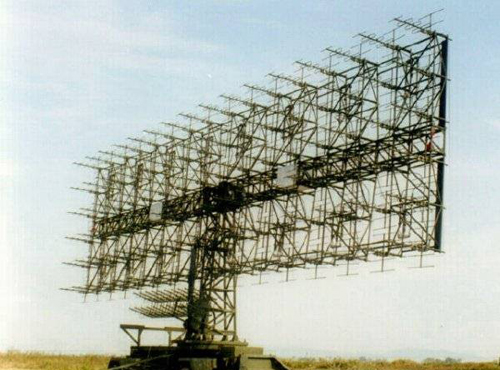
Military experts said that new type of Chinese Phased Array Radar is able to fulfill this task. Yin also said that F-22 is not totally stealth and meter-wave radar could detect the fighter. Radars arranged towards the East China Sea are able to find the F-22 stealth fighter jets, according to Yin. Besides, airborne early warning and control aircraft like KJ-2000 and KJ-500 are also equipped with the ability to detect stealth fighter jets.
In 2018, Russia revealed P-18-2 (an evolved version of Soviet-era P-18), surveillance and targeting radar, capable of detecting targets that use stealth technology. P-18-2 radar is highly mobile and is able to receive additional (flight) information from airborne transponders using the integrated secondary radars. Rosoboronexport, the sole state intermediary agency for Russia’s exports/imports defense-related products, touted it as a Very High Frequency (VHF) radar with azimuth coverage upto 360 degrees. It can be used for “detection, tracking, coordinates measurement (distance and azimuth), and state attribution of various flying objects in demanding active and passive jamming environment, active noise jammer direction finding,” it said.

Russia plans to step up its fourth Sunflower (Podsolnukh-E) radar system, which, according to Russian experts, is capable to detect US stealth aircraft, such as В-2 Spirit, flying over the ocean at a height of 500 kilometers, the China Topix informational website reported.