
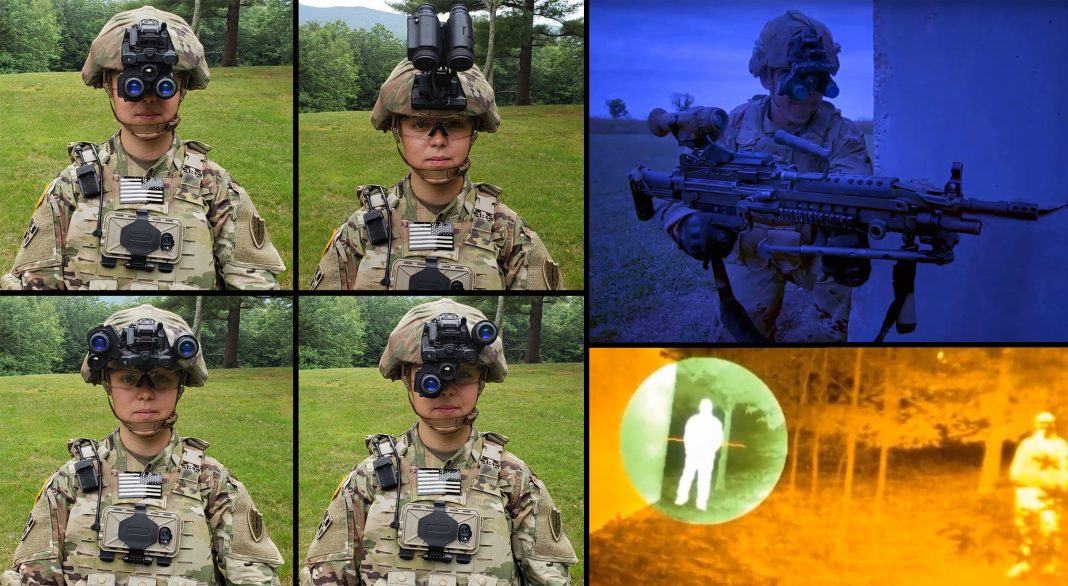

Night vision devices are becoming essential equipment for night driving, night flying and night surveillance, wildlife observation and search and rescue missions. According to Industry ARC’s report on Night vision devices, the market is estimated to grow to $20.5 billion in 2020 at a CAGR of 7%.
Since the inception of combat, darkness has limited the ability of soldiers to operate and complete missions, however Night vision devices give armed forces a massive advantage over enemy combatants, allowing soldiers to conduct vital military operations in the dead of night, when the opposing force is at its most vulnerable.
Night Vision has become essential capability for ground forces in modern warfare as well as for counter terrorist operations. Infrared imaging enables the spotting of targets, intruders and hidden bombs by detecting their heat signatures thereby protecting troops and making the application of force more discriminating.
In Sep 2016, Special Forces of the Indian Army carried out surgical strikes against terror launchpads on and along the Line of Control. 100 soldiers of the Indian Army’s Northern Command sneaked across the Line of Control into Pakistan-administered Kashmir. Armed with thermobaric rockets, grenade launchers and rifles fitted with infrared imaging systems, they hit six terrorist launchpads simultaneously and made it back without losing lives. All of this was captured live on camera by drones.
Tonbo Imaging built the night vision system that guided the surgical strikes of Indian Army in 2016. Its tech sits on seekers on the tips of precision missiles, lightweight thermal weapons and day-and-night scopes to track enemies.
Tonbo’s imaging sensors are the eyes of the soldiers, the artificial intelligence stack built into it is the brain that enables real-time decision-making and fire control. Infrared seekers guide weapons to lock on targets more than 1km away; smart cameras record the action and a secure, wireless communication system relays it back to base.
Night vision and vision enhancement systems have been used by U.S. and allied forces for decades. But while they provide troops with a critical tactical advantage in the dark, there are tradeoffs. Such systems can be heavy, awkward to use and generate monochrome imagery that makes it difficult for warfighters to detect enemy combatants under certain conditions. The performance of Night vision devices is constantly being improved while driving down the size, weight and power consumption in order to maintain an edge over adversaries.