
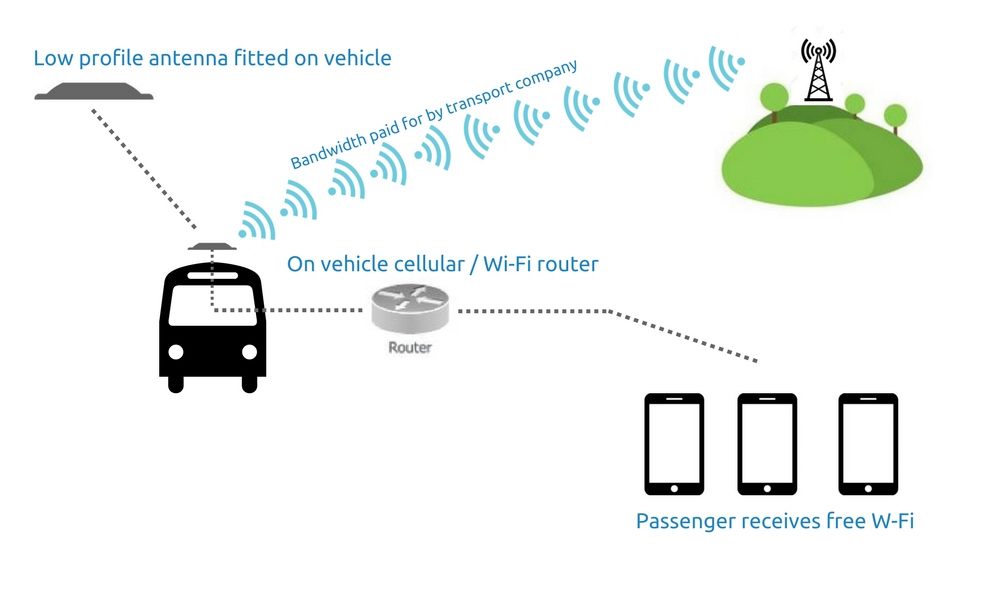

The antenna are required in military for land-based, naval, and airborne communications, as well as communications intelligence (COM- INT) and electronic warfare (EW) systems including communications electronic support measures (CESM) and communications electronic countermeasures (CECM). The aperture size is constrained by the dimensions of the host platform (e.g. aircraft or naval ship).
Antenna requirements for military applications include low profile, high efficiency, wide frequency band, highly integrated and conformability to the host platform. The low profile and conformality stem from the desire to blend the antenna into its surroundings to avoid easy visible detection and identification. These applications often require novel antenna solutions.
Low-profile antennas (LPAs) are of particular importance within the UHF band, where they are used as communications antennas on military platforms. In such applications, they reduce platform visibility and decrease overall antenna weight, which becomes critically important in airborne platforms. These benefits are enhanced in light of the many military vehicles that contain a multitude of protruding antennas for multiple communication links at UHF frequencies.
Another important parameter in the antenna design is the choice of materials that meet structural, electronic, and electromagnetic requirements. Material issues are paramount in integration, packaging, interference, and performance parameters such as efficiency and bandwidth.