

In April 2017, the U.S. military dropped the most powerful non-nuclear bomb ever used in combat on a tunnel complex in Afghanistan’s Nangarhar province. The airstrike targeted the Islamic State’s Khorasan branch. The use of the GBU-43/B Massive Ordnance Air Blast weapon, the so-called “Mother of All Bombs,” highlighted the growing threat posed by adversaries’ underground structures. Gen. John Nicholson, commander of U.S. Forces-Afghanistan, cited the challenge of dealing with subterranean targets to justify the use of the bomb, also known as the MOAB. “As ISIS-K’s losses have mounted, they are using [improvised explosive devices], bunkers and tunnels to thicken their defense,” he said in a statement released after the attack. Additionally, hostile regimes such as North Korea are believed to be hiding WMD technology and other weaponry in underground facilities that the U.S. military might need to locate.
Meanwhile, drug cartels are using tunnels to smuggle contraband into the United States from Mexico. Sixty-seven of them were discovered from fiscal years 2011 through 2016, according to the Government Accountability Office. “In a lot of cases they start [digging a tunnel] in a building on one side of the border and they end in a building on the other side of the border,” said Mark Kaczmarek, a program manager at the Department of Homeland Security’s science and technology directorate.
Indian Border Security Force (BSF), which is responsible for guarding the borders with Bangladesh and Pakistan is carrying out field trials of high-tech ground-penetrating radar (GPR) that will help in detection of tunnels, anti-tank mines and improvised explosive devices (IEDs) on the border with Pakistan. Equipped with an LCD screen and telescopic rod to “plot the real time threat”, the handheld GPR will be able to conduct “automatic target recognition”. According to the specifications approved by a panel for the GPR, the system should not weigh more than 5 kilograms for it to be a handheld device and should be able to detect all kinds of mines and IEDs in different soil conditions.
The GPR system, according to the officials, will strengthen the counter-infilteration measures and help the security forces in detecting underground tunnels on the India-Pakistan border. Since 2012, the Indian Army and BSF have detected six underground tunnels along the border in Jammu region. These tunnels were being used to push Pakistani terrorists, arms and ammunitions in Jammu and Kashmir.
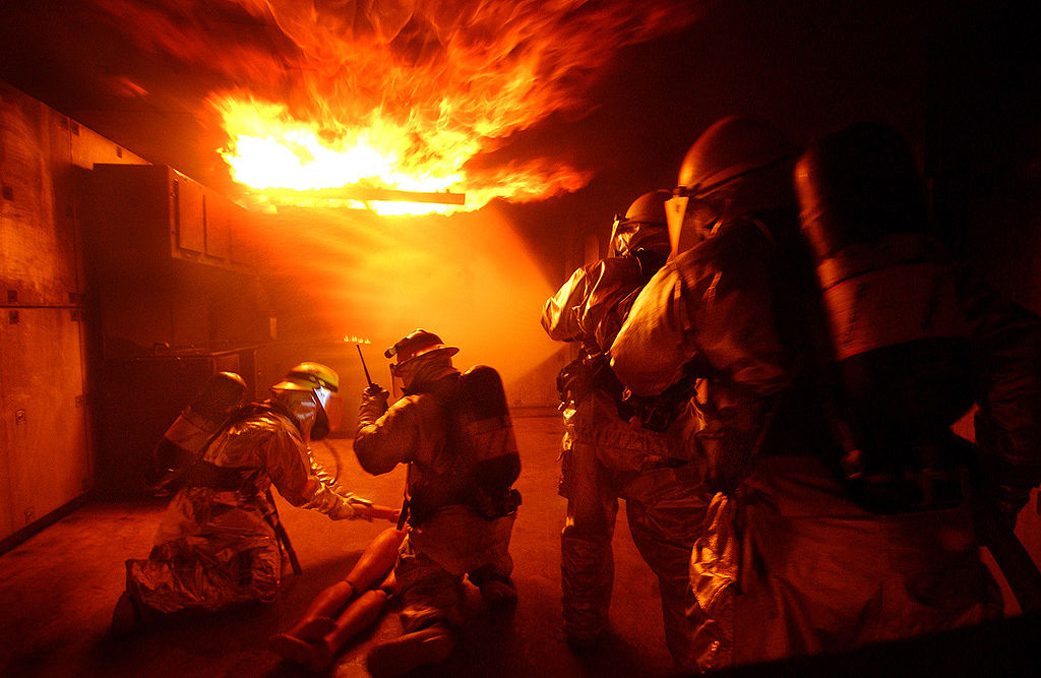
Seventeen years ago in Worcester, Massachusetts, six firefighters who were dispatched to a smoke-filled warehouse lost their lives as they were unable to find an exit before running out of oxygen. A group of scientists at the Jet Propulsion Laboratory in California are working on a tracking system called “Pointer,” that could save firefighters’ lives around the world. The lead researcher at JPL said the device of this kind could not only help firefighters, but could be used for search-and-rescue efforts, the military and even in space.