
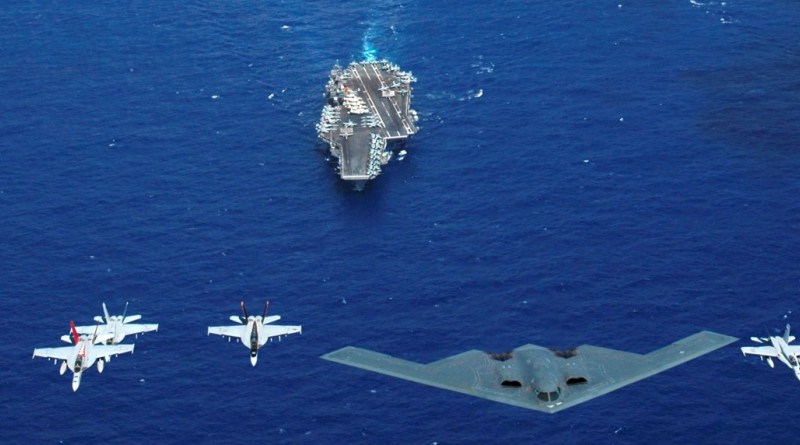

The emerging battlefield is a multi-domain battlefield which shall include all the traditional domains of land, air and sea as well as Cyber, Space, Low Intensity conflicts, Information warfare including Psychological warfare and cognitive warfare shall be exploited by our adversaries simultaneously or in any desired combinations.
Implementing multi domain operations require is achieving MDC2. U.S. Air Force, under the direction of Chief of Staff Gen. David Goldfein, has made multi-domain command and control a top priority. Broadly speaking, this will involve the seamless integration of air, space and cyber capabilities, providing commanders cross-domain options to make more rapid decisions in complex battle spaces. The Air Force is in the throes of a highly anticipated study on the issue lead by the multi-domain C2 enterprise capability collaboration team, or ECCT.
Recently, the Chief of Staff of the US Air Force published a white paper that describes three characteristics of MDC2: situational awareness, rapid decision-making, and the ability to direct joint forces to achieve Commander’s intent. The challenges with operationalizing this concept reside in three domains: technical, policy, and human. In the technical domain, MDC2 systems must have a network that supports the exchange of ‘big data’, removes stove-piped data streams, and improves interoperability. Further, we must be able to identify and remove policy barriers to interoperability to shorten the time from data to decision. Last, in the human domain, command authorities must be established and easily delegated to the tactical level so that those with tactical control (TACON) can produce effects across domains, in real-time
Implementing Multidomain Command and Control requires interoperable Multi domain communications. “The key is really as the speed of information and the speed of war increases, making sure that we can get the right information to the right person to allow them to make that decision quickly,” said Renee Pasman, mission systems road maps director for the Skunk Works division, adding that being able to share that information across the entire network is critical.
“What we’re looking at doing is enabling the vision of linking assets that are space-based, in the air, in the sea and on the ground to create combined effects,” according to Jack O’Banion, vice president of strategy and customer requirements for Lockheed Martin Skunk Works. “[The] challenge is: How do you create a dynamic network that allows you to link things together to create effects inside the bubble and from outside the bubble to create collaborative engagements and multiple dilemmas for an adversary?”
The Navy’s Space and Naval Warfare Systems Command is developing a low-cost backbone for line-of-sight radio communications using land, sea and satellite links in an effort to provide interoperable wideband communications.