
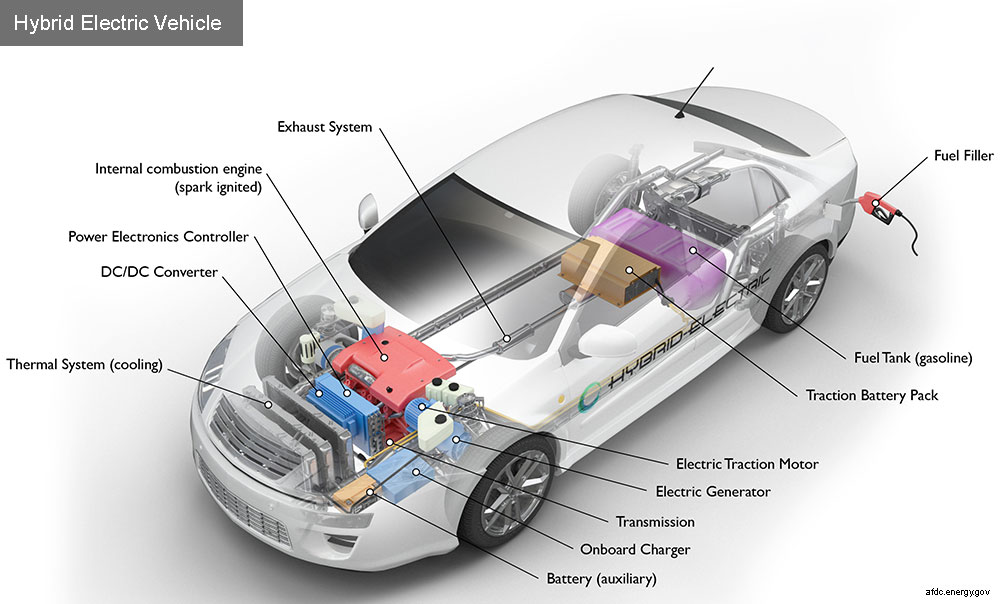

The US Army is looking into the possibility of adding electric vehicle technology to its fleet of wheeled vehicles. The subject of a draft white-paper proposal by the Army Futures and Concepts Center (FCC), the hope is to simplify maintenance while reducing the logistical problems connected with fossil fuels.
Currently, the US Army is dependent on large vehicles powered by internal combustion engines to move personnel and materials to the battlefield. But such engines are extremely complex with many parts that could become more expensive as the demand for fossil fuel engines falls and production is cut back. In addition, such complex engines are difficult to maintain. Worst of all, conventional engines mean moving tonnes of fossil fuels across the globe and to the battlefield – putting commanders at the mercy of very long and very vulnerable logistics chains.
The hope is that electrification could be one way to overcome these limitations. Electric motors have few components, are relatively easy to maintain, and battery ranges have improved significantly. Unfortunately, the technology also has its drawbacks. Batteries take a long time to recharge and have a short service life. Worse, while fossil fuels cease to be a problem, electric vehicles still need a power source that is reliable and within a reasonable distance.
The technologies involved in EVs are multidiciplinary, which include electrical and electronics engineering, mechanical and automotive engineering, and chemical engineering. Many new technologies are being introduced in EVs. Mechanical, pneumatic and hydraulic parts, silicon power components and dumb structures are on the way out. In come merged parts often radically different components such as SiC, GaN and GaAs based ones including added systems for electrical input such as regeneration, induction and external energy harvesting. New electrical loads proliferate and merge. Improved performance, fuel economy and emissions reduction result. Even conventional powertrains will avoid illegality under new emissions laws by being reinvented as mild hybrids. These will evolve into vehicles with many pure electric modes so the total EV market rockets to nearly one trillion dollars in ten years.
The lack of appropriate technologies has been an important barrier for Electric Vehicles to become mainstream particularly the technologies that could help cut costs and significantly increase battery life. Changing to a vehicle which may need several hours charging before it can go anywhere and may only be able to travel 200 miles before it needs to be plugged in again, a challenge. To deal with the problem, the Army says that the Office of the Secretary of Defense is looking at several alternatives, including the development of mobile nuclear power plants to generate electricity. Meanwhile, the battery problem could be overcome by new capacitors that could extend battery life and reduce charge times.
One way to extend EVs’ range is to reduce their weight, therefore EV design concepts should include the consistent weight saving design, optimum safety concept, low drag coefficient- body design, and low rolling resistance concept. Automakers are seeking higher stiffness, better occupant safety and superior crash performance all at an optimized cost. HBPO offers plastic-metal hybrids with either metal or organic fiber “over-molded” with plastic.
With increasing vehicle content and safety requirements, weight reduction continues to escalate as a priority for all vehicles regardless of propulsion type. The design, materials and processes as each having the potential to save vehicle weight through better optimisation and emphasises the need for new approaches to design and analysis that allow full advantage to be taken of developments in materials and joining technologies.