
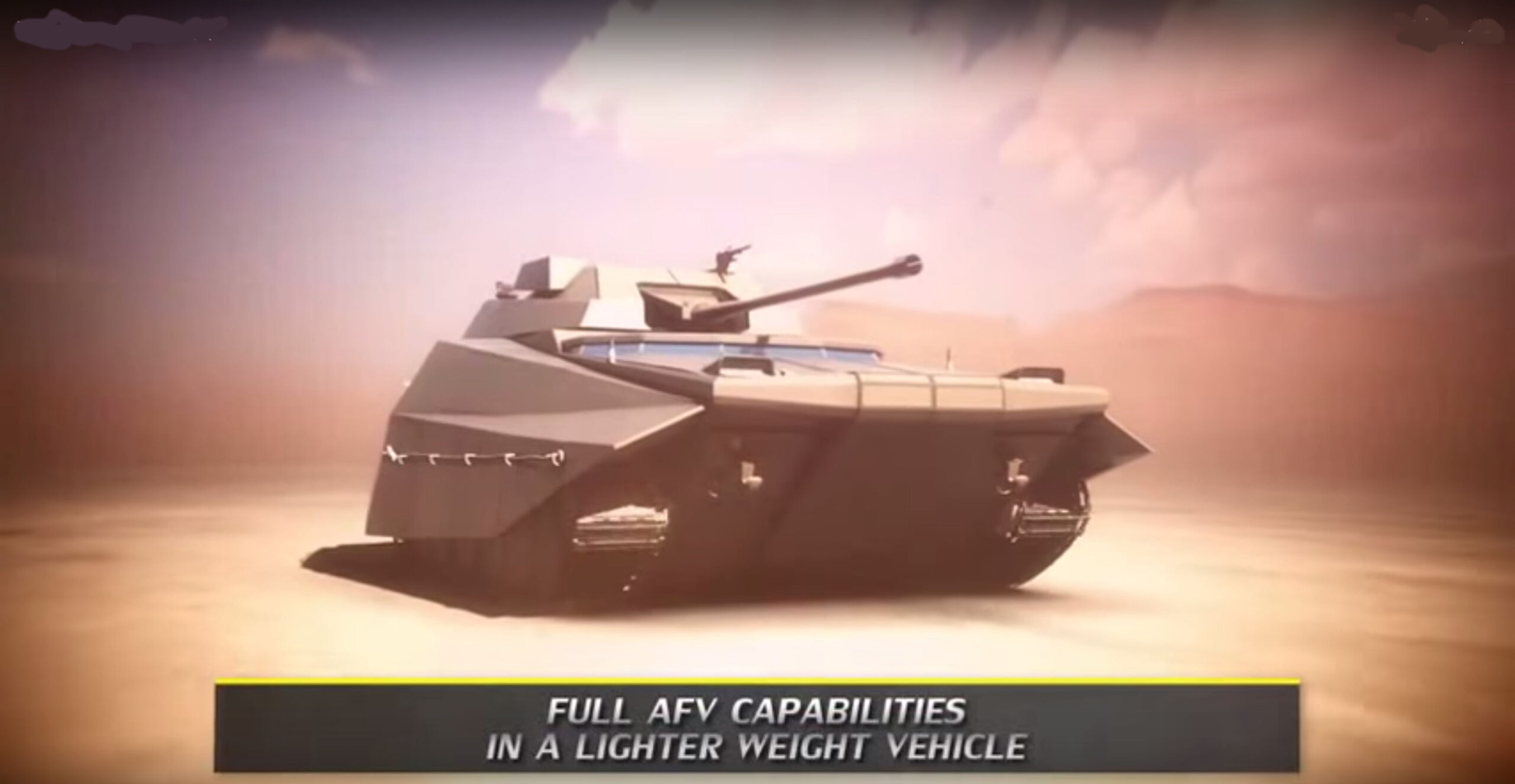

Current Ground combat vehicles, especially main battle tanks (MBT) and infantry fighting vehicles (IFV), are the mainstay of technologically superior armies. The combination of firepower, mobility and survivability allows such vehicles to dominate ground military operations. Military planners expect GCVs to fight in relatively open terrain, where threats come from the front. Therefore, engineers optimize the survivability for most GCVs to defend against frontal attacks.
Now militaries are realizing much of the fighting in future conflicts will take place in cities. Whether Russia in the Caucasus, Israel in Gaza and southern Lebanon, or the United States and its allies in Iraq, many sophisticated armies have experienced urban warfare over the past two decades. Urban assault has many unique challenges.
The likelihood is high that the Army won’t get to pick the time and place of its choosing for the next battle, said Gen. Robert Abrams. But it’s likely that the next battle will take place in a megacity, said Abrams, commander of U.S. Army Forces Command. He spoke, Nov. 30, here during the Future Ground Combat Vehicles Summit. “The chance of fighting in a megacity is going to go through the roof,” he said, pointing out that there are currently 25 megacities across the world. A megacity is defined as a city of 25 million or more inhabitants. By 2035, the number of megacities is projected to double.
Since the mid-1990s, Russia has deployed troops to urban areas in Chechnya, Dagestan, Georgia, Ukraine, and Syria for conventional offensive operations, counter-insurgency, and counter-terrorism missions. Therefore Russian government, its military, and its people are well familiar with the heavy toll urban warfare exerts in manpower, resources, and political capital.
During the conflicts in Iraq and Afghanistan in the 2000s, U.S. ground forces found themselves in a similar position to the U.S. military aircraft community during the Vietnam conflict in Southeast Asia. The warfighters operated in a threat environment using vehicles not specifically designed to survive in that particular environment, resulting in high levels of vehicle kills and occupant casualties.
Urban terrain generally favours the defender, who can prepare defences, utilise deception, install traps and explosive charges, and monitor the attacker from a myriad of hard-to-detect locations. Even boulevards are narrow compared to open terrain, constricting mobility and channelling attackers into urban canyons overwatched by enemy snipers, ATGMs (Anti-Tank Guided Missiles) and RPGs (Rocket-Propelled Grenades). The presence of civilians as human shields inhibits offensive operations (at least by those armed forces which place a premium on international law and human rights); lack of intelligence regarding opposition force dispositions is another serious threat multiplier.
The recent conflicts in the Middle East amply demonstrate the increased complication of GCV survivability due to urban operations. Dense, urban terrain diminishes the effectiveness of fighting vehicles, which are impacted by obstacles, large civilian populations, and confined spaces. The close confines of an urban environment, coupled with multiple avenues of ambush and attack, allow enemies to attack a GCV from any direction, which significantly complicates the survivability equation for the vehicle. The close confines of an urban environment, coupled with multiple avenues of ambush and attack, allow enemies to attack a GCV from any direction, which significantly complicates the survivability equation for the vehicle. In such confined spaces, enemy dismounts are better able to isolate individual vehicles at close range, and employ anti-armor fire and IEDs of all types.
Optimising offensive urban operations therefore requires careful preparation, preferably adjusting the force and equipment mix to the specific conditions being faced. Urban assault operations require a combined arms approach including aerial reconnaissance and ground support, engineering support, signals intelligence, armoured forces, and a strong infantry component for house-to-house combat and clearing operations.
Militaries are now researching and developing next generation vehicles that can operate in dense urban terrain. One of the features of these combat vehicles is enhanced autonomy that can deliver solutions that are too dangerous for current formations. Autonomous systems and remote systems can excel in is explosive device clearing. The military is looking to driverless vehicles advancement in auto industry and migrating this capability to military doamin. AI / ML can also rapidly develop an common operating picture by fusing a constellation of sensors working together to greatly enhance survivability and force capabilities.