
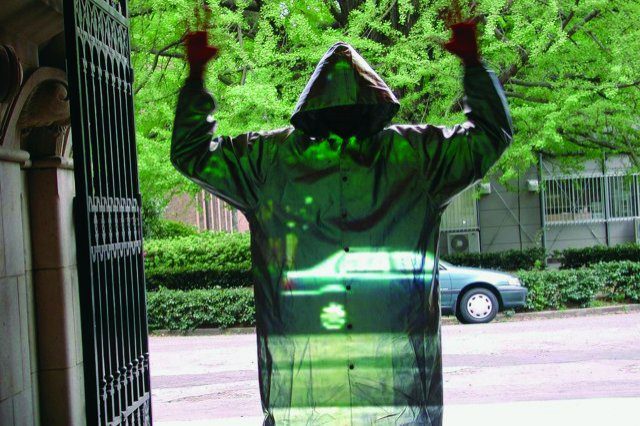

“Invisibility” is a goal that has been long sought after by the Militaries. An operational cloaking chip could be an extension of technologies such as radar-absorbing dark paint used on stealth aircraft, local optical camouflage, surface cooling to minimize electromagnetic IR emissions, or electromagnetic wave scattering. Metamaterials are the primary materials that are for cloaking, making their platforms, weapons and persons invisible from electro-optic sensors, radars and sonars.
Metamaterials are artificially structured materials designed to control and manipulate physical phenomena such as light and other electromagnetic waves, sound waves and seismic waves in unconventional ways, resulting in exotic behavior that’s not found in nature. They are predicted to be able to protect the building from earthquakes by bending seismic waves around it. Similarly, tsunami waves could be bent around towns, and sound waves could be bent around a room to make it soundproof.
Currently, the military is also backing the creation of a “Quantum Stealth” camouflage material that makes its wearers completely invisible to the naked eye by bending light waves around them. A Canadian company is spearheading that effort, which is, like Quantum Stealth itself, shrouded in secrecy. Israeli researchers are also working on a “cloaking carpet” that uses a similar light-deflecting technology.
NATO troops will soon become invisible to radar and thermal cameras thanks to a groundbreaking fabric developed in Turkey, said officials. The fabric, which has reportedly passed tests by the Turkish Armed Forces, spreads a person’s body heat to confuse thermal cameras. It also makes it easier for soldiers to hide from night vision scopes and other detectors. A team of researchers at Moscow’s National University of Science and Technology (NUST MISIS) have come up with a unique metamaterial which can make combat vehicles invisible, the authoritative scientific journal Physical Review wrote.
But an invisibility cloak needn’t be a sinister tool of war. Vanderbilt’s Valentine suggests architectural usage. “You could use this technology to hide supporting columns from sight, making a space feel completely open,” he said. Other potential uses include rendering parts of an aircraft invisible for pilots to see below the cockpit, or to rid drivers of the blind spot in a car. Toyota has recently patented a cloaking device designed to turn vehicles’ A-pillars to the left and right of the car’s dashboard invisible, improving road visibility for the driver.