
Materials determine what systems can achieve, how they perform, and where their operational limits lie. Advances in materials science are enabling lighter, stronger, smarter, stealthier, and more resilient platforms across defense, aerospace, energy, electronics, and strategic industries. From advanced composites, nanomaterials, metamaterials, and high-temperature alloys to smart materials, additive manufacturing, and quantum-engineered materials, breakthroughs in material technologies are driving the next generation of military capabilities, industrial innovation, and technological competitiveness.
IDST Intelligence Briefings
Composites, metamaterials, thermal protection, stealth coatings, and advanced manufacturing materials.
Why This Magazine Exists
Materials innovation is often measured in decades, yet it underpins many of the most transformative advances in defense, aerospace, energy, and manufacturing. This sub-magazine examines how breakthroughs in materials science transition from laboratories to operational systems, analyzing both emerging capabilities and the technical, industrial, and supply-chain challenges that determine their real-world impact.
What We Track
- Structural and composite materials
- Thermal and stealth materials
- Additive and advanced manufacturing
- Materials for extreme environments
- Supply-chain dependencies and critical inputs
Latest Analysis & Intelligence
-
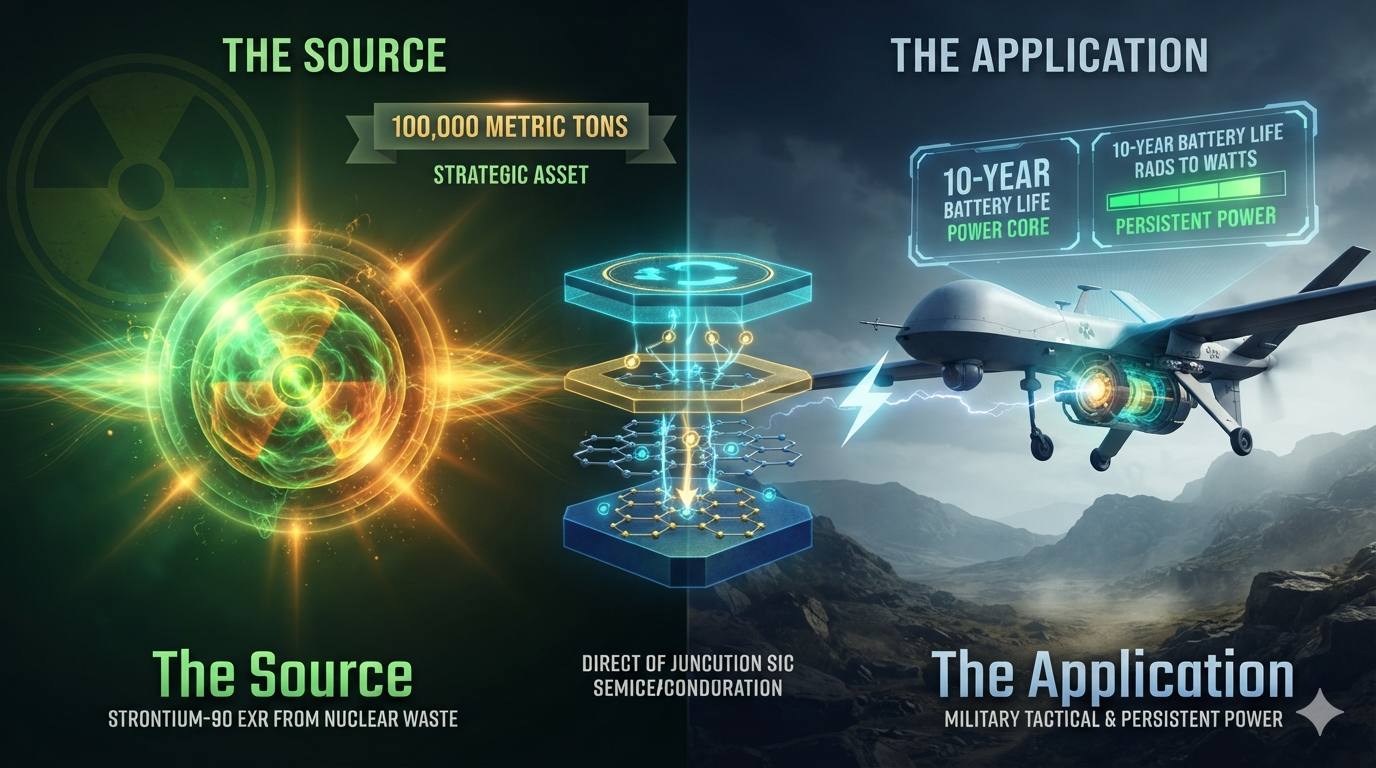
Rads to Watts: DARPA’s Nuclear Battery Revolution and the Future of Persistent Power
Strategic Context: The Emerging Battle for Persistent Power Energy has quietly become one of the defining constraints of twenty-first century military operations. Modern battlefields increasingly depend upon autonomous drones, unattended ground sensors, artificial intelligence processors, electronic warfare systems, underwater surveillance networks, hypersonic defense architectures and proliferating satellite constellations that all require continuous electrical power. Yet…
-
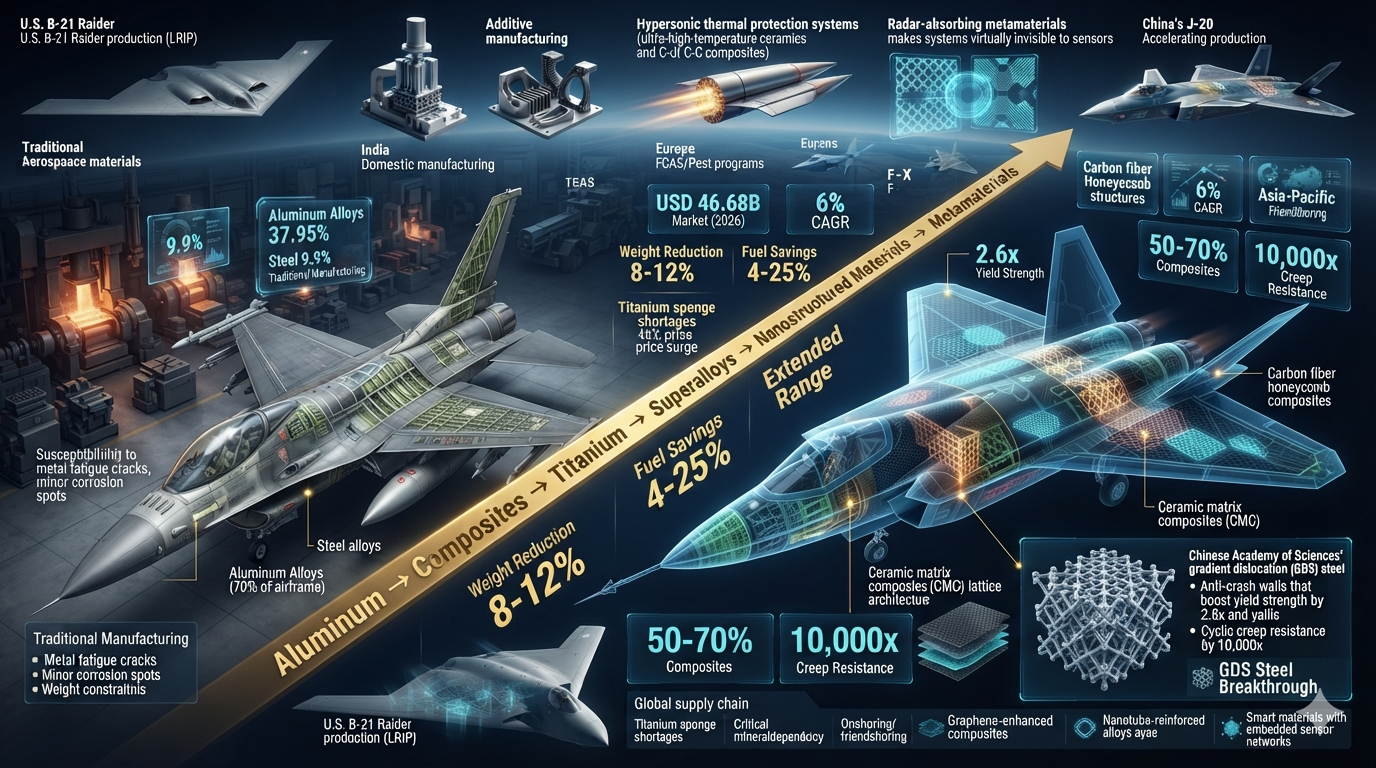
Forging the Future: Advanced Materials Transforming Military Aerospace
Introduction: Strategic Context Air superiority in the twenty-first century is no longer determined solely by faster engines, superior avionics, or more capable weapons. Increasingly, it is being shaped by the advanced materials that define the structure, survivability, endurance, and stealth of military aircraft. As major powers accelerate development of sixth-generation combat aircraft, hypersonic weapons, autonomous…
-
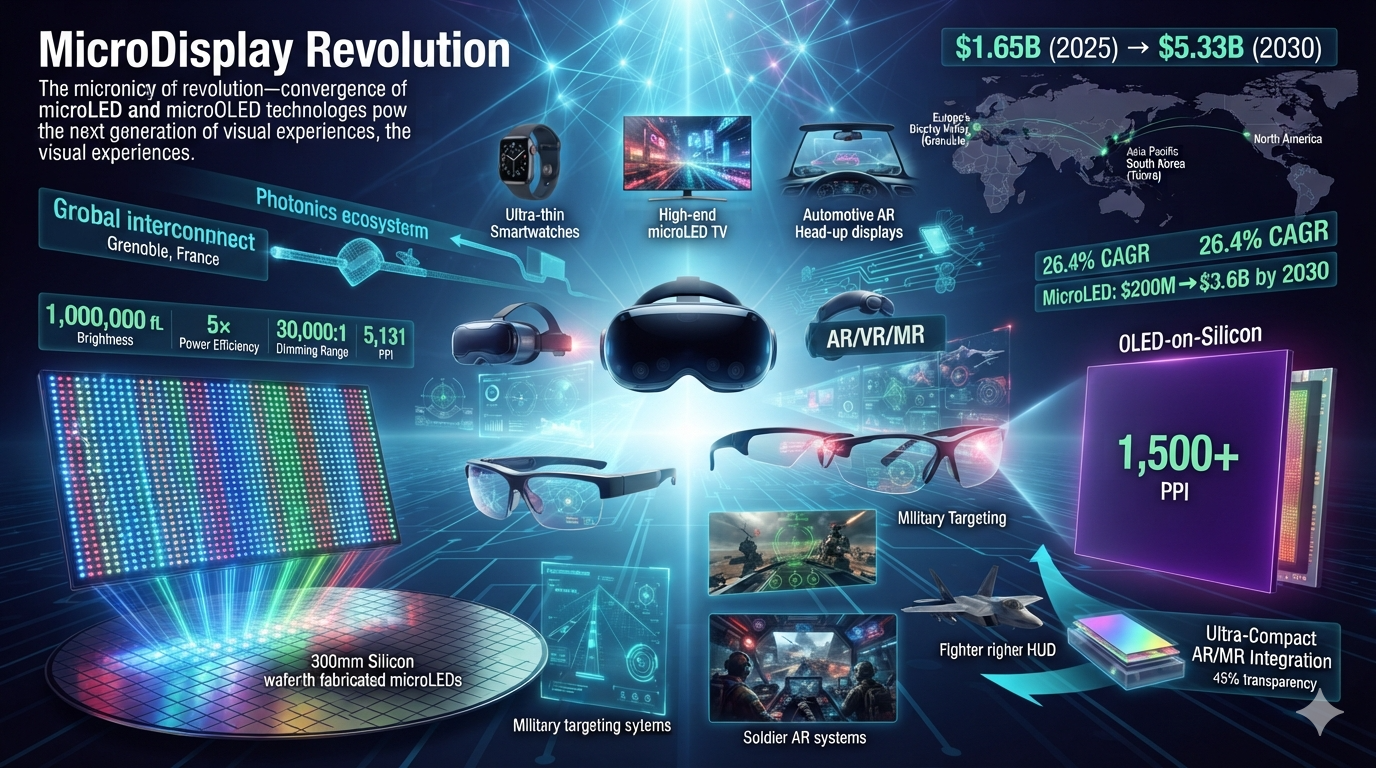
Microdisplay Revolution: How MicroLED and MicroOLED Are Shaping the Future of Defense, AI, and Spatial Computing
Introduction: Strategic Context The race to build lighter, brighter, and more energy-efficient displays has become a strategic competition extending far beyond consumer electronics. As augmented reality (AR), virtual reality (VR), mixed reality (MR), artificial intelligence, autonomous systems, and wearable computing become integral to military operations, industrial automation, healthcare, and next-generation consumer devices, microdisplay technologies have…
-
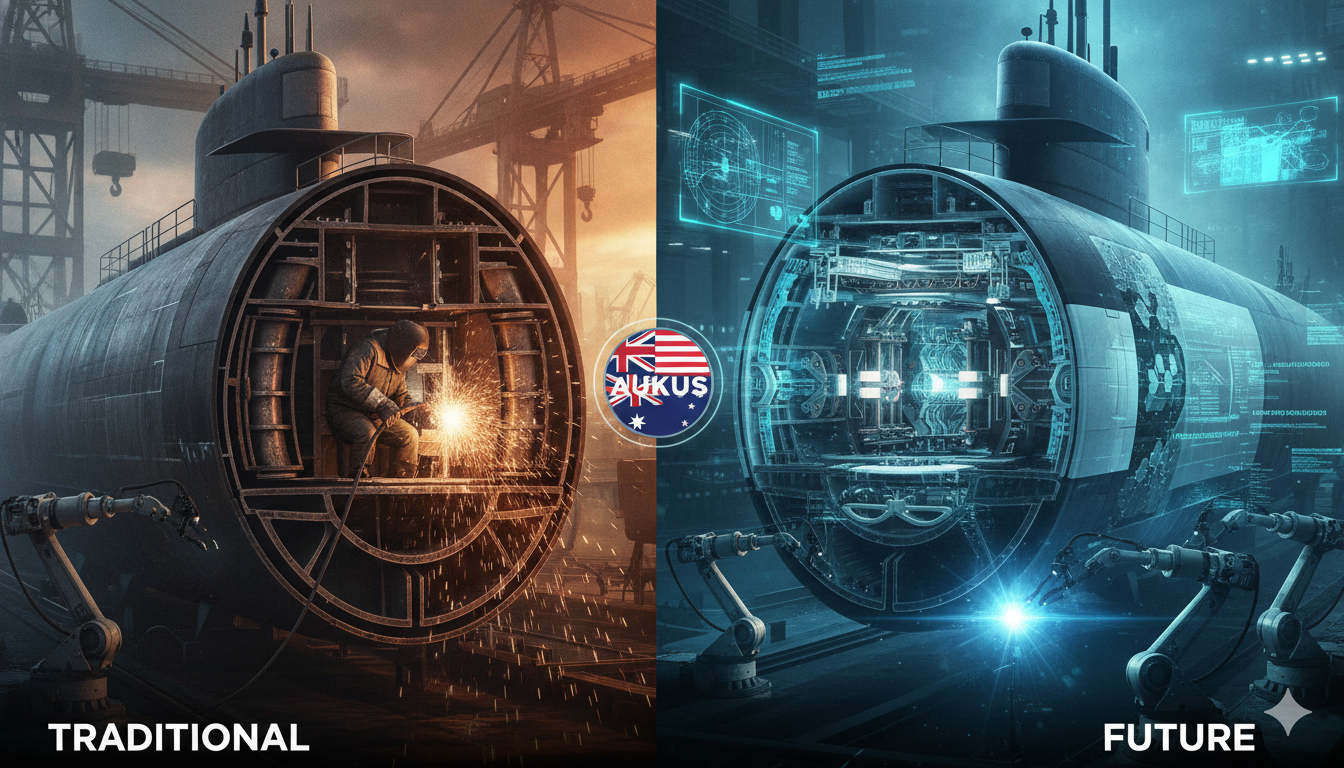
Advanced Materials and Technologies Transforming Submarine Hulls for Enhanced Warfighting Capabilities
Introduction: Materials Innovation Becomes a Strategic Undersea Competition The global undersea battlespace is entering one of its most significant periods of transformation since the Cold War. Intensifying geopolitical competition across the Indo-Pacific, Arctic, North Atlantic, and other contested maritime regions has elevated submarines from traditional naval assets to strategic instruments for deterrence, intelligence collection, long-range…
-

DARPA CRYSTAL: Building the Foundation for Next-Generation Quantum, Photonic, and RF Systems
Introduction: Why Advanced Materials Integration Matters Now The future of military and commercial technology increasingly depends not on individual breakthroughs in semiconductors, photonics, quantum science, or advanced sensing, but on the ability to integrate diverse materials into a single high-performance system. As artificial intelligence, quantum technologies, electronic warfare, space systems, and next-generation communications evolve, the…
-

Topological Quantum Computing: Engineering Noise-Resilient Quantum Information for Utility-Scale Quantum Systems
Introduction: Why Topological Quantum Computing Matters Now The global race to build practical quantum computers has entered a new phase. While recent years have focused on increasing qubit counts, researchers are increasingly recognizing that scalability alone cannot deliver useful quantum computing. The central challenge remains reliability. Quantum information is extraordinarily fragile, with environmental noise, thermal…
-

2D Transistors in 2026: The Post-Silicon Revolution Has Begun
Introduction: Why 2D Transistors Matter Now The global semiconductor industry is entering one of the most consequential technological transitions since the invention of the integrated circuit. For more than fifty years, silicon transistors have served as the foundation of modern computing, enabling the steady progression of Moore’s Law and fueling advances across consumer electronics, cloud…
Related Domains & Cross-Cutting Themes
Aerospace systems, naval platforms, hypersonics, industrial resilience, and manufacturing ecosystems.
Ethics, governance, and technology control
Industrial scaling and supply-chain constraints
Human–machine teaming and trust
Interoperability across platforms and institutions
Export controls and technological rivalry
Explore the Critical & Emerging Technologies Magazine →
Explore the Industry, Markets & Supply Chains Magazine →
Explore the Space Technology, Defense & Exploration Magazine →