

Iran’s air defence command conducted what was billed as the first test launch of the indigenously developed Talash air defence system on 28 December 2016. The tests began with the launch of Iranian-made Sayyad-2 medium-range, high-altitude surface-to-air missile. The Sayyad-2 is a canister-launched version of the RIM-66 (SM-1) naval surface-to-air missile that Iran obtained from the United States before the 1979 revolution. The Fars news agency reported that the Talash system uses the indigenously developed Ofogh (or Ofoq) fire control rada,r which calculates the path for missiles to hit targets. The launches were part of an exercise dubbed ‘Defenders of Velayat Skies 7,’ which was seen as signal to potential adversaries such as Saudi Arabia, Qatar, and even the US, that Iran has power and ability to defend itself.
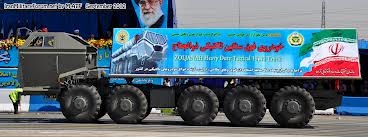
Iran has been indigenously developing an increasingly sophisticated air defense system in recent years. Iran unveiled its locally developed Bavar-373 long-range air-defence system on 21 August 2016 in presence of President Rouhani, through a series of photographs of system’s missile launcher, target-acquisition radar, and target-engagement radar. IHS Jane reported, “The launcher appeared to be mounted on a 10×10 Zoljanah heavy equipment transporter and had two missile canisters elevated to a nearly vertical position. The canisters appeared to be approximately 6.5 m in length, which would make the Sayyad-3 shorter than the 7.5 m-long 48N6 missile used with the S-300PMU2.”
Iran’s air defence was further bolstered by delivery of the first cargo of missiles special to the Russian S-300 missile defense system which was delivered to Tehran by Moscow in April 2016. The recently-delivered missiles can be used in the S-300 PMU2 defense shield which is known as the most advanced and deadliest missile defense system in the S-300 family. According to the Russian arms manufacturer, the PMU2 needs only 5 minutes to prepare for action against hostile flying objects. The radar used in the missile shield, N6E Big Bird 64, can simultaneously identify 200 targets, trace 12 targets and send the information to the fire control radar. This is reversal of Russia’s earlier decision when it had cancelled contract to supply Iran with S-300 long-range air-defence systems.
Noting that Khatam ol-Anbia Air Defense Base has deployed the S-300 missile shield that it has received from Russia, he said that the missile defense system monitors and defends the country’s airspace as part of Iran’s integrated defense network round the clock. Commander of Iran’s Khatam al-Anbia Air Defense Base Brigadier General Farzad Esmaili highlighted the Army’s air defense capabilities, saying the country’s integrated air defense network is protecting 3700 sensitive sites inside and outside the borders.
It has also succeeded in developing capable missiles to target UAVs and aircrafts. Tehran has showcased an indigenous long-range air defense system, the Bavar-373 missile, developed as an alternative to the Russian S-300. It is claimed to be better than the Russian S-300, as it is able to track over 100 targets, just like the Russian system but with a higher targeting capability.
The Iranian parliament approved the country’s expansion of its military spending in Jan 2017, including for the production of missiles. The bill, which is part of the country’s Sixth Economic Development Plan, states that the Iranian administration can take “fundamental measures” to promote the country’s “defense power.” “Developing and increasing the power to produce missiles,” “developing and strengthening the air defense power within short, medium and long ranges,” and “developing and strengthening electronic warfare and cyber defense capabilities” are among the administration’s obligations, according to the legislation.